Pullman PS-1 40 Ft Boxcars in 1952

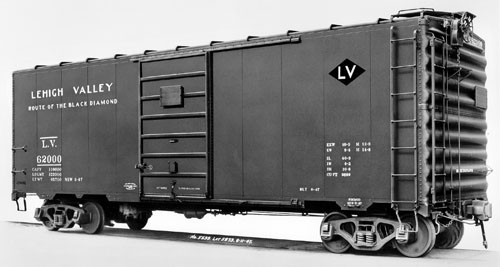
lv-62000

Pullman Standard introduced its PS-1 boxcar in the late 1947. There are a number of articles about the PS-1’s in the Hobby press. I’m not going to restate everything that has been written about this design of cars.

Ed Hawkins and Ted Culotta compiled a list of all the PS-1’s built. The complete list of Pullman PS-1 boxcars can be found on the Steam Era Freight Car Website.

Below is a modified version of their information sorted by the build-date of the cars built before my modeling period, the Summer of 1952.

Pullman Standard built a total of 77,570 cars, but by 7/52 only 46,847 had been built. These are the only cars that existed and could have been seen by my modeling period, so this is a list of the only cars that can be on the layout. Now I don’t plan to build every one of these, but the four or five I do plan to build are on this list.

This will also give me other other information then just what details are on the car and which road. By knowing if the car is less than one year old it means it should look close to brand new. Or if it’s one of the LV car built in 1947 it should look like it has been in service for five years.

Lionel and Weaver both make version of this car in O scale. The Lionel car is available with a 6ft, 7ft and 8ft door. The Weaver is only available with an 8ft door. Protocraft makes a number of decals for these cars, I’ve linked the reporting mark (first column) to the decal pages with photos of the cars.

Road Series Qty Built Lot No. Door Type Trucks
LV 62000-62499 500 6-47 5873 7 7P Sup1 S2(SP)
CGW 93001-93500 500 8-47 5875 6 7P Sup1 S2A
BM 74000-74499 500 9-47 5877 7 7P Sup1 A3
MEC 6500-6749 250 10-47 5877 7 7P Sup1 A3
ATSF 276500-276749 250 11-47 5879 6 7P Sup1 A3
NH 34000-34499 500 11-47 5894 7 7P Sup1 A3
NH 33500-33999 500 12-47 5882 7 7P Sup1 A3
KCS 18150-18549 400 12-47 5885 6 7P Sup1 A3
NKP 6600-6999 400 J-48 5887A 7 7P Sup1 A3
C&O 15000-15999 1000 2-48 5886 6 7P Sup1 A3
NKP 6000-6599 600 2-48 5887 7 7P Sup1 A3
Southern 23487-26486 3000 2-48 5896 8 7P Sup1 S2A
KCS 18550-18949 400 3-48 5895 6 7P Sup1 A3*
NYC 167000-167999 1000 3-48 5904 6 7P Sup1 S2A*
SAL 22450-22949 500 4-48 5888 14 7P Sup1 A3
NH 34500-34999 500 4-48 5894 7 7P Sup1 A3
NH 35000-35999 1000 4-48 5907 7 7P Sup1 A3
UP 100000-101599 1600 6-48 5908 6 7P Sup2 S2A
SL-SF 17000-17299 300 7-48 5911 8 7P Sup2 A3
RI 25500-26499 1000 8-48 5919 6 7P Sup2 A3
COPR 4010-4024 15 8-48 5908A 6 7P Sup2 S2A
CNW 86300-88298 1000 9-48 5920 6 7P Sup2 A3
SA 8200-8249 50 9-48 5896A 8 7P Sup1 ANDREWS
SAL 24000-24499 500 10-48 5919B 8 7P Sup2 A3
CMO 39100-39498 200 11-48 5919A 6 7P Sup2 A3
CNW 88300-88382 42 11-48 5919A 6 7P Sup2 A3
COPR 4025-4032 8 11-48 5919A 6 7P Sup2 A3
DSS&A 15000-15099 100 11-48 5919A 6 7P Sup2 A3
P&WV 1300-1399 100 11-48 5919A 6 7P Sup2 A3
DL&W 35000-35199 200 12-48 5936 6 7P Sup2 S2A
Southern 26487-26527 41 12-48 5919A 6 7P Sup2 A3?
Southern 262050-262055 6 12-48 5919A 6 7P Sup2 A3
Southern 307023-307024 2 12-48 5919A 6 7P Sup2 A3?
Southern 330500 only 1 12-48 5919A 6 7P Sup2 A3?
MSC 5000-5099 100 6-49 5942 6 YSD-2 A3
CIL 501-530 30 6-49 5942A 6 YSD-2 A3
CP 269600-269999 400 7-49 5950 6 YSD-2 S2A
LS&BC 1100-1119 20 8-49 5950 6 YSD-2 S2A
CNW 106600-108598 1000 8-49 5955 6 YSD-2 A3
CIL 532 only 1 10-49 5950 6 YSD-2 S2A
MKT 90001-90079 79 10-49 5950 6 YSD-2 S2A
CNW 57400-57898 250 11-49 5957 15 YSD-2 A3
NYC 169750-170499 750 J-50 5965 6 YSD-2
ATSF 31250-31749 500 5-50 5964 6 YSD-2A A3
L&N 16800-17299 500 5-50 5966A 6 YSD-2 A3
L&N 17300-17799 500 6-50 5966B 6 7P Sup3 A3
NYC 169000-169749 750 7-50 5965 6 7P Sup3 A3*
LV 62500-62999 500 9-50 5970 7 7P Sup3 A3
LS&I 2226-2275 50 9-50 5965A 6 7P Sup3 A3
D&H 18400-18899 500 10-50 5973 6 YSD-2 A3*
GBW 700-899 200 11-50 5977 6 7P Sup3 A3
USAX 26021-26120 100 12-50 5980 8 7P Sup3 A3
C&O 16000-16999 1000 12-50 5983 8 YSD-2 A3
L&N 14600-14999 400 J-51 5988 6 YSD-2 A3
NYC 171000-171499 500 J-51 5993 6 7P Sup3
NYC 172000-172499 500 J-51 5997 6 YSD-2
NYC 170500-170999 500 2-51 5993 6 YSD-2 A3*
C&EI 65500-65699 200 2-51 5996 6 7P Sup3 A3
D&H 18900-19399 500 2-51 5998 6 YSD-2 A3*
USAX 26125-26318 194 3-51 8008 8 7P Sup3 A3
BM 75000-75749 750 4-51 5999 7 YSD-2 A3
SAL 24500-24999 500 5-51 5994 8 YSD-2 A3
NYC 171500-171999 500 5-51 5997 6 7P Sup3 A3*
MEC 8000-8249 250 5-51 5999A 7 YSD-2 A3
SL-SF 17300-17799 500 6-51 5995 8 YSD-2 A3
N&W 44000-44499 500 6-51 8002 8 YSD-2 A3*
ACY 700-849 150 6-51 8004 6 YSD-2 A3
CGW 5001-5600 600 6-51 8016 6 YSD-2 S2A
CNW 6200-7398 600 7-51 8007 6 7P Sup3 A3
CNW 7400-10198 1400 7-51 8007 6 YSD-2 A3
USAFX 26319-26323 5 7-51 8044 8 YSD-2 A3
USAFX 26474-26481 8 7-51 8044 8 YSD-2
USAX 26324-26473 150 7-51 8044 8 YSD-2
USMC 173227-173236 10 7-51 8044 8 YSD-2 A3
USN 02455-02463 9 7-51 8044 8 YSD-2 A3
USN 02698-02727 30 7-51 8044 8 YSD-2
C&O 17000-17999 1000 9-51 8017 8 YSD-2 A3
L&N 17800-18399 600 10-51 5988 6 YSD-2 A3
MILW 35000-35041 42 10-51 8025 6 7P Sup3 S2A*
SSW 33950-34049 100 10-51 8026 8 YSD-2 A3
WP 20801-20820 20 10-51 8027 7 YSD-2 A3
WP 20821-21400 580 10-51 8027 7 YSD-2 A3
Southern 30000-30499 500 11-51 8003 9 YSD-2 S2A
Southern 30500-32018 1519 11-51 8003 9 7P Sup3
Southern 262056-262059 4 11-51 8003 8 7P Sup3
Southern 307028 only 1 11-51 8003 8 7P Sup3
Southern 330501 only 1 11-51 8003 8 7P Sup3
RI 21000-21749 750 11-51 8028 6 7P Sup3 S2A
RI 21750-22249 500 11-51 8028 6 YSD-2 S2A
RI 22250-22999 750 12-51 8028 6 7P Sup3 S2A*
L&C 1000-1019 20 1-52 8003 9 7P Sup3 S2A
BS 6700-6749 50 1-52 8009 6 7P Sup3 S2A
CNW 6766 only 1 J-52 8083 6 5P Sup
CNW Various 3 J-52 8083 6 5P Sup
BS 6750-6799 50 2-52 8009 6 PS S2A
NC&StL 22000-22649 650 2-52 8015 6 YSD-2 A3
N&W 44500-44999 500 2-52 8035 8 YSD-2 S2A*
GA 39501-39550 50 3-52 8021 6 YSD-2 A3
WofA 18100-18209 110 3-52 8021 6 YSD-2 A3
SAL 25000-25499 500 3-52 8029 8 YSD-2 A3
L&N 5000-7199 2200 3-52 8039 8 YSD-2 A3
CG 7000-7299 300 4-52 8030 8 YSD-2 S2A
C&O 18000-18499 500 6-52 8037 8 YSD-2 S2A
C&O 18500-18999 500 6-52 8037 8 6P Sup1 S2A
ASX 712-811 100 6-52 8069 6 5P Sup A3
NYC 180000-180499 500 6-52 8036A 6 5P Sup A3
BCK 1000-1499 500 7-52 8038 7 5P Sup A3
FDDM&S 12201-12400 200 7-52 8036B 6 5P Sup A3
CP 268800-269099 300 7-52 8036C 6 5P Sup S2A
LS&I 2400-2489 90 8-52 8047 8 YSD-2 A3
VGN 63100-63399 300 8-52 8048 8 YSD-2 A3/S2B

References:
Ed Hawkins PS-1 list on the Steam Era Freight Car Website
Mainline Modeler Article

Reading N1’s 2-8-8-0

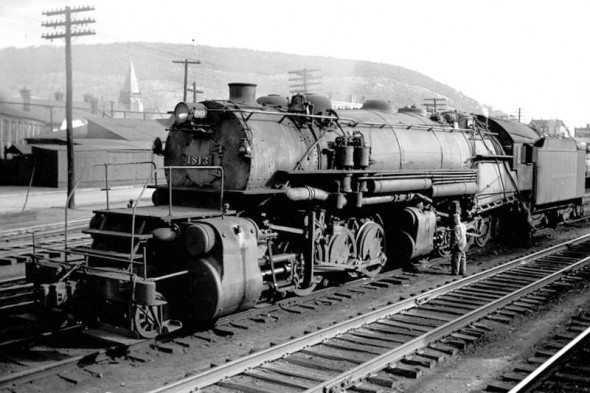
Reading N1-sc 1813 in an as-built look.

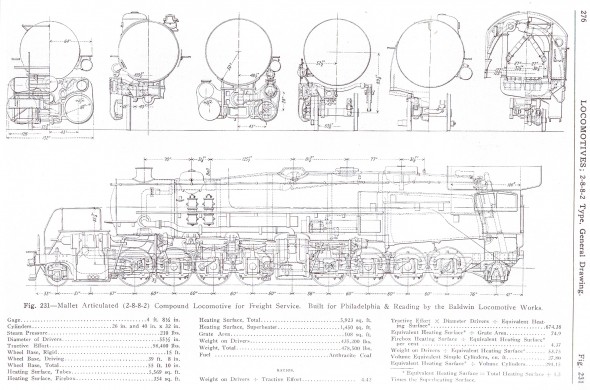
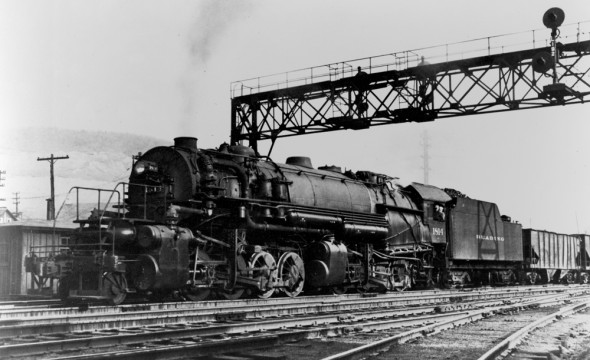
Bert Pennypacker speaks about the Reading Mallets 2-8-8-2 in his Mainline Modeler article on the K1’s. They were built by Baldwin beginning with six locomotives received in 1917. Two additional orders brought the fleet up to 31 locomotives by 1919 and were classes N1-sa/b/c. They were numbered 1800-1830, with 55.5 inch drivers and 98,400 lbs of tractive force.

The mallets were distributed in different parts of the system, 11 were running between Hagerstown-Rutherford-Allentown, two were assigned to Reading as Temple Hill pushers, and the rest were were distributed through the coal regions, West Cressona, St.Clair, Tamaqua, Gordon and Shamokin. The locomotives assigned to pusher duties were given small capacity tenders, 8,000 gallons and12.8 tons of coal. While the road mallets were given larger tenders with 11,000 gallon and 18 ton capacity. Wages were cheap and pusher runs were short, no need for big tenders.

It was said of the Mallets that they could pull anything slowly. The Reading most not have been totally happy with the speed of the N1’s in road service. Beginning in 1927, locomotives #1800-1810 (11) were rebuilt into the K1 2-10-2 locomotives. They were only ten years old at the start of the project. Their boilers were reused and most of their parts in the rebuilding project.

Reading N1 drawing from Locomotive Cyclopedia

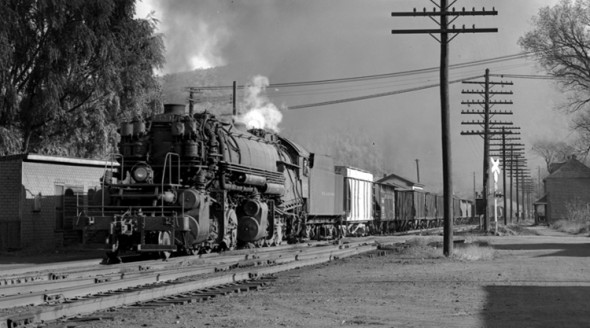
Then in 1930 the railroad began converting the mallets from compound to single expansion cylinders. They were re-classed as N1-sd. The big delivery pipes on the side of the smoke box are an indication of the converted locomotives. All the N1’s were converted by 1945. They also had their trailing trucks removed between 1940-1944.

Reading N1-sd moving a train in coal country.

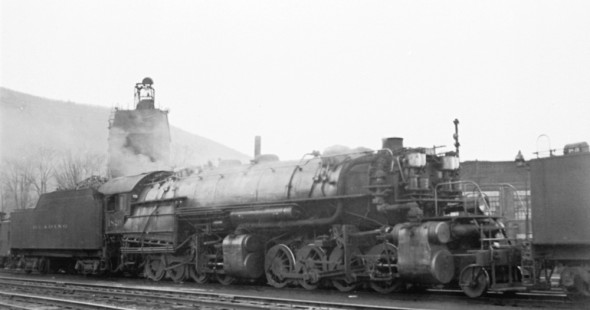
In the late 1940’s ten N1-sd’s received new smoke boxes and cross-compound air pumps relocated onto the smoke box front. The locomotive that had the forward mounted air pumps were numbered; 1811, 1812, 1817, 1820, 1822, 1823, 1826, 1828, 1829 and 1830.

Reading N1-sd sporting air pumps on the smoke box
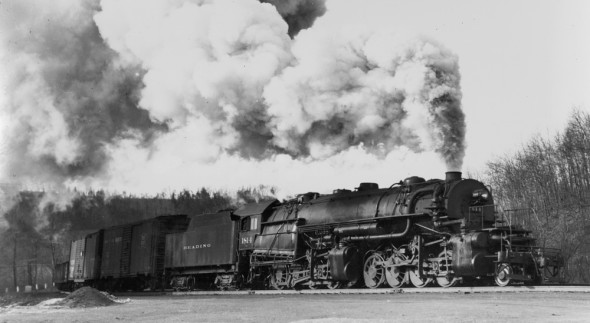
Reading 1814 N1-sd on the move.
Nice to have both sides of Reading1814 here at Tamaqua, PA.

References:
Mainline Modeler, May/June 1981 – “Reading 2-10-2 It should have been a Texas” by Bert Pennypacker
Reading Steam Pictorial

Photograph’s from George Losse Collection scanned from prints and/or original negatives.

Layout Visit: Cherry Valley Model Railroad Club, 2010

I had to meet up with a couple of the members of the Cherry Valley Model Railroad Club in Merchantville, NJ. So it was a good chance to take a look at the club layout. They continue making improvements as always.

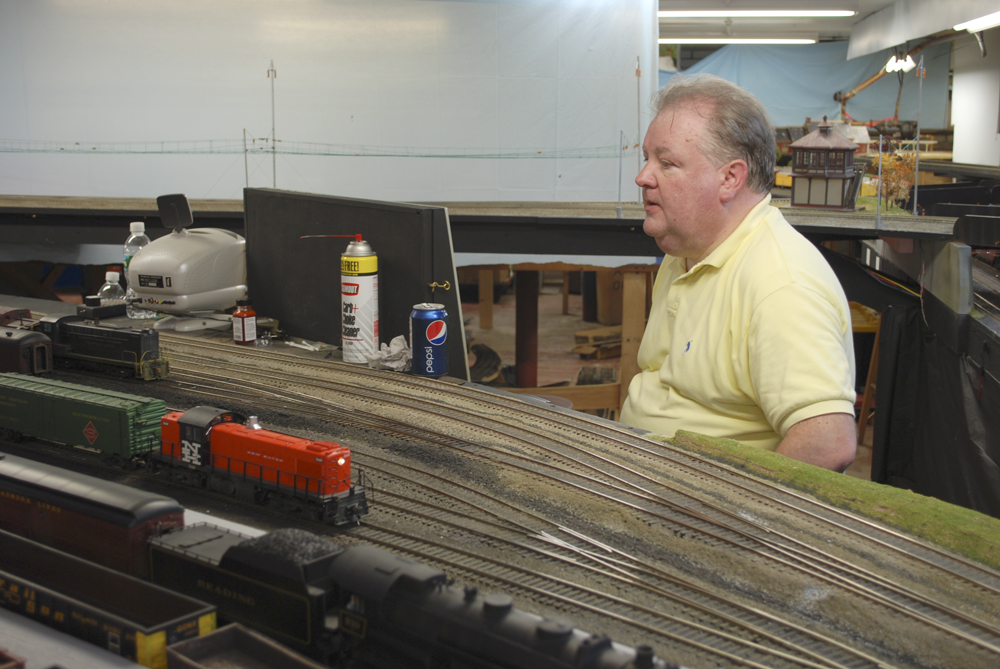
John Dunn sitting at the main control panel.
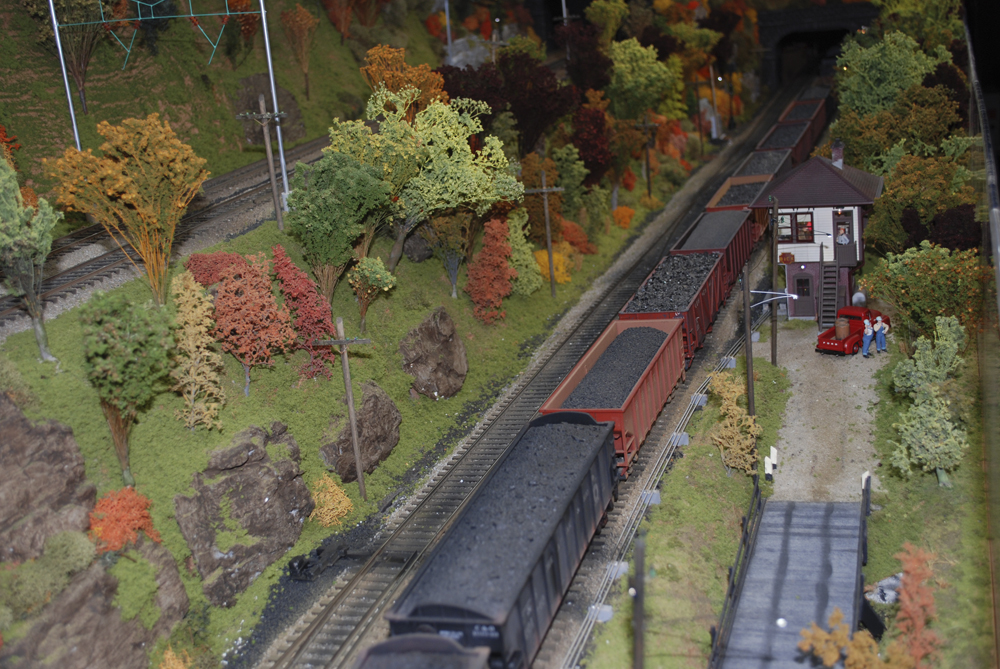
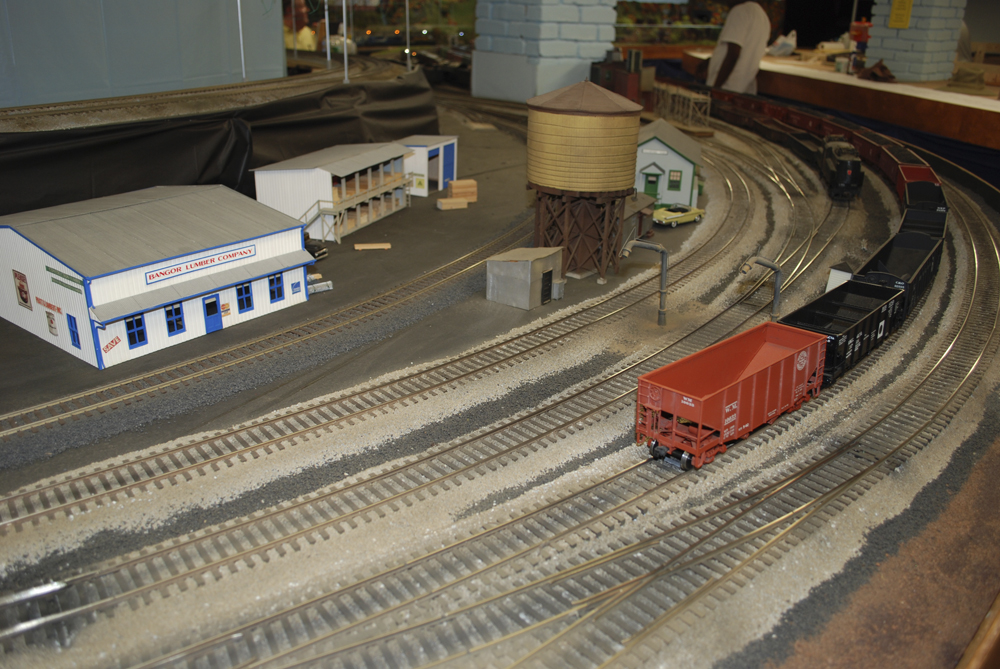
A Nice Junction scene on the lower level
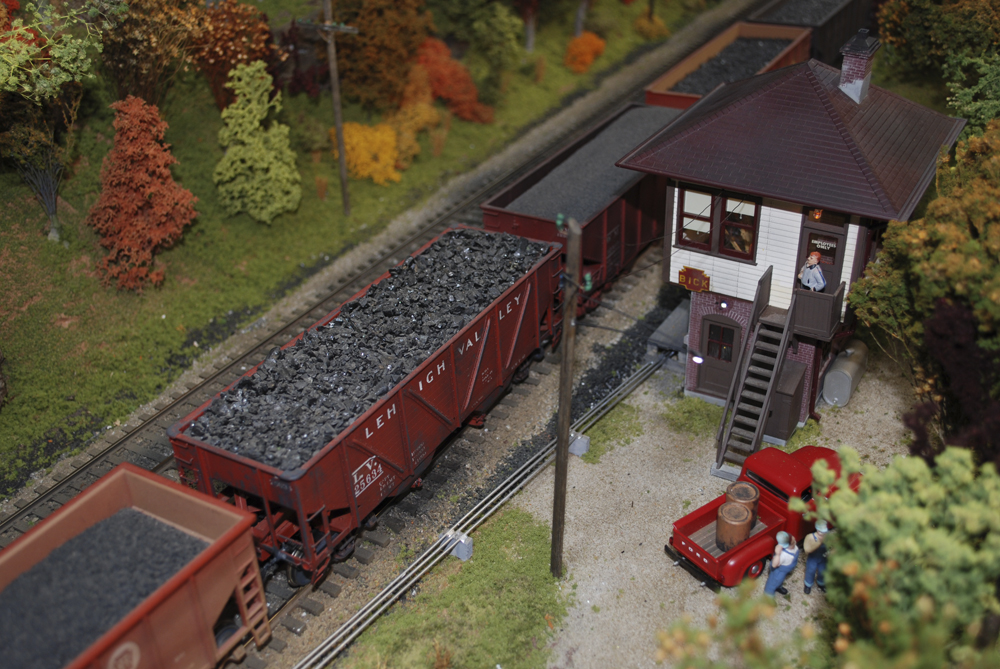
Close up view of the Junction scene
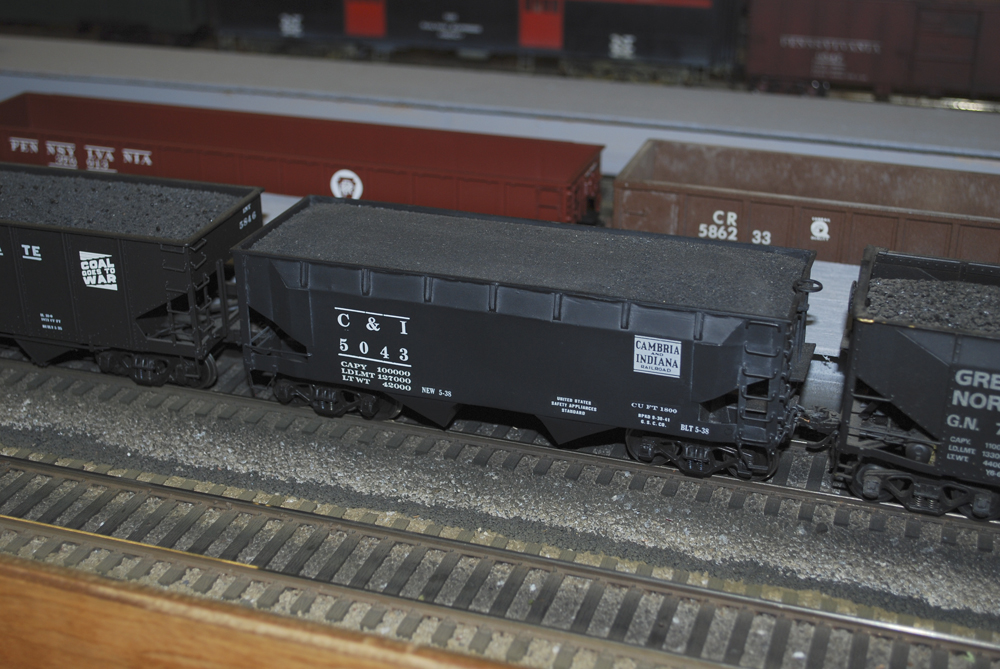
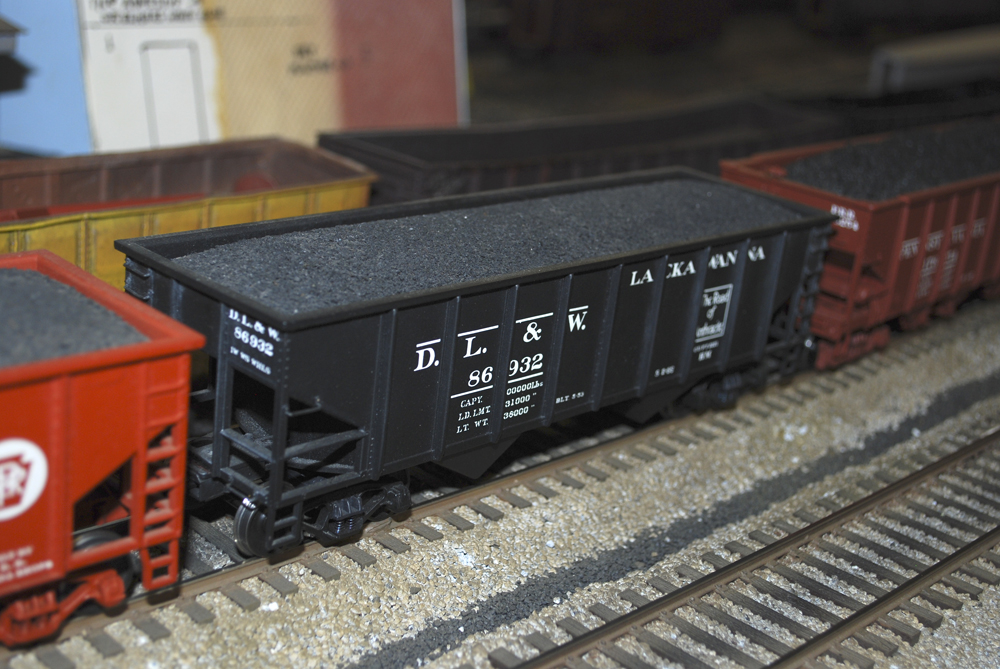
You know I like to look at hopper cars. Here is a nice old cast car done very nicely.
View from the end of the passenger station (that wasn’t there)
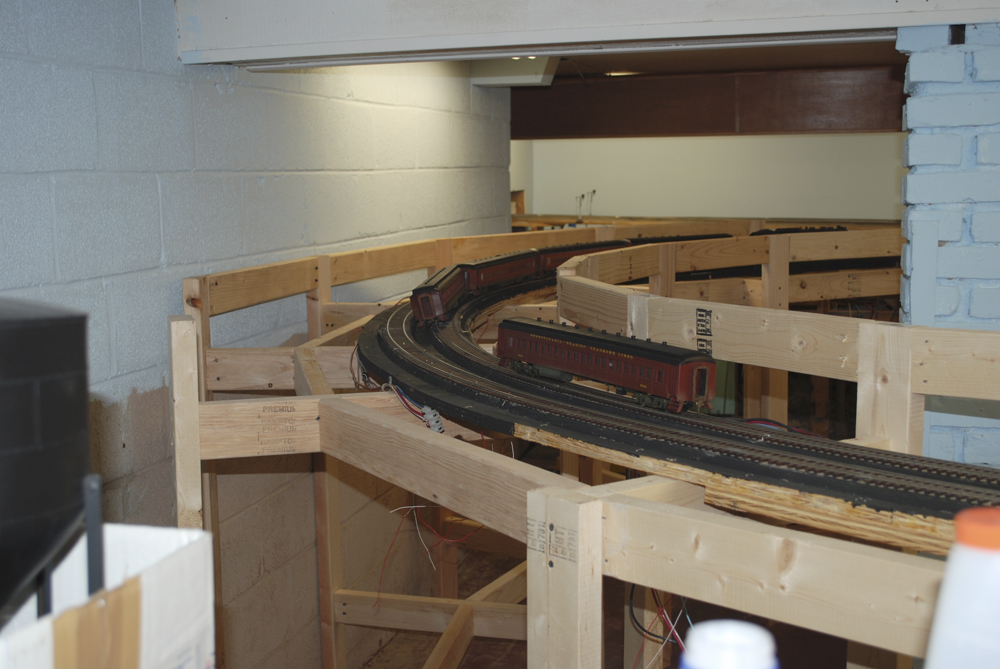
Tom Mapes recently replaced the bench work on the loop. Looks like they are planning to cover this. I sure hope so.

Reading Modeling Myth #1-Will the “Real” RDG Pullman Green Please Stand Up – Part II

Just when I thought I got away from paint color debates by not modeling the PRR…….

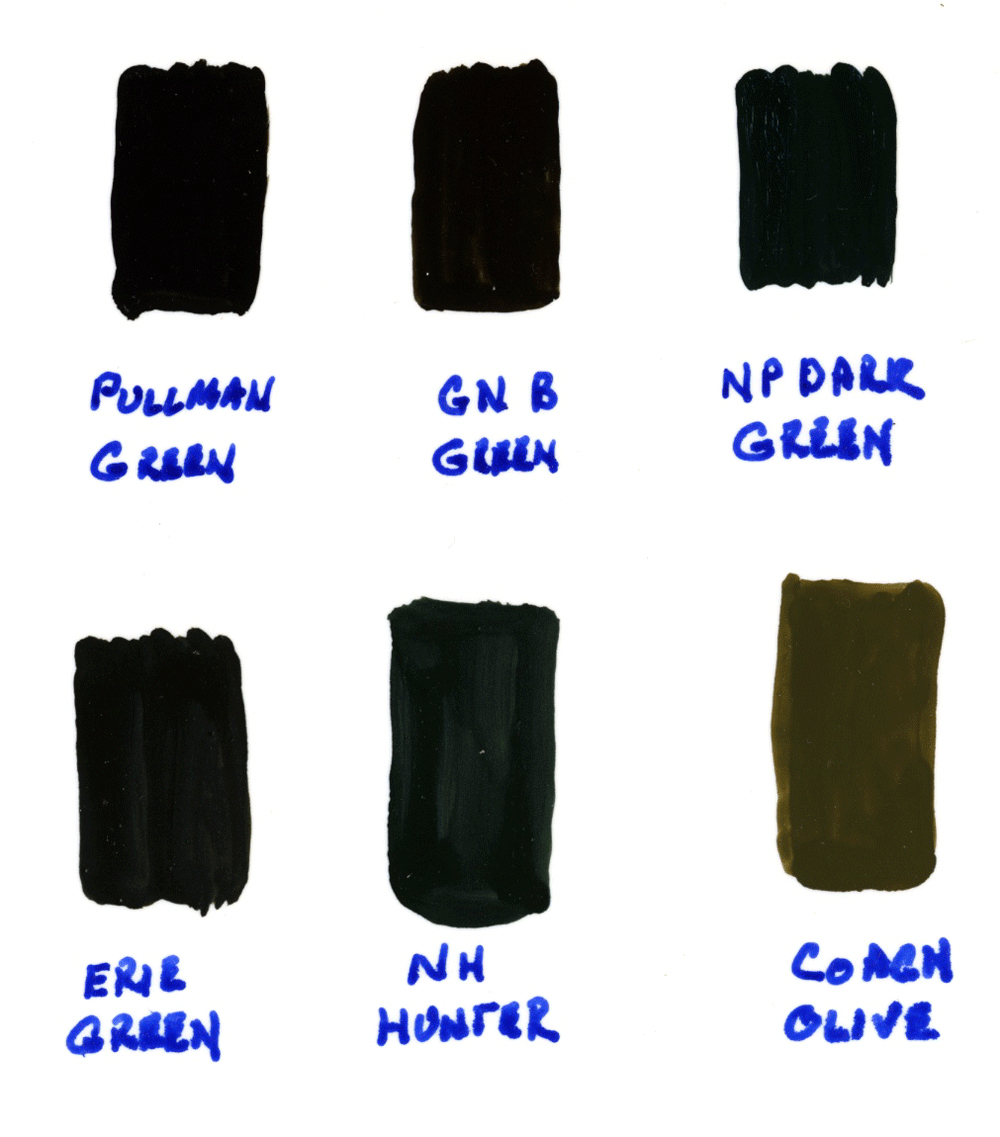
This morning I had the pleasure of testing some greens from Scalecoat 2. The Scalecoat made for plastics.

I tested six new greens.

Scalecoat 2 samples

Scalecoat 2 samples

Top Row: Pullman Green, Great Northern Empire Builder Green, Northern Pacific Dark Green
Bottom Row: Erie Green, New Haven Hunter Green, Coach Olive

This time instead of trying to match scans on the computer I went back to a technique from art school to match color. I had my samples above and cut a square in the paint sample. Then I placed the samples over different photographs.

My results so far:

For a locomotive within the first couple of years from being delivered Tru-Color New Haven 401 Green or Scalecoat 2 Erie Green were the closest.

For a locomotive 5-10 years from being delivered Polyscale Pullman Green.

Next step put some paint on the models and see what they look like.

Reading Modeling Myth #1-Will the “Real” RDG Pullman Green Please Stand Up

My brother sent the title as a title to an email a few days ago along with his interpretation of Reading Pullman Green.

Well I have calmed down from my frustration of last week. Now I just want to know what color first generation road switchers are to be painted for 1952? Simple answer, Pullman Green. But what is Pullman Green? It seems everybody has a different idea of just what that is.

After finding out that the Scalecoat 1 Pullman Green is some strange form of crappy brown, I realized I will have to test some paints.I first went out to the LHS and picked up some Polyscale greens. Then I used the testing as an excuse to try Tru-Color Paint. I ordered it online from P&D Hobby Shop and it arrived yesterday during a thunder storm. The box was soaked, glad the decals that I ordered did not ship in that box.

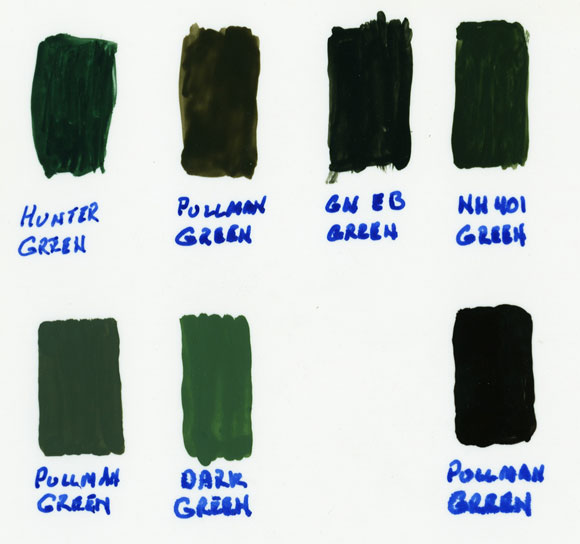
Top Row Tru-Color paint, Bottom row left two Polyscale, right Scalecoat 1

The Tru-Color paint is nice. Their Pullman Green is much better than Scalecoat’s Pullman Brown, but to my eye it still does not look like what is on the locomotives. The Great Northern Empire Builder Green next to it looks better.

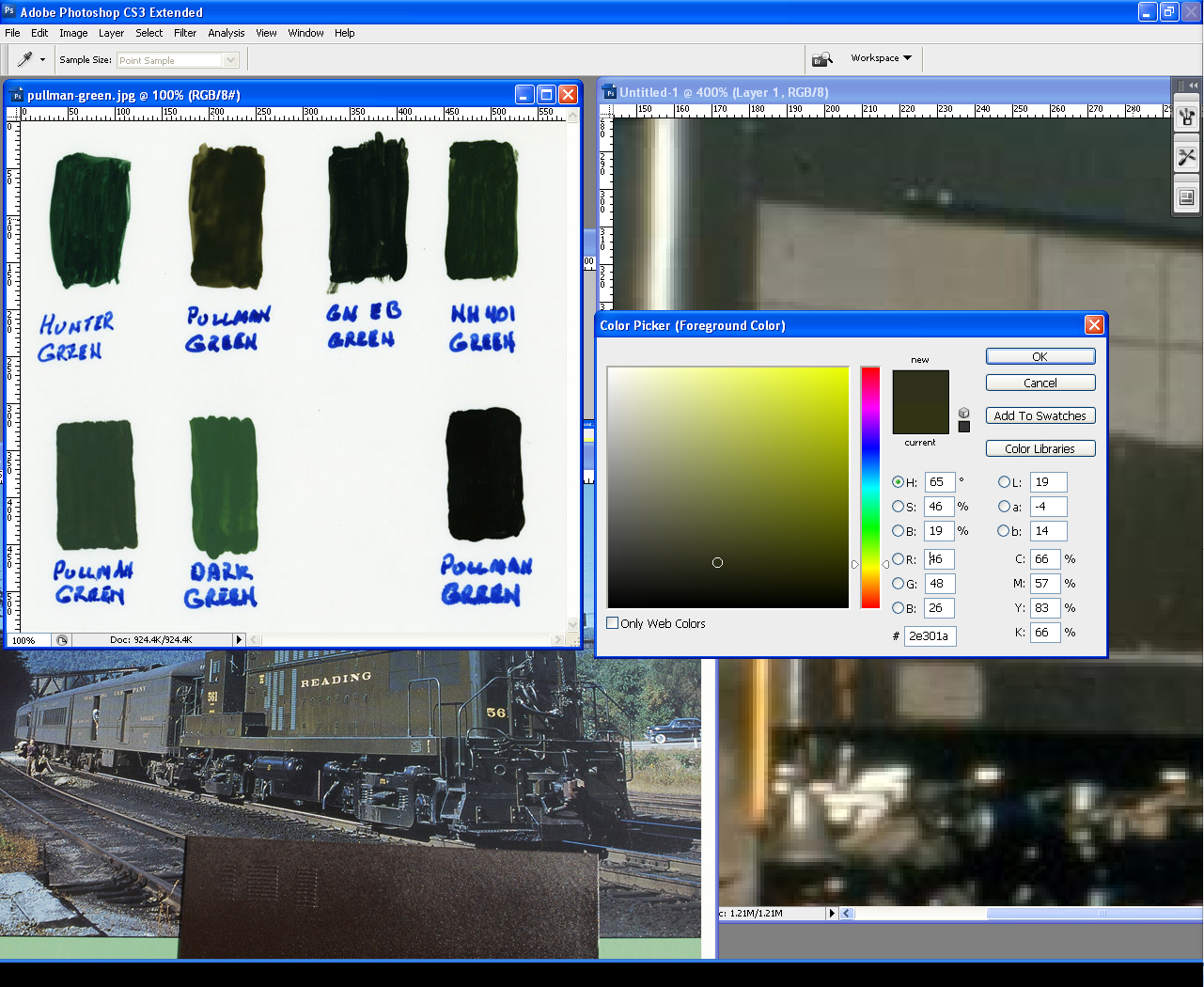
Well I thought about it and decided to open the scans up in Photoshop and let something other than my eye look at it.

PhotoShop says that the Tru-Color Pullman Green is the closest to the two scans. My eyes still do not believe it.

I have to paint something now to prove it to myself.

Reading OE-9 EMD NW2

Reading OE-9  #102 Tamaqua, PA 9/23/1961

Reading OE-9 #102 Tamaqua, PA 9/23/1961

The Reading received their first 1000 HP. switcher form EMD in the form of an NW2 #90, on September 5, 1940. This missed out being the first 1000 HP. switcher on the Reading by three weeks to #80 a Baldwind VO-1000.

NW2’s numbered #91-92 arrived in early October of 1941. After World War 2 was over the Reading added five more NW2’s to the roster numbers #100-104.The second series of NW2’s differed slightly from the first three by having louvers in the engine compartment doors.

The First three were originally assigned to the Shamokin Division. Eventually, they migrated to other parts of the railroad.

All the locomotives were delievered in the Pullman Green scheme. None were repainted into the green and Yellow scheme. One locomotive #104 was repainted into the last solid green scheme. Not all switcher received the rain gutters, #91 was photographed in 1963 without gutters.

Reading OE-9 #92 Reading, PA 10-16-75

Reading OE-9 #92 Reading, PA 10-16-75

No. Built Model Notes Engine House Assignment Photos on this Site Photo Online
90 Sep-40 NW2 No Louvers PhotoPhoto
91 Oct-41 NW2 No Louvers Photo
92 Oct-41 NW2 No Louvers PhotoPhoto
100 Jul-47 NW2 Louvers PhotoPhoto
101 Jul-47 NW2 Louvers PhotoPhoto
102 Jul-47 NW2 Louvers
103 Jul-47 NW2 Louvers
104 Jul-47 NW2 Louvers PhotoPhotoPhoto

References:
Diesel Era – 1996 March/April – Reading’s Repowered Switchers.
Diesel Era – 1998 March/April – Reading’s First-Generation Diesels by by Paul K. Withers
Reading Diesels Volume 1 The First Generation – by Dale Woodland
Photograph’s from George Losse Collection scaned from negatives.

Reading Modeling Myth #1

0616-2

Having modeled the PRR for a number of years, I have to say that I have heard all the modeling “Truths” about modeling the PRR. Belpairs being too short or having the wrong slope, the wrong pimple board being used on walkways or I1 airtanks being undersized.

I thought my shift in primary modeling focus to the Reading Company would free me of those types of truths. I was wrong. I fell into one of those yesterday.

Reading first generation road switchers are painted Pullman Green.

It says so in every article you read about first generation locomotives. It says so in every modeling article you read about Reading road switchers.

0616-0

In this image you see a printed reproduction of a photograph of a Reading AS-16 less than a year old. This is what I needed my model to look like. The Scalecoat Pullman Brown crap that I sprayed on the model did not please me.

Now it’s time to buy some different GREEN paint and start testing to find MY Pullman Green.

So much for trusting the work and word of other modelers. The Reading Modeler website even goes so far as to say:

Pullman Green Scheme: Floquil, Polly-Scale, or Scalecoat Pullman Green.  Floquil seems to yield a lighter shade than the other two – this would be useful for painting first-generation diesels that have faded due to weathering and age.  For newer models, Polly-Scale or Scalecoat would work best.

I am modeling the Summer of 1952. The Baldwin AS-16 I’m modeling would have been less than one year old, so it should be clean, shinny and in close to new condition.  Scalecoat Pullman Green sounded like the right choice.

So much for trusting the work and word of other modelers.

0616-3

0616-4

0616-5

Reading DF-3 ALCO FA-1’s

Reading DF-3 #301Reading DF-3 #305b


Number BuiltRDG ClassHPEngine House Assignment
3006/48DF-31600 
300 B6/48DF-31600 
3016/48DF-31600 
301 B6/48DF-31600 
3026/48DF-31600 
302 B6/48DF-31600 
3036/48DF-31600 
303 B6/48DF-31600 
3046/48DF-31600 
304 B6/48DF-31600 
3056/48DF-31600 
305 B6/48DF-31600 

References:
Reading Diesels Volume 1 The First Generation – by Dale Woodland

Photograph’s from George Losse Collection.

The ORER’s

ORER – April 1956

Purchasing this ORER was one of the first steps in focusing my modeling efforts. For those that do not know about these, they list all the revenue freight cars for every railroad at the time of their publishing, Every one.

I used to refer to this as the “Bible for Modeling.”

When I was modeling the Elmira Branch in the late Spring of 1956, a car had to be listed in here or it did not belong on the railroad.

The information here is different then just knowing a railroad had the car, it tells you haw many they had on the roster at that time. That is very important information for trying to get the right proportions of cars modeled.

ORER – October 1953

When I made the switch to model the Reading I researched what locomotives I wanted to model and found the point in time that had the most of them on the roster at the same time. This turned out to be the middle of 1953. So I needed a “New Bible.”

This ORER for October 1953 shows different cars on the roster than the April 1956 ORER does. Just three yaears difference and there is a big difference in the cars which were retired by 1956 and the classes that were being built to replace them.

ORER – January 1952

This is now the “Bible” for my railroad. If it’s listed in here than I can have it on the railroad.

It’s also is the heart of the “By the Number” idea for modeling freight car fleets. It more important to know how many cars of a particular design a railroad owned as of Jan 1952, then just know that they owned them.

Reading Locomotives for the Layout


When I made to choice to model the Reading, I knew I had two choices, either have my modeling time after the last of steam or I was going to have to build some steam locomotives. There has not been many brass models imported in O scale of Reading steam locomotives. One reading fan suggested “buying a bunch of T-1’s and model 1956 because nothing else has been imported.”

When I was focused on the Elmira Branch of the PRR, I was also focused on 1956 as the date to model. When I first made the choice to model the Reading, I shifted my focused time period to 1953. All of the first generation diesel locomotives I liked were on the roster. And there were only a few Steam locomotive classes left running.

Well as luck would have it, I was able to trade some of my surplus PRR equipment for an SGL Reading G3. They only lasted on the line until the Summer of 1952 and then they were bumped from the King Coal by a pair of GP7’s. I’ve read that they lasted until September of that year even though the GP7’s which replaced them arrived in July. After that point the G3’s were transferred to South Jersey to run out their service life on the PRSL.

So that has set my time to the Summer of 1952.

Steam Classes

Left on the roster in 1952 were I9-sc’s, I10’s, K1-sd/e’s, N1-sd’s, G2-sa’s, G3’s and T-1’s.

The T-1‘s do not seem to show up in the photos West of Tamaqua until 1956-1957. They ran through the mainline to Pottsville and into Saint Clair. There is a really nice O Scale model of a T-1 done by Overland back in the 1990’s. There was also a nice Bob Jones’ Kit for a T-1 that was produced before the Overland run. The finding of a nice Overland T-1 has prompted the move of modeling location to Schuylkill Haven on the line to Pottsville.

SGL imported the Reading G3 back around 2000. While not super detailed, it does have enough detail to be a good place to start. One arrived on my roster in a trade for some of that surplus PRR equipment.

The N1-sd‘s, were built between 1917-1919 and are dimensionally close to a USRA 2-8-8-2. That is my starting point, I have a pair of Sunset N&W Y-3’s that are the going to become Reading locomotives.

The K1-sd/e‘s will have to be built. I found the the wheelbase is very close to that of the Sunset I1sa’s. With modifications to the Sunset frame, new boilers and new tenders, they will take shape.

The I10 uses almost the same wheel base as the PRR H10 so I plan to use the Central Locomotive Works H10 mechanism for this conversion.

The I9-sc was an I9 that was rebuilt with the running gear from the I10’s that became T1’s. So this too will use the Central Locomotive Works H10 mechanism for the conversion.

Diesel Classes

Seen in the photos from 1952 in the Shamokin Division were:  Road Power EMD FT’s, F3’s, F7’s, ALCO FA1’s and Baldwin AS-16’s, Switchers were EMD NW2’s Baldwin VO-1000’s and DS4-4-1000’s.

EMD FT’s:
O Scale is blessed with a couple of choices for EMD FT brass models, Overland or Hallmark. The Hallmarks are detailed for Santa Fe units so they would require some correcting. But they usually show up at good prices at the shows. Overland are a newer model imported in the 90’s and the details are much cleaner but they cost a little more. I was lucky to find a pair at a very good price.

MTH also makes a 3-rail version of an EMD FT, but it is not a scale model. I owned a pair, so I was able to see and measure them first hand.

EMD F3 & EMD F7:
There have been a number of O scale EMD F3 & F7 models available both as kits and brass imports. I am using a combination of Overland F3’s and P&D F3’s and F7’s.

ALCO FA-1’s:
There are again a number of options here in O scale.  Central Locomotive Works has made brass kits for them since before I was born. Key is about to import them, but their price point is not in my hobby budget. Overland has imported them in the past and that is what I have on my shelf.   Also Custom Brass and Sunset both have imported them in the past. I was going to use the Custom Brass models until I found an A-B-A set of the Overland models at a great price.

Baldwin AS-16’s:
The Overland AS-16 is THE option for modeling the Baldwin AS-16’s. The model was imported in the mid 90’s. They do show up at shows and on ebay every so often. So far the models I have found me in trades and one purchase. Overland produced both the early car body design and what modelers refer to as the ’53 body or high hood version.

Again, MTH has produced a 3-rail version that they call a Baldwin AS 616, but the hoods are too wide and too tall, they would require far too much work to correct them.

EMD NW2
All Nation has produced a white metal version almost as long as the prototype has existed. The All Nation model looks like 1940 technology. These have also been produced in brass by a couple of importers over the years.

I started building an NW-2 by combining an All Nation body on top of an Atlas SW9 frame. Life is way too short! I’m now looking for one of the brass imports to cross my path at a good price…..

Baldwin Vo-1000, DS4-4-1000:
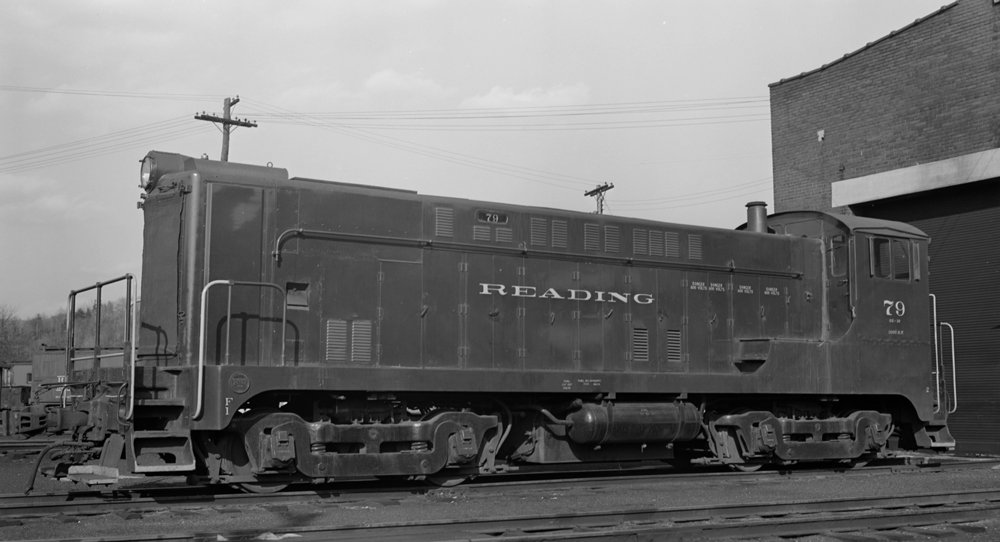
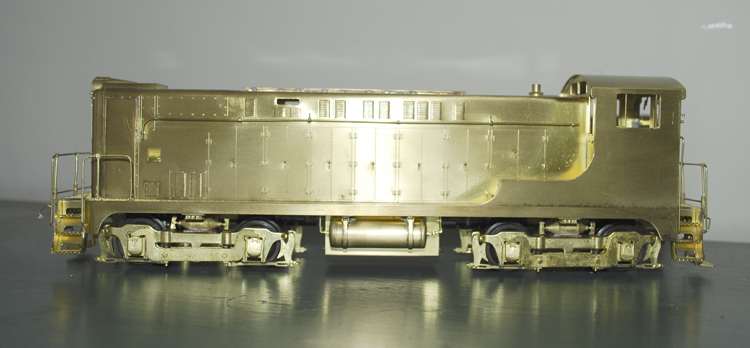
I am using a pair of Car Works VO-1000’s and plan to back-date Rich Yoder’s S12 into the DS4-4-1000.

Weaver also make a nice model of the VO-1000 with curved insets in the walkways.

ALCO RS-3‘s and EMD GP7‘s:
While plentiful on the Reading, they did not venture into coal country much at this early date in freight service. That would change as time moves on and second generation diesels hit the roster.

Passenger service is a different story. The RS-3’s and the Gp-7’s did run in passenger service to Pottsville during this period.