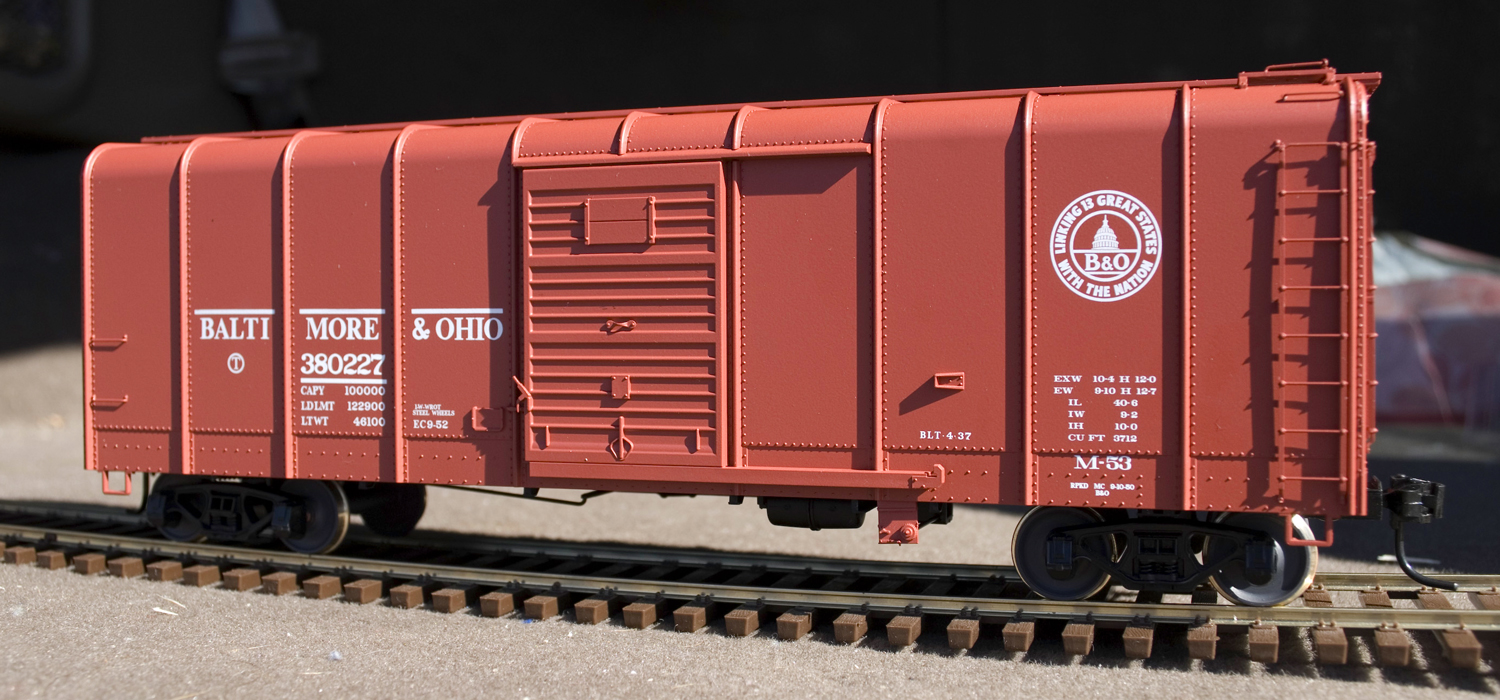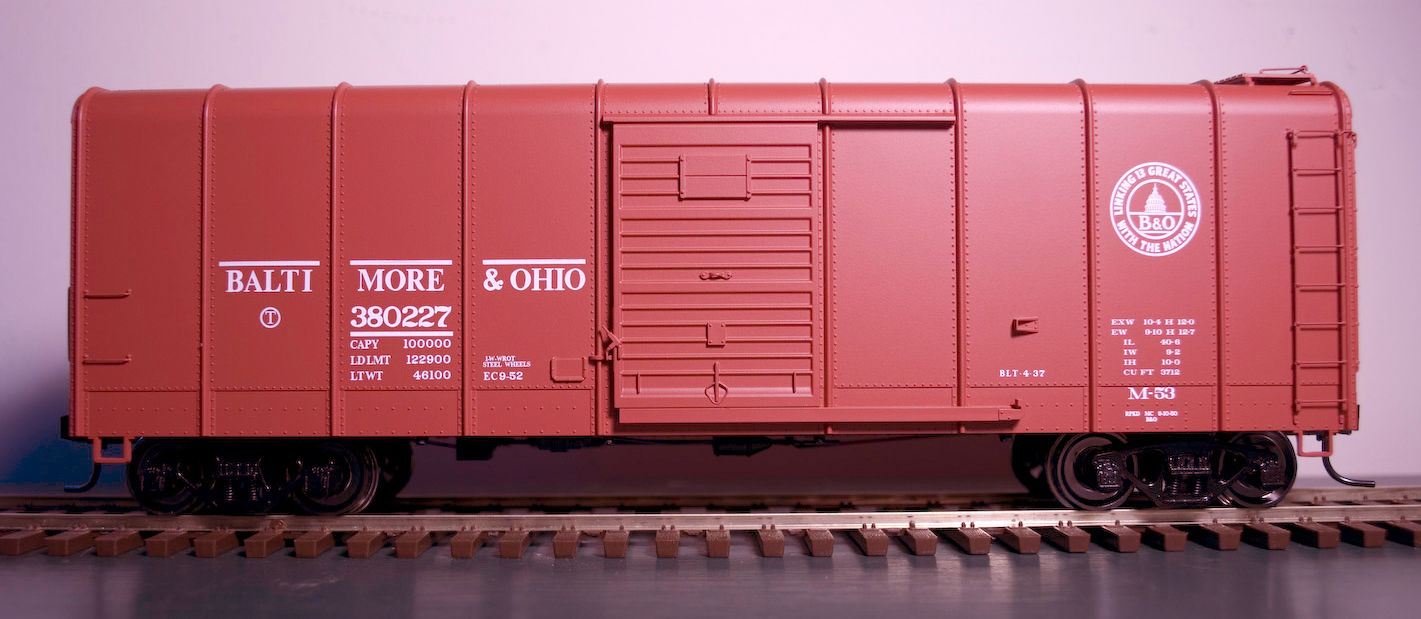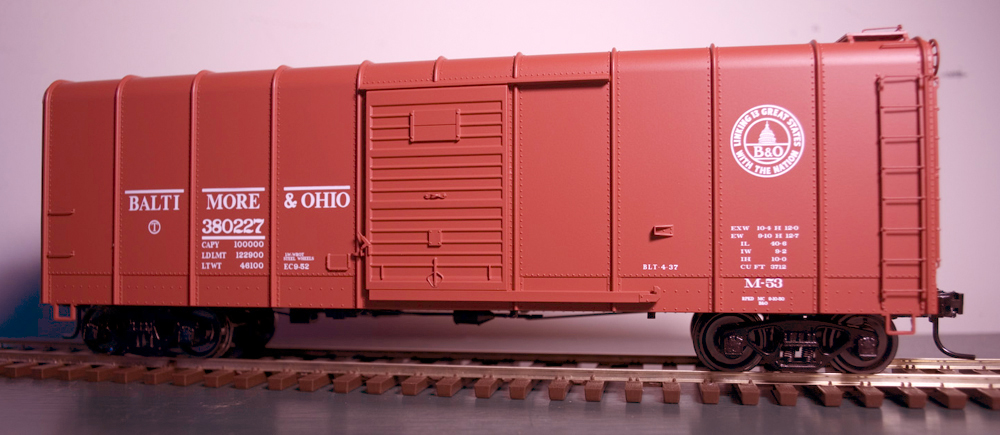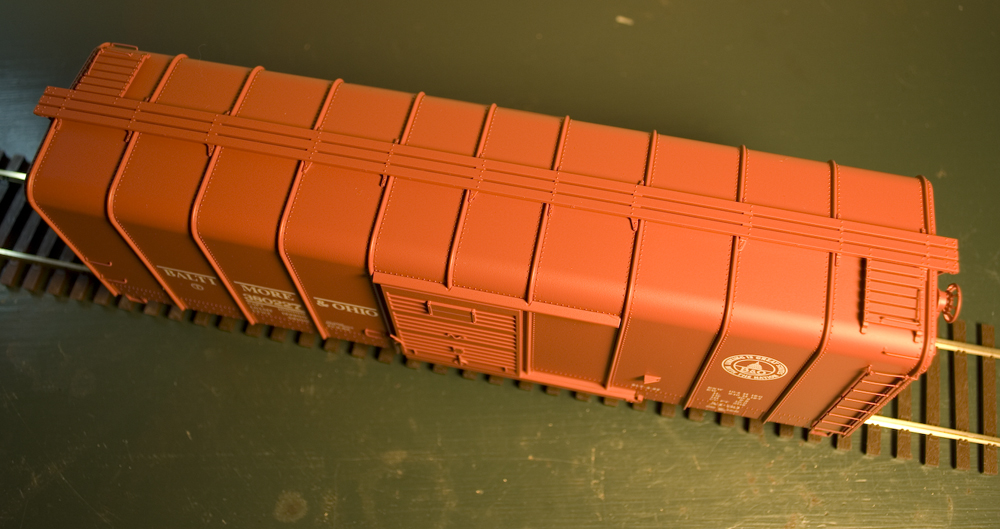
Questions about the Color of the M-53’s

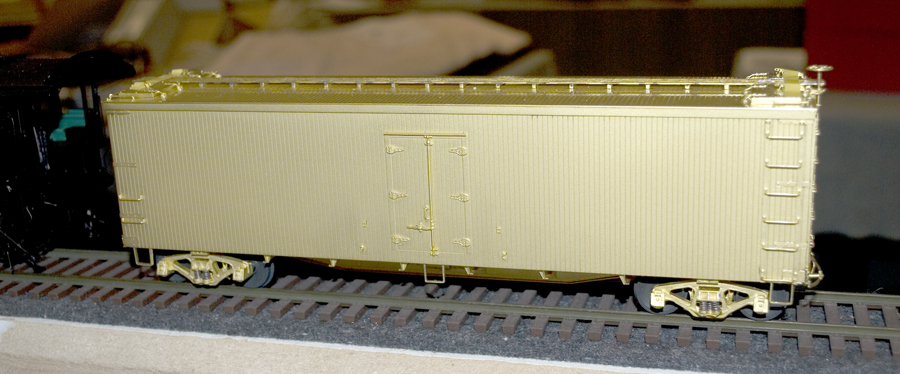
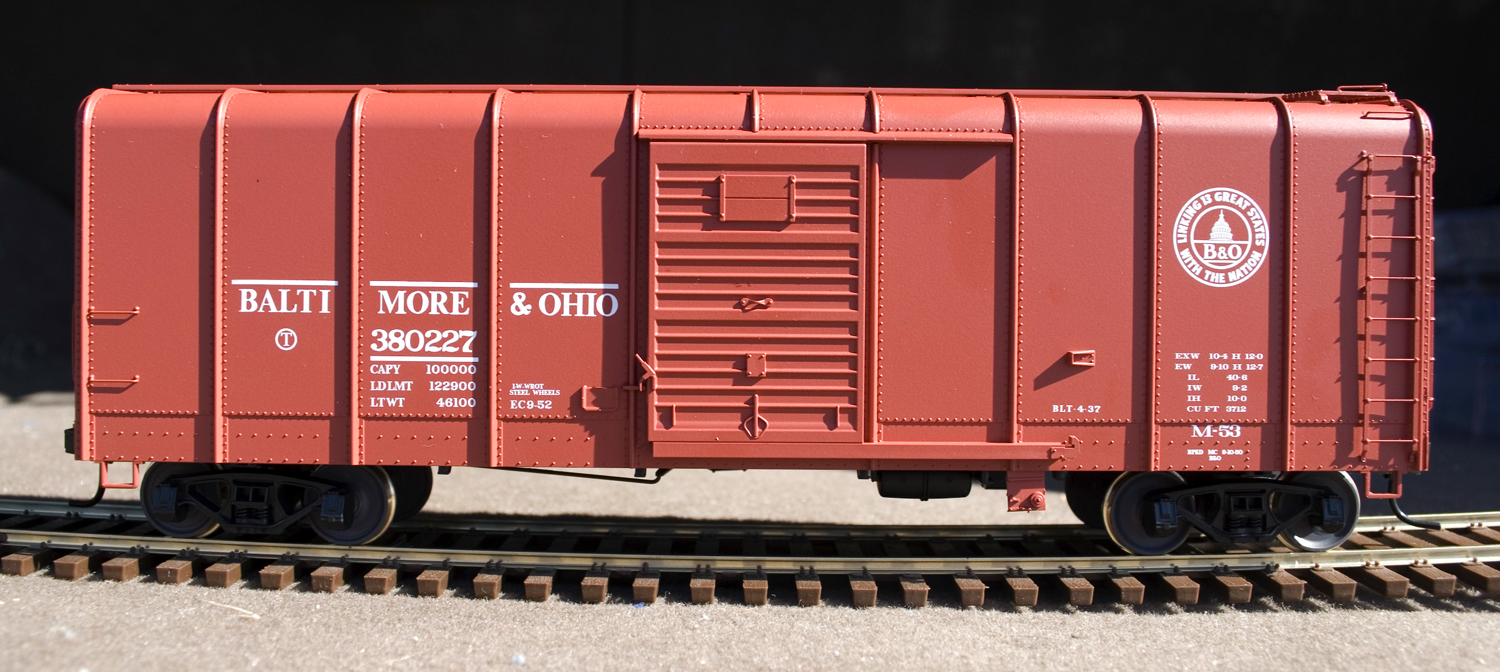
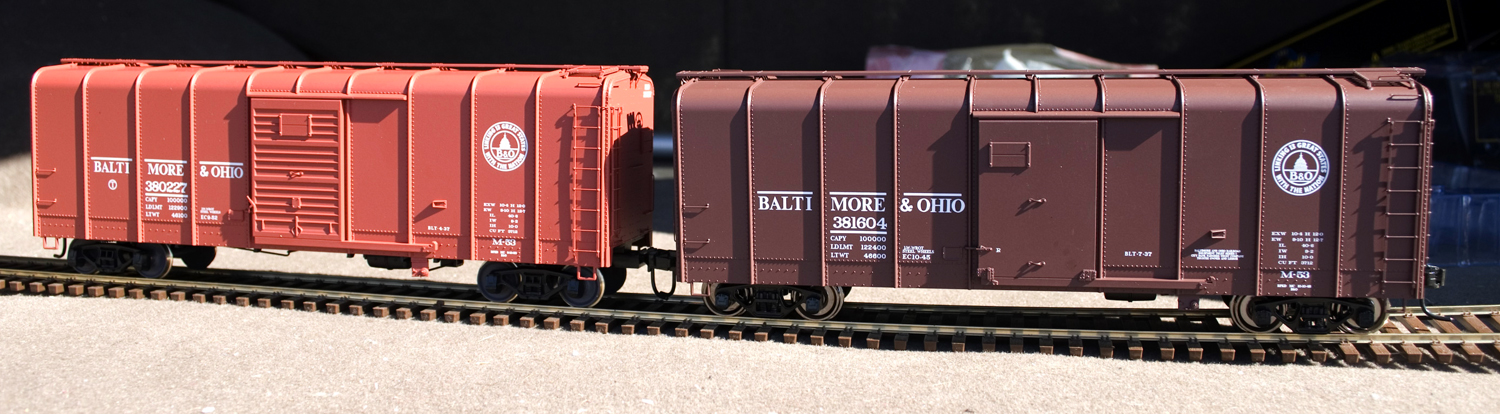
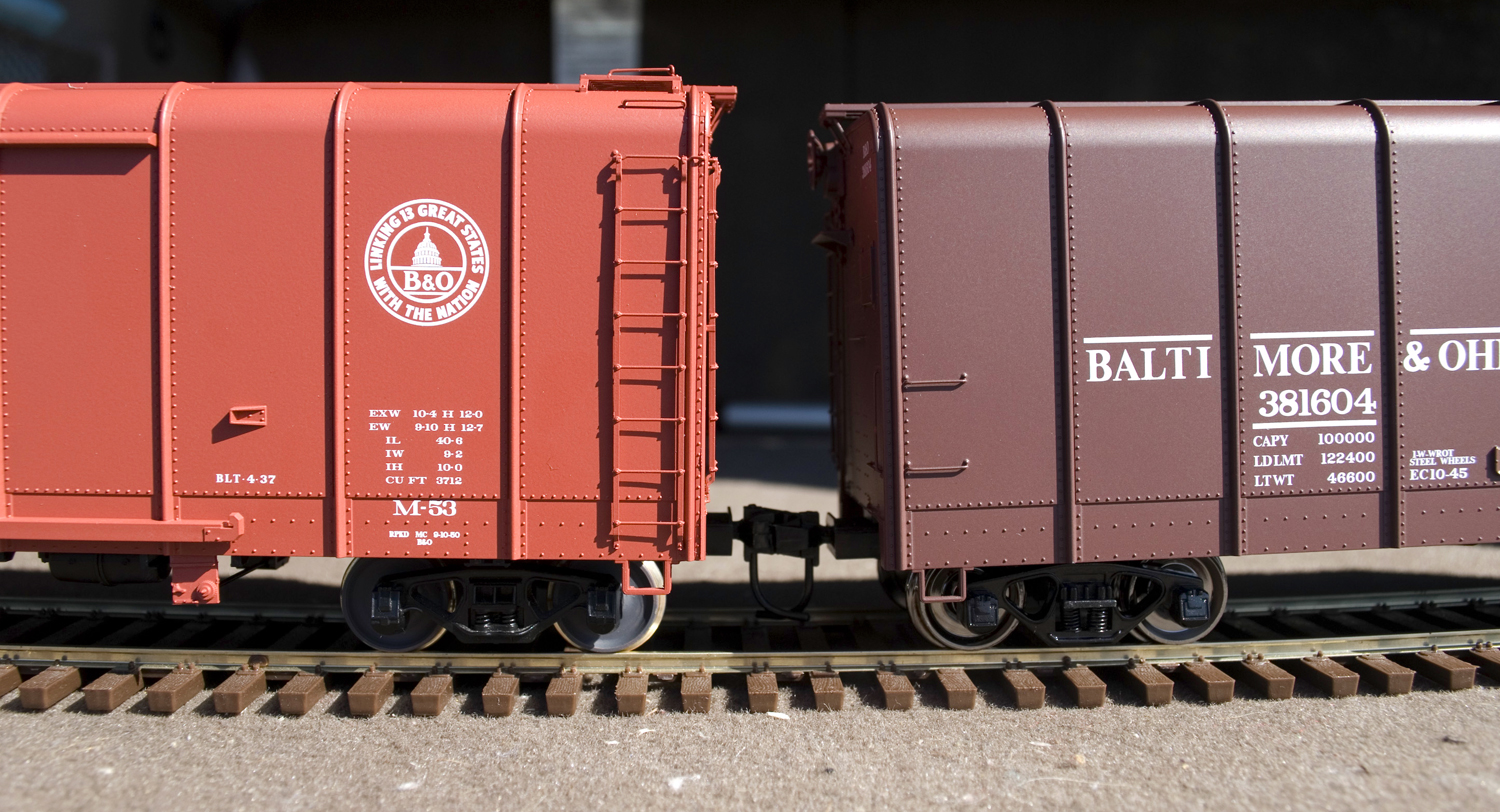
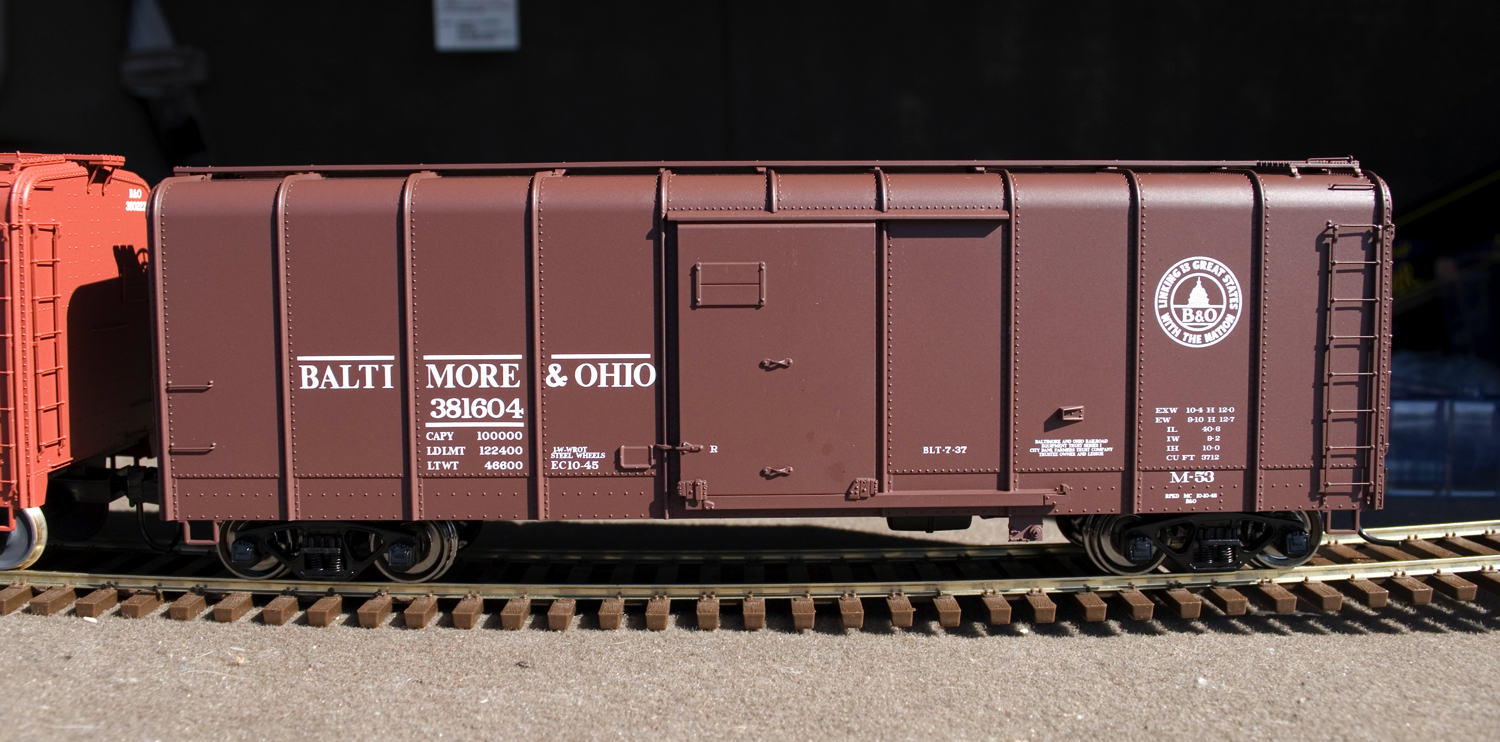
Ok after last night’s post on the Weaver cars there was some whining about the color of the cars and the color in the photographs. But then again some folks need to whine about something, otherwise they might have to do some modeling.

Today, was a beautiful day so I decided to break out the big studio strobe in the sky. Trouble was, even though it was 50 degrees today, all of the tables in the local parks either still had snow on them or all around them. I guess nobody uses picnic tables in the snow…… So these are shot in the back of my Jeep.

Let the whining begin!

Weaver – B&O M-53 Wagon-top Boxcar

Imported By: Weaver Models
MSRP February 2011: $75.45

Back at the 2009 National in Towsand, Md. Weaver Models announced they were going to produce the B&O M-53 wagon-top boxcar. That Fall I did something I don’t normally do, I pre-ordered the cars. They have finally arrived and they were worth the wait.

I stopped by my dealer to pick up my cars and he had one he had ordered out on the counter. At first glance, I was blown away, Weaver hit a home-run with this one.

Prototype History
For a complete prototype history of all the B&O Wagon-top boxcars, I highly recommend reading Pat Wider’s article in RP CYC 9. The article talks about the early experimental cars, the rebuilds of the M-15 class of double sheathed boxcars and the built new M53 class of boxcars.

In Ted Culotta’s “Essential Freight cars: 23″ he talks about both the rebuilt and built new wagon-top cars. He points out many detail differences in all the cars.

Prototype Population
380000-381999  2000 M-53 cars built 1937-1938
385000-385999  1000 M-53a cars built 1941
380000-381999  1942 M-53 cars in the January 1952 ORER
385000-385999    986 M-53a cars in the January 1952 ORER

The Models
The overall appearance of the cars is very nice. Paint was smooth and the lettering clean and crisp.

The car weighted in at 15 oz. (the NMRA recommended weight) with the metal side framed trucks from Weaver installed. Yes the Weaver Metal trucks did weigh 3 oz. They will be changed out for a proto48 set of trucks.

The car measures up to the Kadee coupler height gauge at the correct height. I will change out the Weaver couplers. The ladder rungs measure out to be 0.018 inches round, very close to scale 3/4 of an inch.

Some have complained about the door not opening, I think that it is great! They should not be open while a car is moving anyway.

There are some things I plan to upgrade, such as the door tracks and a couple of missing gussets around the striker plate. When I do those upgrades I’ll post about them.

I’ve owned a couple of brass versions of this car in the past. It has been imported by different manufacturers over the years, International, Hallmark, PSC and Overland all have done a form of this car. I’m glad I sold off my brass cars a few years ago. This car is as good or better than most of them.

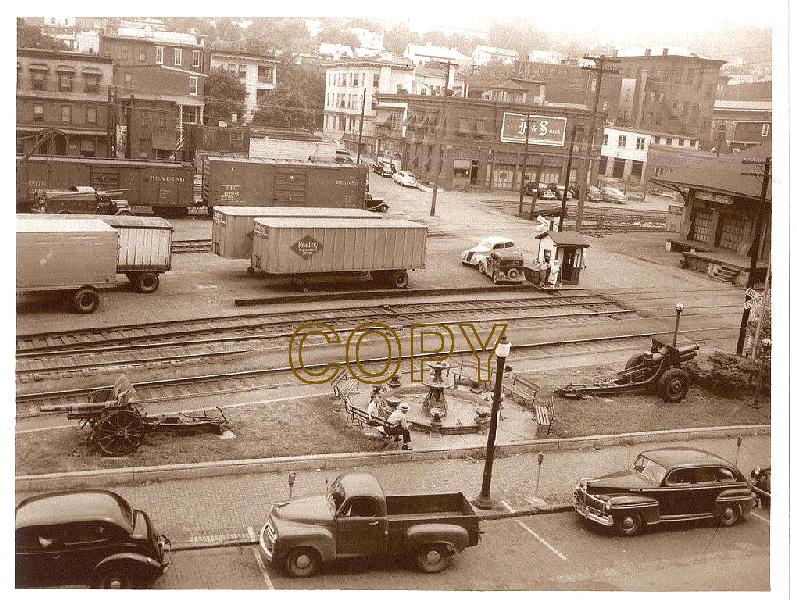
Weaver has set the bench mark much higher with this car than anything Atlas has brought out in O scale. I think every O scale railroad needs at least one of these cars on the layout. When you look at yard photos of the early and mid fifties, its hard to find a photograph without one of these cars somewhere in the shot.

References

Train Order

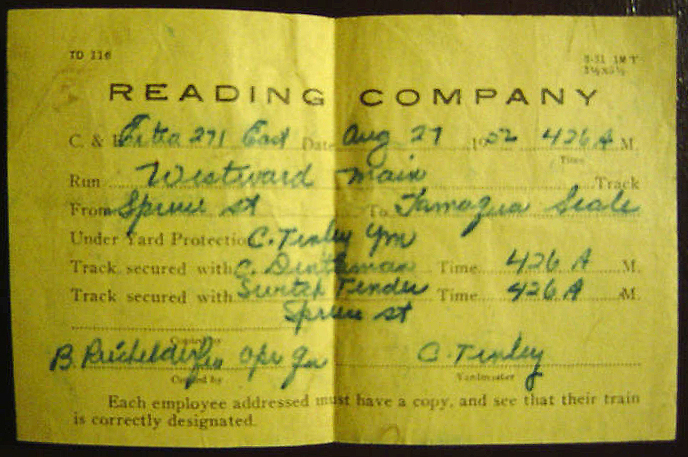
You never know what you might find on the web. Today I found a train order for Extra 271 East, for August 27, 1952, to run on the Westward Main from Spruce Street to The Tamaqua Scale at 4:26 am.

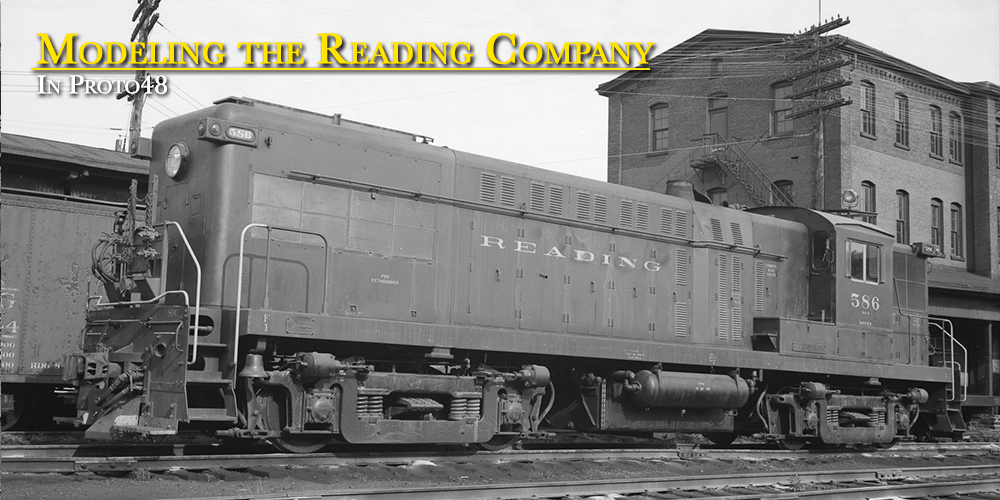
Here is a piece of paper handed up to a crew of a Reading F7 58 years ago and it put a smile on my face today thinking about movement.

Wheel Standards

I’ve been having a conversation with Matt Forsyth for the last month or so about wheel standards. We both were involved with Proto48 when we first started in O scale, so the NMRA standard of 1.172 for wheel width is not something either of us like.

One of my early lesson on using my lathe was to turn down the width of some Gem PRR B6sa drivers. The drivers started out at 0.175 close to the NMRA specification, we turned them down to 0.145 which greatly improved their appearance.

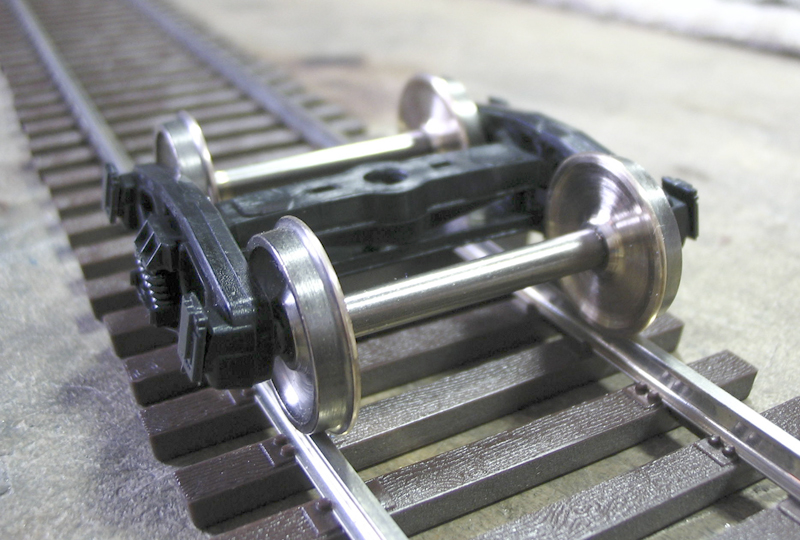
Matt has chosen to set his standards at a wheel width of 0.135″ which really makes for a fine looking wheel. He keeps sending photos like this one of an Intermountain truck with the .135 wheels under them. I had to give it a try.

Matt was working with the Intermountain Replacement wheelset that is quickly becoming the standard wheelset for a lot of modelers. First off that wheelset is way too wide at 0.162″ so it’s a natural to be thinned. Matt has been taking off the material from the backside of the wheelset. So I set up the lathe and started. The wheelsets turn very easily and were thinned to their new widths. I experimented with 0.145″, 0.140 and 0.135 taking all the material off the back of the wheel just as Matt had instructed.

They looked great! I set them up in a spare Intermountain truck and had a good look at them. Again, I say they look great! A big improvement over the stock Intermountain wheelset.

So I began to test the trucks with the new wheelsets on some of the turnouts I’ve built on the Fasttracks jigs. They rolled right through with no trouble. But as I looked closer I noticed that there was a lot of room between the guardrails and the running rails on the wheels. On the 0.135′ wheels if the one wheel was against the guardrail then the opposite wheel could hit the opposite side of the frog point. I should point out this didn’t happen on my test but it could have if the car was forcing the truck in that direction.

The first thought was simple enough tighten up the flange-way standards at the same time as the wheel standards. But My brother is also an O scaler and my layout will most likely be the only option from him to ever operate any of his O scale models. So do I really want to change the flange-way standards?

Emails were flying back and forth between Matt and myself about the flangeway issue and the back-to-back dimension. Matt went though on one email and pointed out a half dozen manufacturers who all had different wheel widths and back-to-back dimensions.

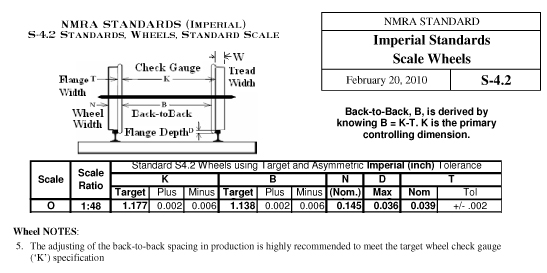
So I decided to check back with the NMRA and see exactly where the standard is set at. To my surprise the standard had been revised last February. See below

I thought Wheel Note 5 was very important, it states: “The adjusting of the back-to-back spacing is highly recommended to meet the target wheel check gauge (K) specification.” Here is the NMRA pointing out that there needs to be flexibility in the back-to-back dimension to meet the more important dimension of the inside of the flange to the back side of the opposite wheel dimension.

With this I’ve started a new page to record the different dimensions of different manufactures wheels. I was surprised how far off some of them where.

Turns out the new NMRA standard is where I wanted to move my standard to. I think the 0.145 wheel is a nice compromise in width and there are already commercial replacement wheelset for the width from North West Short Line. I had already started to go there with the purchase of some North West Short Line replacement wheels for the Weaver drives.

My next experiments with thinning the Intermountain wheels are starting from setting the back-to-back dimension first and than machining the front of the Intermountain wheel to get to the desired width. This will be a lot more work than taking the material off the back, but I think it will make a better operating wheelset in the long run.

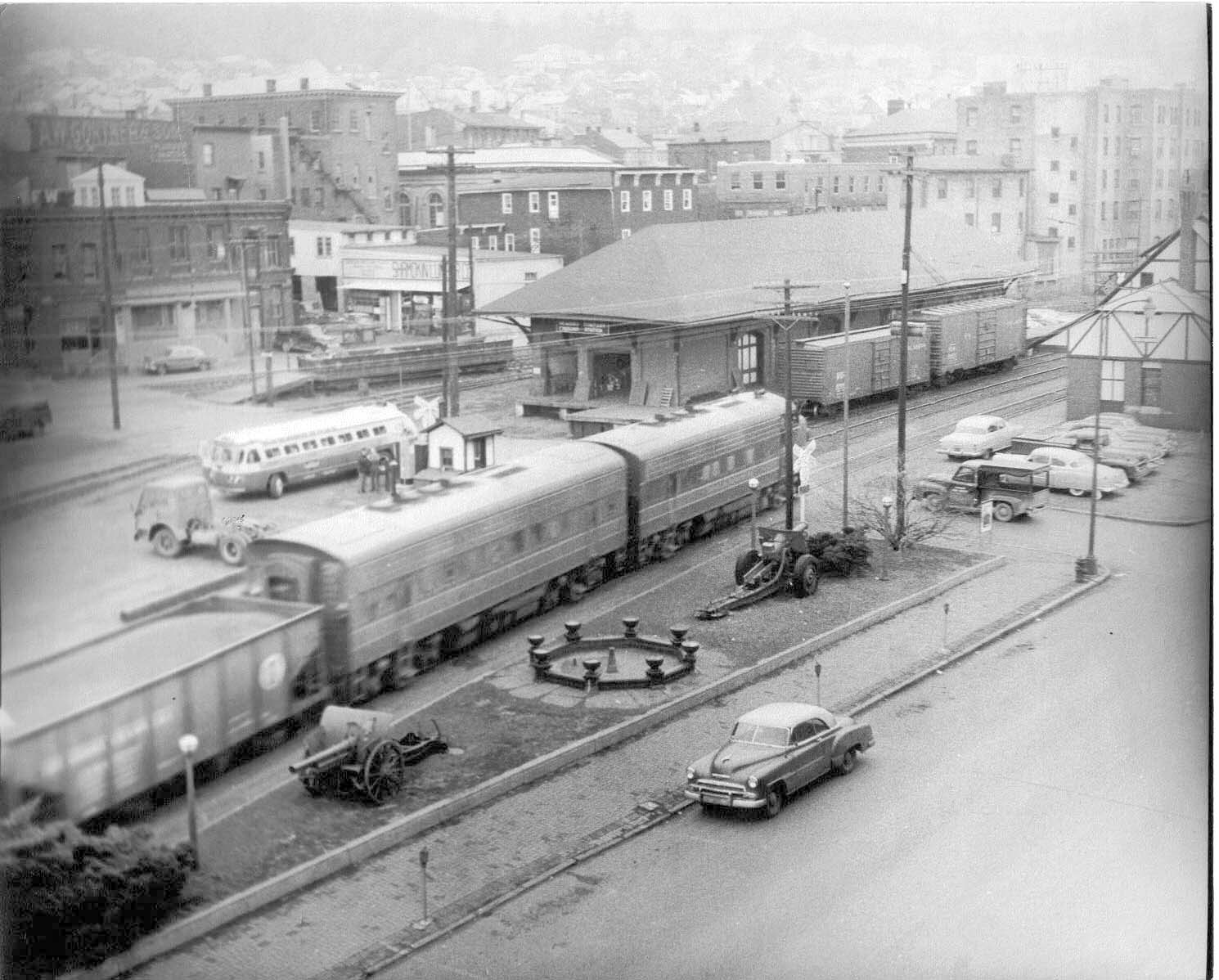
Shamokin Engine House, May 1972

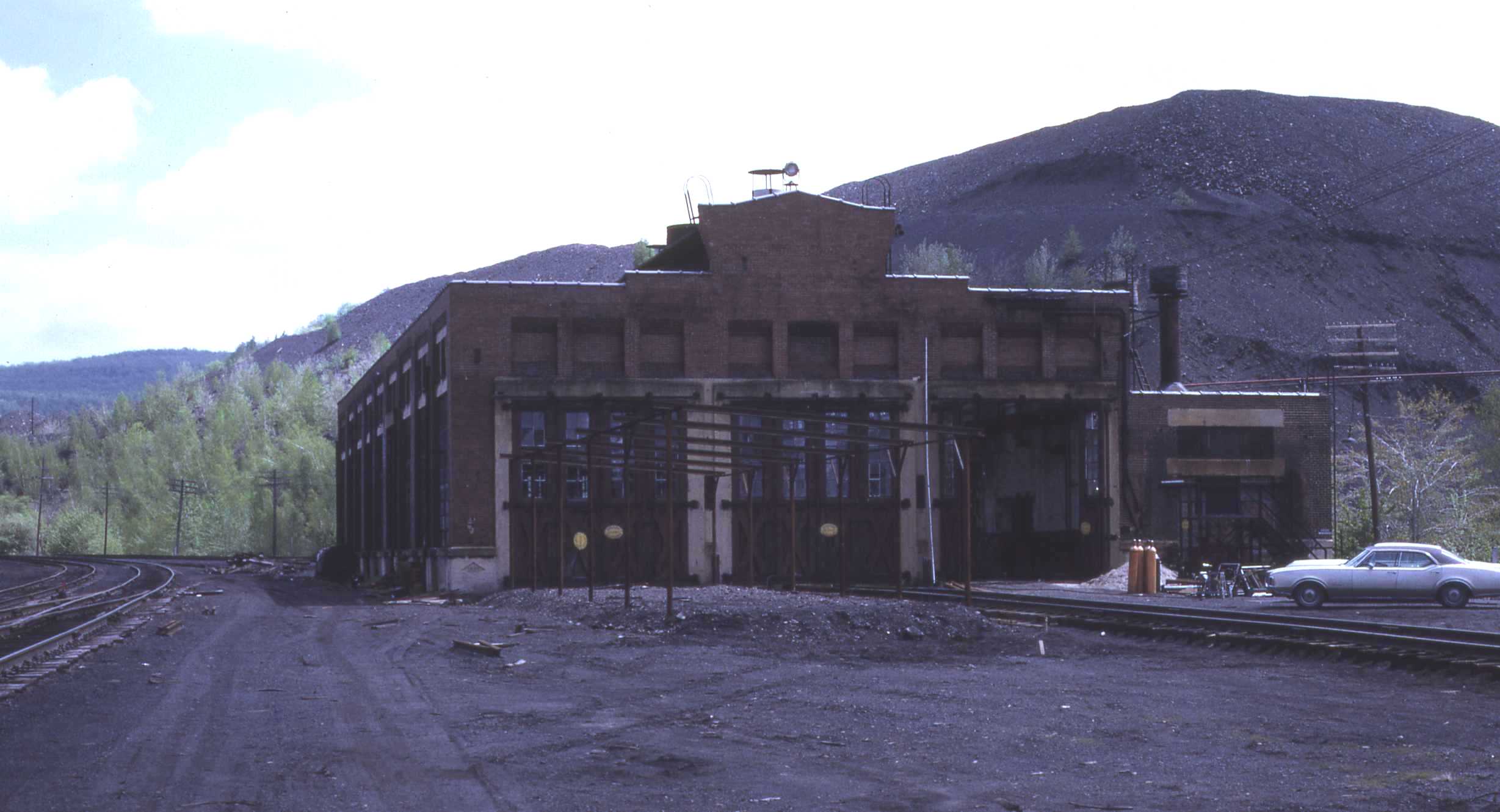
As I explore Shamokin as a possible modeling location, one of the key structures to build will be the engine house at the East end of the Yard.

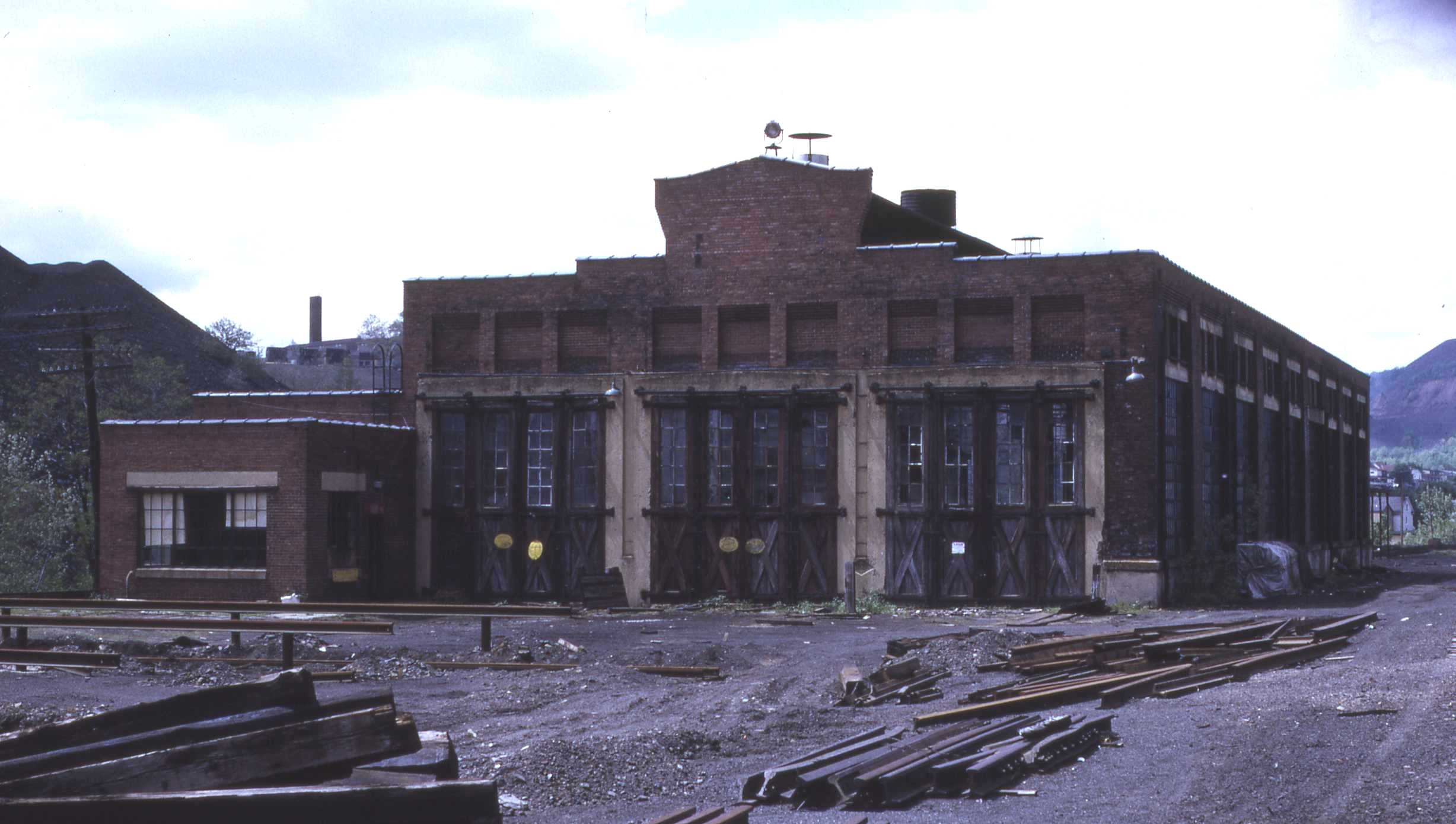
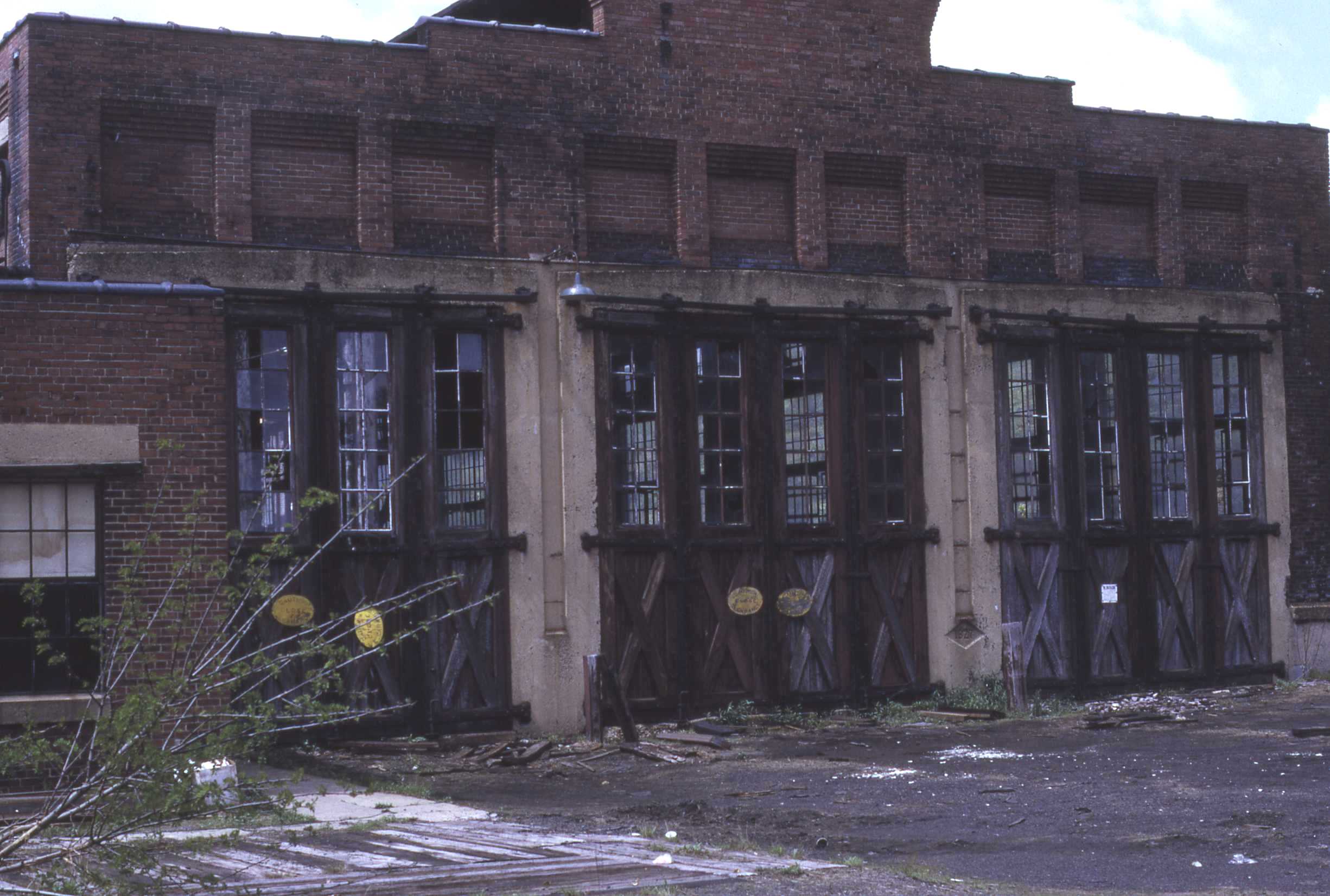
Back in May of 72 my brother Bobb was chasing an excursion in Shomokin. He sent me some scans of the engine house that he shot that day.

Here we see the North Side of the engine house with one track still going to the building.

Here in the view of the south side of the engine house with no tracks going in the building.

South Side Shamokking Engine House. Closer view of the engine house doors.

Shamokin Yard with Excursion train coming into town.

Modeling the Reading Open Hopper Car Fleet in 1952

The Summer of 1952, my modeling period, was a time of change for the Reading open hopper car fleet. The oldest cars of the fleet, class HTf, dated back to 1910 were being retired and the newest HTv’s were being built in 1952.

There were six open hopper car types split into twelve car classes. The majority of the fleet was comprised of 50 ton twin hoppers except for the two classes of 70 ton quad hoppers class HTl and HTn.

In March of 2012, I gave a presentation on “Modeling Reading Company Open Hopper Cars 1948-1956” I’ve posted the handout from the clinic. Dowload the handout

Milestones In Open hopper car painting:

  • 1923-1940 Underlined “Reading” Car Number Centered On Car
  • 1940 Roman lettering without red herald New with Class HTO
  • 1942-1954 Roman lettering with red herald
    2-17-42 revision on an HTj paint diagram “Added Stencil “America’s Largest Anthracite Carrier”
  • 1955-1958 “Speed” lettering with red herald

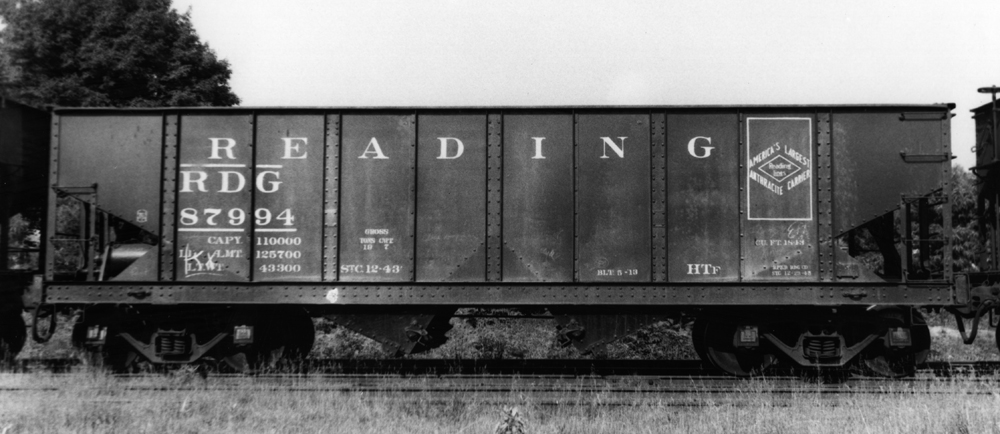
Reading HTf 87994

Reading HTf

Car Numbers Builder Built Qty Built 1/52 ORER Service Life Inside Length
86000-86999 American Car & Foundry 1913 1000 334 1910-1953 32′ 10″
87000-87999 Cambria Steel Co. 1913 1000
88000-88999 Standard Steel Car Co. 1911 1000
89000-89999 American Car & Foundry 1910 1000

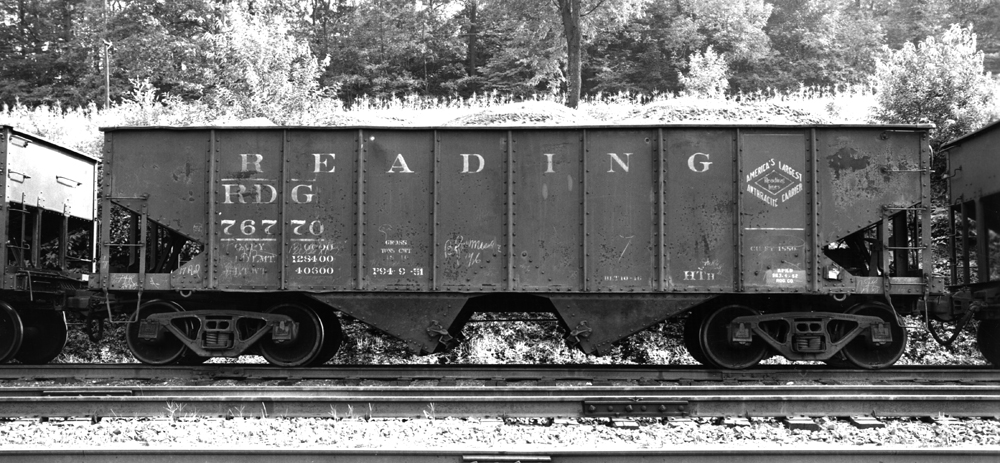
Reading HTh 76770

Reading HTh

Car Numbers Builder Built Qty Built 1/52 ORER Service Life Inside Length
74500-75499 Cambria Steel Co. 1917 1000 4214 1916-1960 32′ 10″
75500-75999 Standard Steel Car Co. 1917 500
76000-76499 Pressed Steel Car Co. 1917 500
76500-76999 Pressed Steel Car Co. 1916 500
77000-77499 Standard Steel Car Co. 1917 500
77500-77999 Standard Steel Car Co. 1916 500
78000-78999 Pressed Steel Car Co. 1916 1000

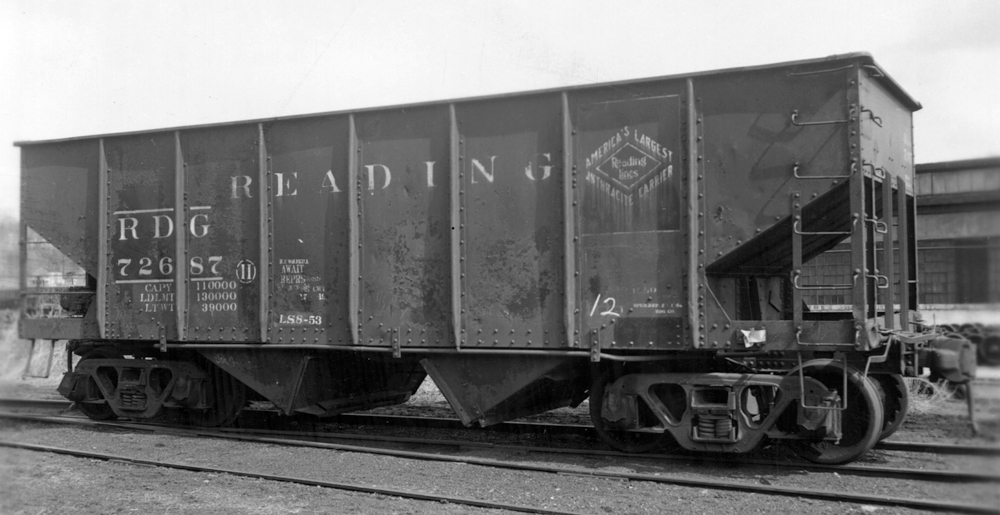
Reading HTj 72687 (USRA Twin Hopper)

Reading HTj

Car Numbers Builder Built Qty Built 1/52 ORER Service Life Inside Length
72500-73499 Standard Steel Car Co. 1919 500 1831 1919-1964 30′ 6″
73500-74499 Ralston Steel Car 1919 500

Reading HTl 70843

Reading HTl

Car Numbers Builder Built Qty Built 1/52 ORER Service Life Inside Length
70500-70999 Pressed Steel Car Co. 1922 500 3504* 1922-1964 39′
71000-71499 Standard Steel Car Co. 1922 500
71500-71999 Midvale Steel & Ordinance 1922 500
72000-72499 American Car & Foundry 1922 500

Reading HTn

Car Numbers Builder Built Qty Built 1/52 ORER Service Life Inside Length
68500-69499 Bethlehem Steel Corp. 1925 1000 3504* 1924-1964 39′
69500-69899 Pressed Steel Car Co. 1924 400
69900-70099 Standard Steel Car Co. 1924 200
70100-70299 Bethlehem Steel Corp. 1924 200
70300-70499 American Car & Foundry 1924 200

*ORER record is for combined totals of both classes HTl and HTn.

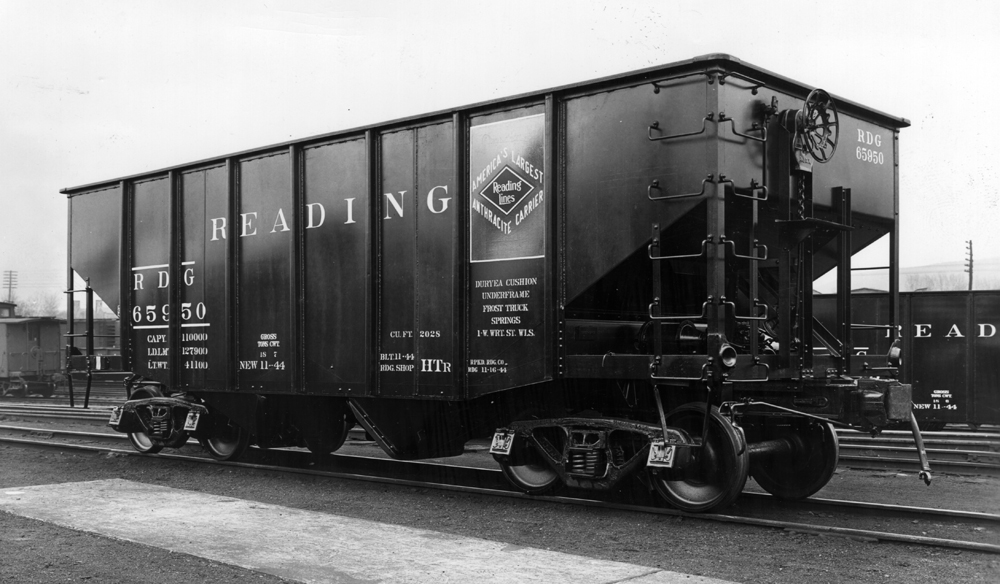
Reading HTr 65950

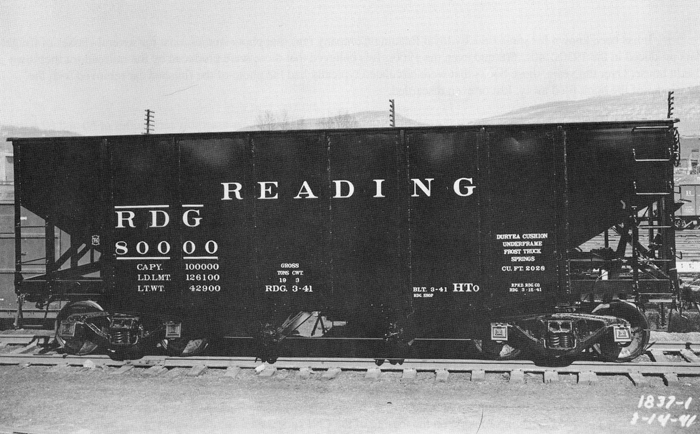
Reading HTo

Car Numbers Builder Built Qty Built 1/52 ORER Service Life Inside Length
80000-80999 Reading Shops 1941 1000 995 1941-1976 31′-0″

Reading HTp

Car Numbers Builder Built Qty Built 1/52 ORER Service Life Inside Length
67000-67299 Reading Shops 1942 300 339 1941-1976 31′-0″
67300-67338 Reading Shops 1943 39

Reading HTr

Car Numbers Builder Built Qty Built 1/52 ORER Service Life Inside Length
65000-65999 Reading Shops 1944 1000 996 1944-1976 31′-0″

Reading HTs

Car Numbers Builder Built Qty Built 1/52 ORER Service Life Inside Length
66000-66999 Reading Shops 1943 1000 995 1943-1976 31′-0″
67339-67999 Reading Shops 1944 661 659 1944-1976

Reading HTss

Car Numbers Builder Built Qty Built 1/52 ORER Service Life Inside Length
66000-67999 Reading Shops 1951 2 1951-1976 31′-0″

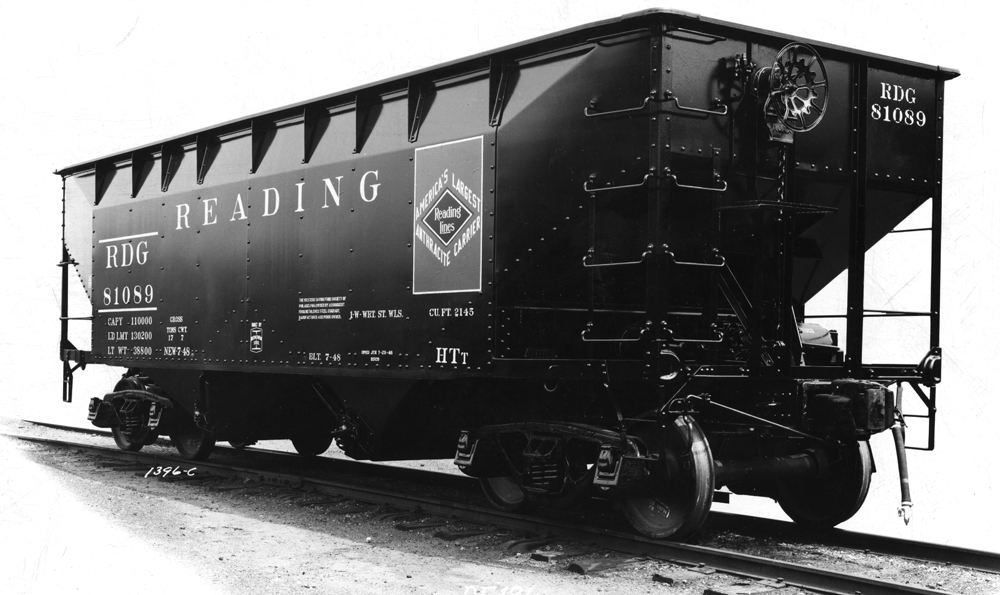
Reading HTt 81089

Reading HTt

Car Numbers Builder Built Qty Built 1/52 ORER Service Life Inside Length
81000-81999 Bethlehem Steel Corp. 1948 1000 1000 1948-1967 33′-0″

Reading HTu

Car Numbers Builder Built Qty Built 1/52 ORER Service Life Inside Length
82000-82749 Bethlehem Steel Corp. 1949 750 749 1949-1967 33′-0″

Reading HTv

Car Numbers Builder Built Qty Built 1/52 ORER Service Life Inside Length
83000-83999 Bethlehem Steel Corp. 1950 1000 3000 1950-1967 33′-0″
84000-84999 Bethlehem Steel Corp. 1951 1000
85000-85999 Bethlehem Steel Corp. 1952 1000

Note more HTv’s were built AFTER my modeling period of 1952.


Layout Visit: Southern New England Model Railroad Club, 2010 Show

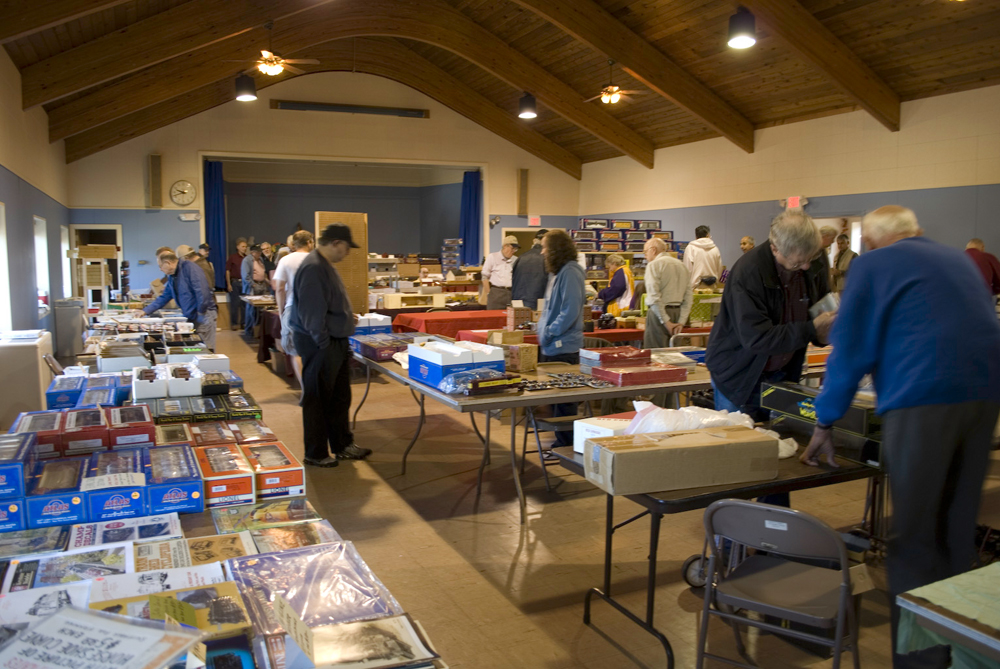
Well I decided to take a little ride today, to visit the Southern New England Model Railroad Club layout and attend their O scale Show located in Gardner Massachusetts. From my home in South Jersey Google Maps said it was a 5.5 hour drive so I wanted to get an early start. The wife and I got into the car around 4:30 am. We arrived at the show a little before 10:00 am.

The show was not as big as some of the other O scale shows I’ve attended, but it also wasn’t as small as some of the shows in the past. There was a different selection of dealers at the show which was a refreshing change of pace.

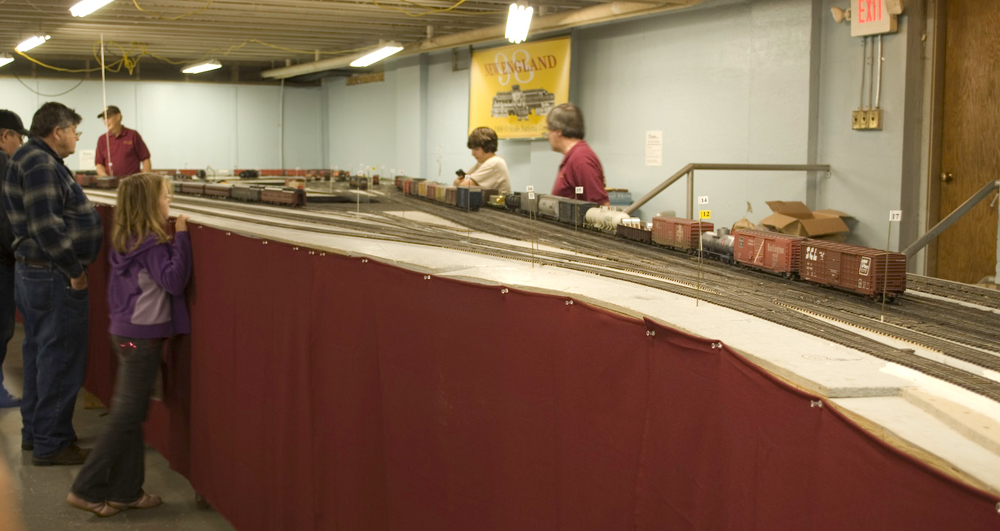
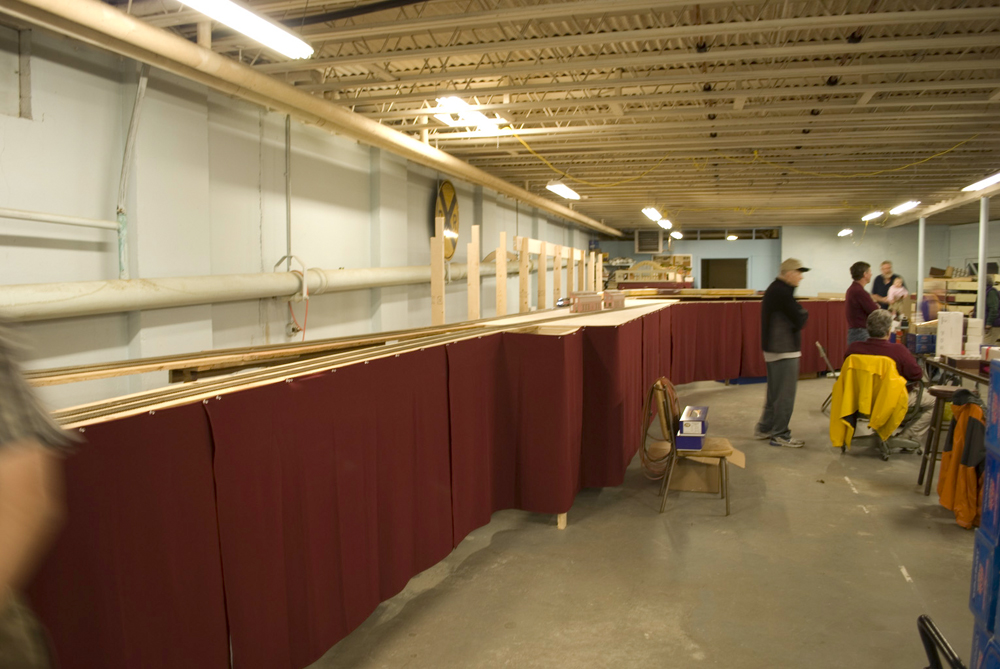
After walking around the show, I headed down to the basement of the auditorium to see the club layout. I didn’t see a track plan posted anywhere so I could not tell exactly how far along they are. But what they had built was working nicely.

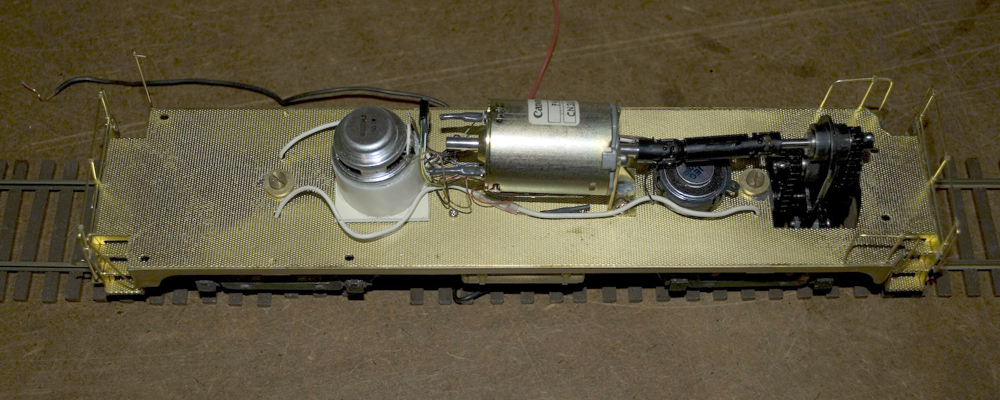
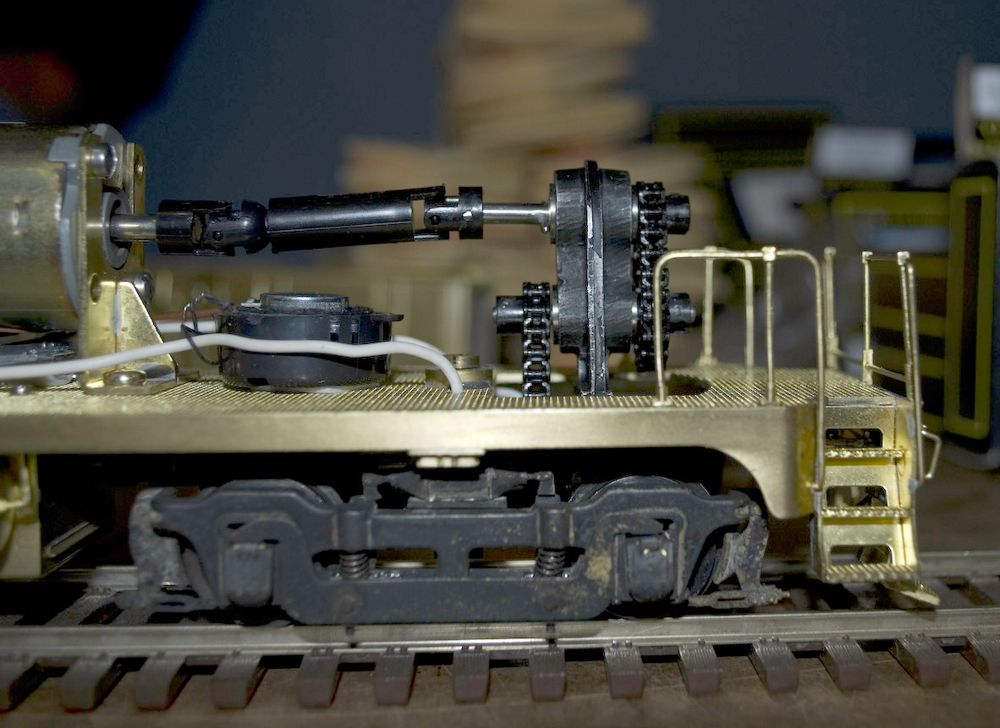
One of the highlights for me at the show was getting to see Bob Jones’ display. He had a Car Works Baldwin Vo-1000 inching back and forth on his test track. It had a High Sierra reduction gear tower installed along with a low current draw motor and an HO DCC sound system. The DCC did slow down some of the running speed but most of the work was being done by the High Sierra reduction gear-tower.

Unfortunately it is another example of by the time you see a product installed and working, they are no longer produced. I know after seeing it work, if they were still in production, they would be install in all my switchers with the Weaver drives.

After a pleasant hour or so in the show and the club, it was time to head back and enjoy the rest of the day with the wife.

PRR Class GLa Open Hopper

PRR 166658 GLa

PRR 166658 GLa – George Losse collection

The Pennsylvania Railroad class GLa is a 50 ton twin open hopper car. Construction began in 1904 and continued through 1991. A total of 30,256 were built for the PRR or acquired from various coal companies that built the same design.

The April 1956 OER lists 21,840 GLa’s on the roster. Compare this to Reading’s 13015 total hopper cars, or Western Maryland’s 8006 total hopper cars and you begin to see the size of the PRR fleet of GLa’s.

The GLa was originally built with K brakes and later converted to AB. Very few GLa were updated with power brake wheels most cars retained their verticle brake staff. One exception would be the second hand cars acquired from Berwind-White, which had modern power hand brake hardware.

It’s interesting to note that the overall dimensions of the GLa are close to the USRA Standard 50-Ton Twin Hopper which was designed almost 15 years later. Inside Length is one inch shorter at 30′ 5″. Inside width 9′ 5 1/2″ is a half an inch wider then the USRA Twin. The GLa is 8″ shorter to the top of side cord at 10′ 0″ but the side height is only 5″ shorter as the bottom of the car side sits three inches lower than the USRA Twin. The GLa has a capacity only 197 cu. ft. less that the USRA Twin. These similiarities will work in our favor when it comes time to build a fleet of these cars.

BCWX 4026 GLa

BCWX 4026 GLa – George Losse collection

WMX 1404 GLa

WMX 1404 GLa – George Losse collection

References:
Keystone Article
PRR Steel Open Hopper Cars – John Teichmoeller
January 1952 Official Railway Equipment Register
September 1953 Official Railway Equipment Register
April 1956 Official Railway Equipment Register