There were a couple of arrivals this month on the interchange track.
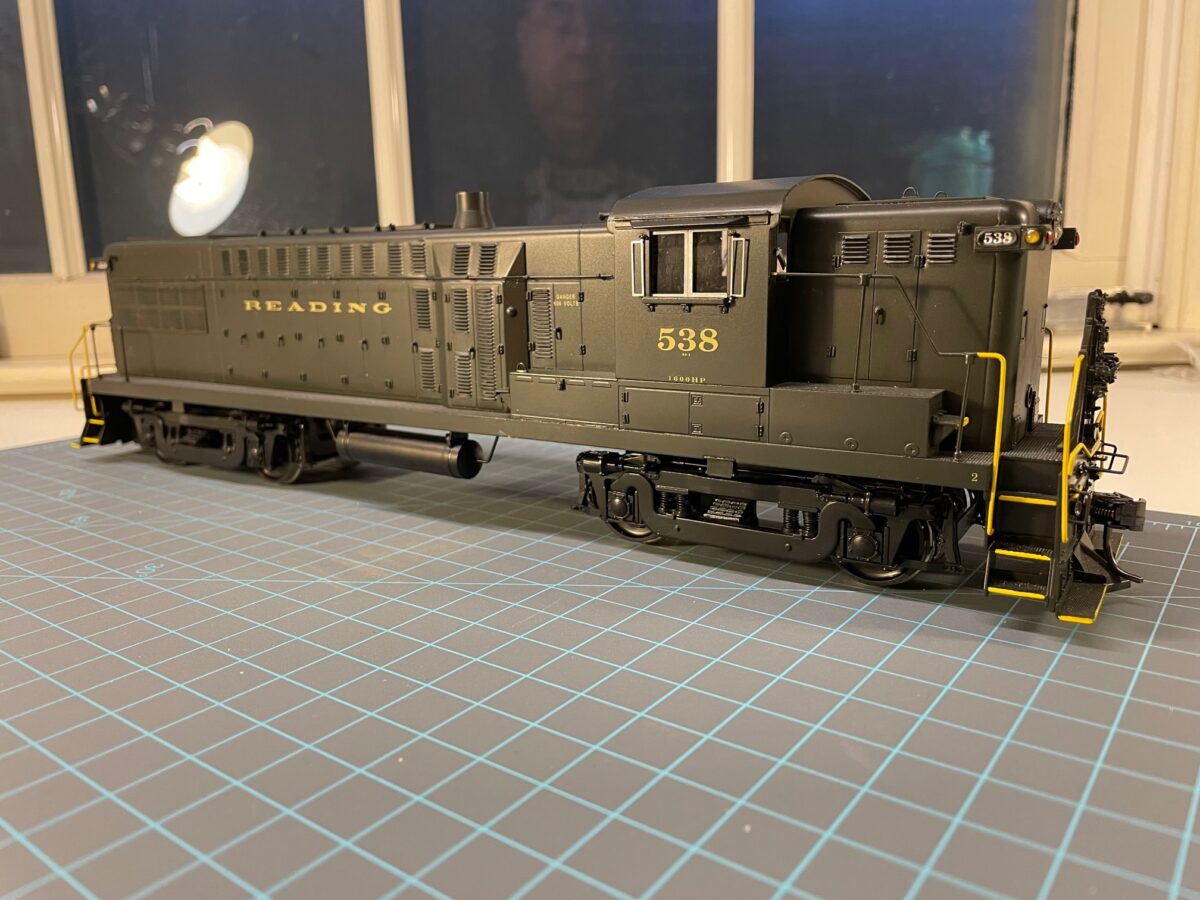
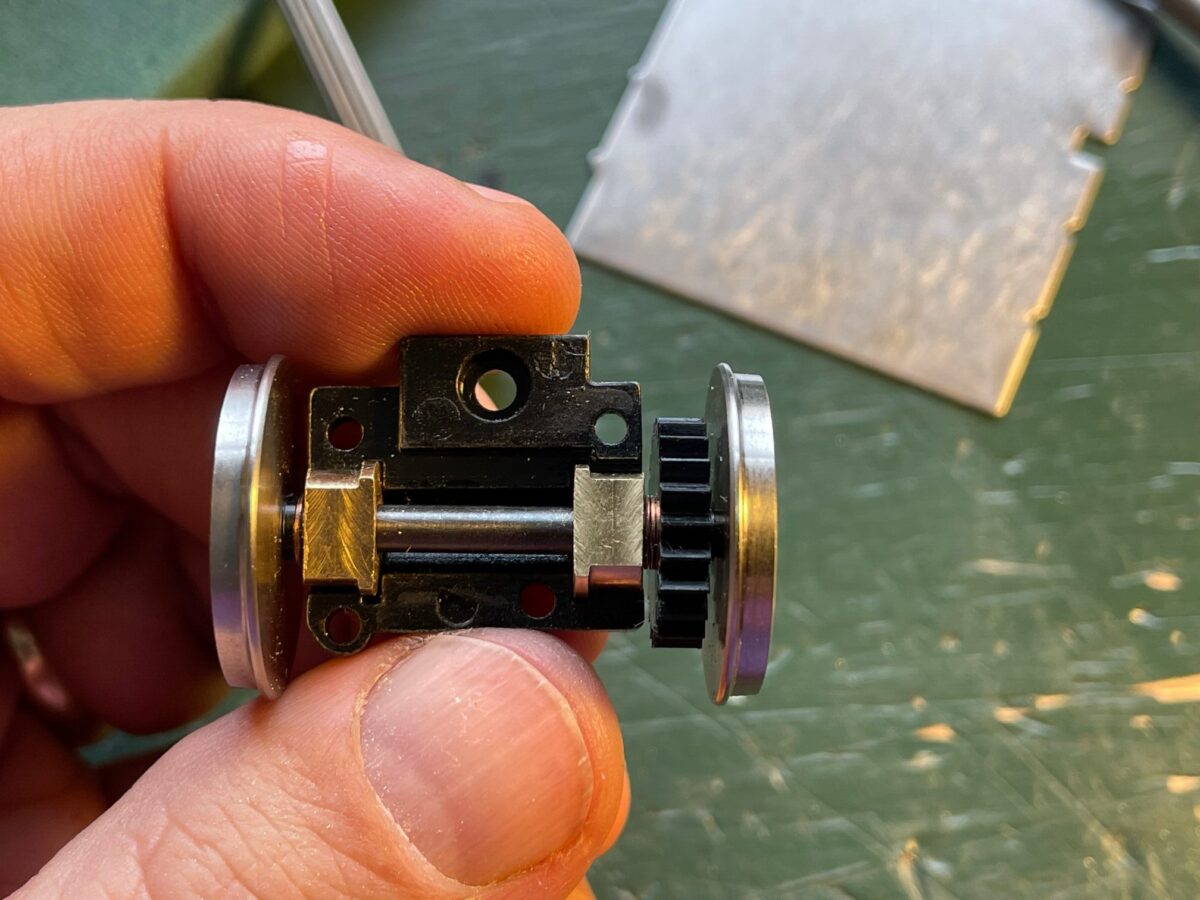
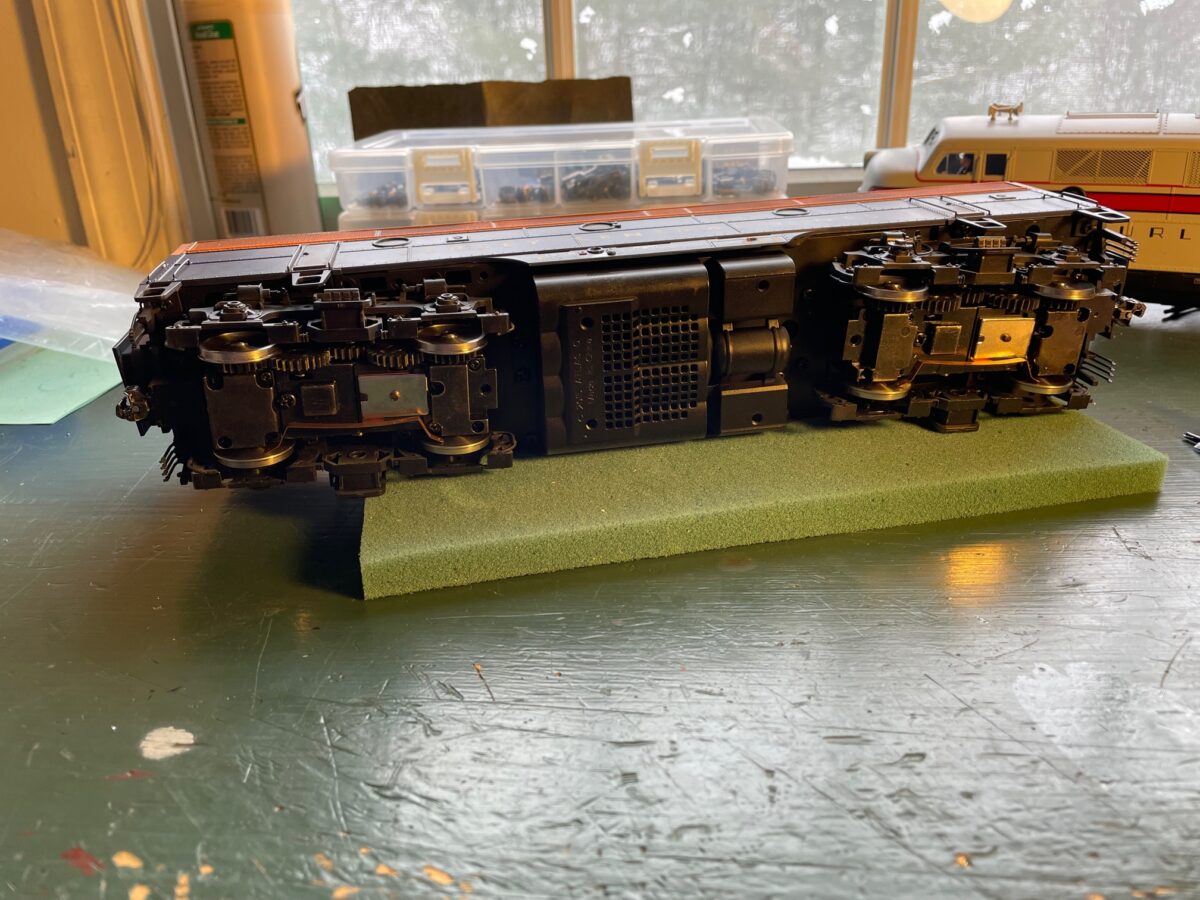
First was an Overland Baldwin AS-16 nicely painted with the internal drive. The drive on the models with fuel tanks are through the fuel tanks. When the tank is removed, the gear tower is exposed. Not so on this model. This one came in a trade worked out at dinner in Chicago this past April. It a fine looking model to start with but there are a couple of things to adjust to make it more accurate for 1952.
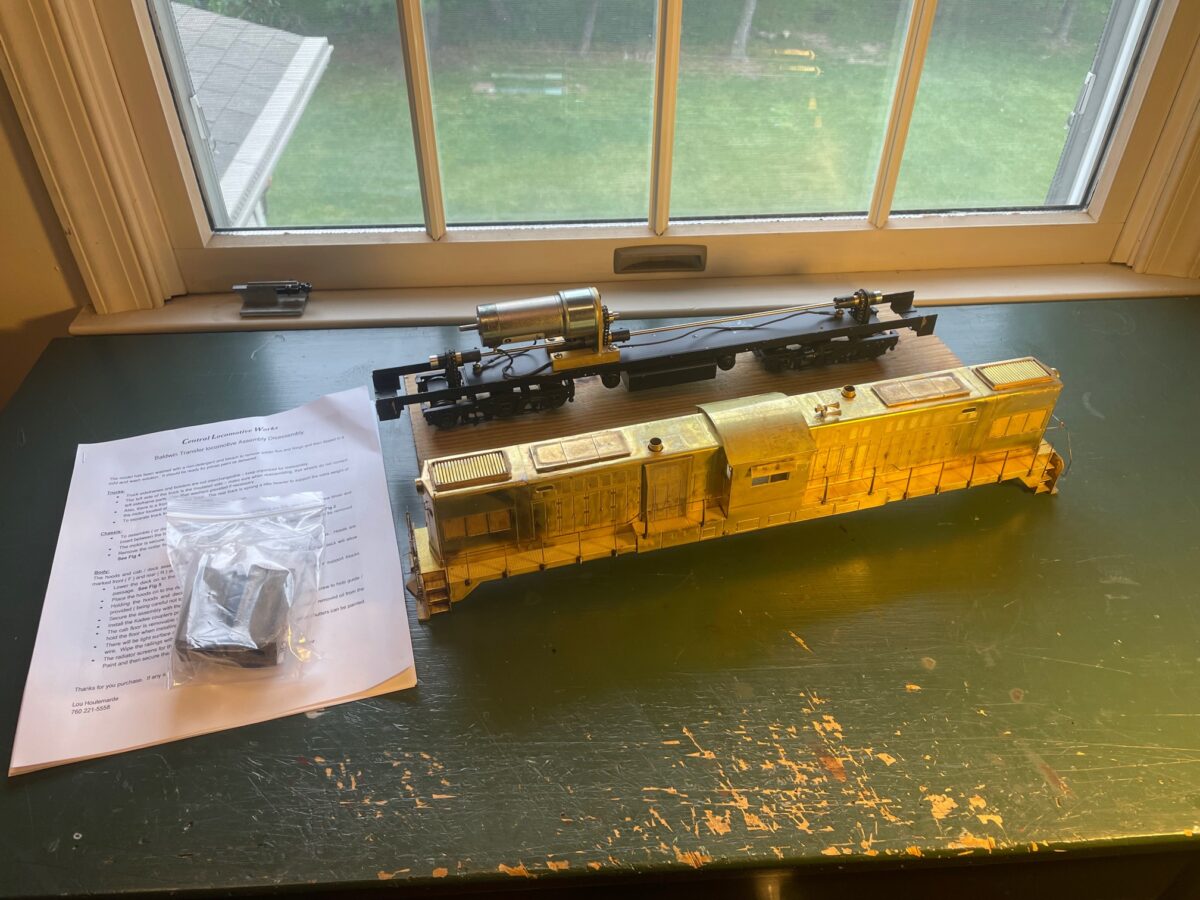
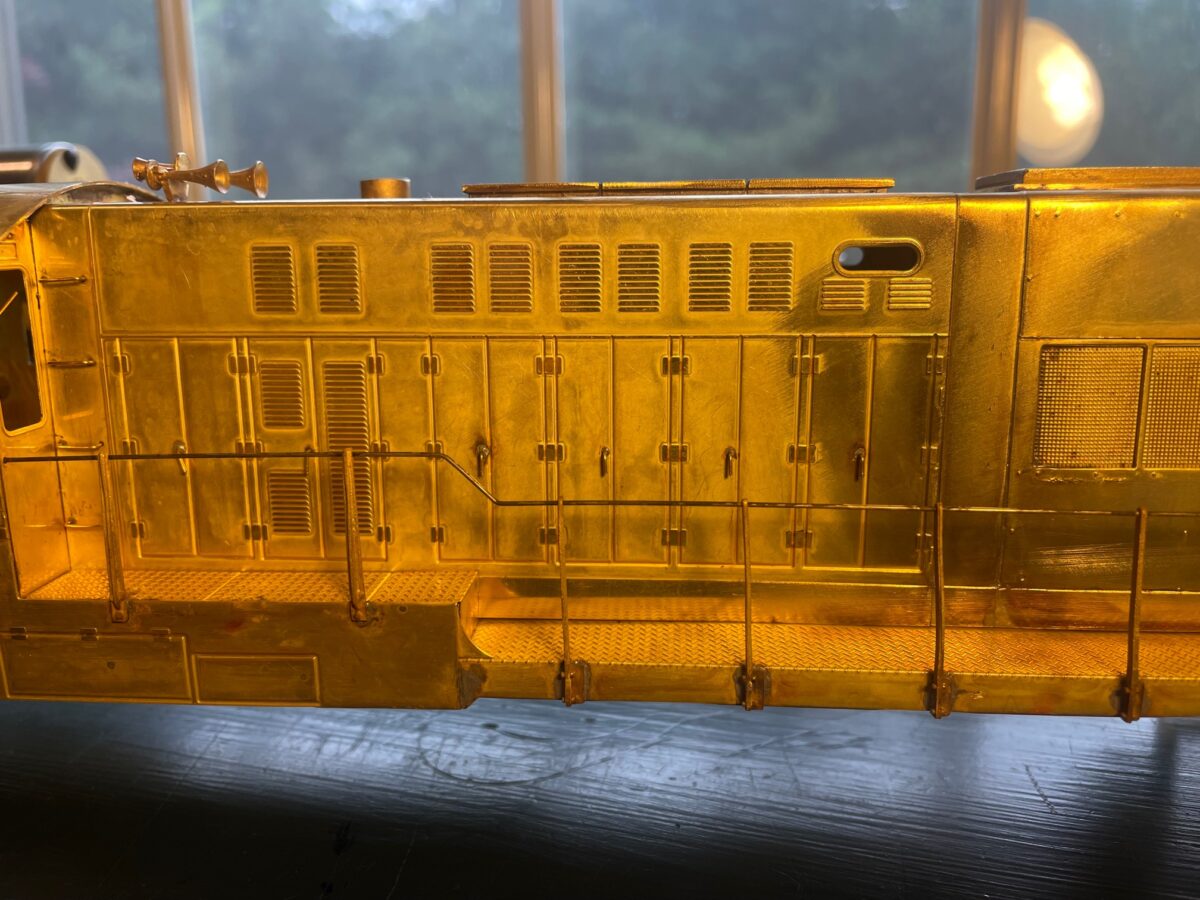
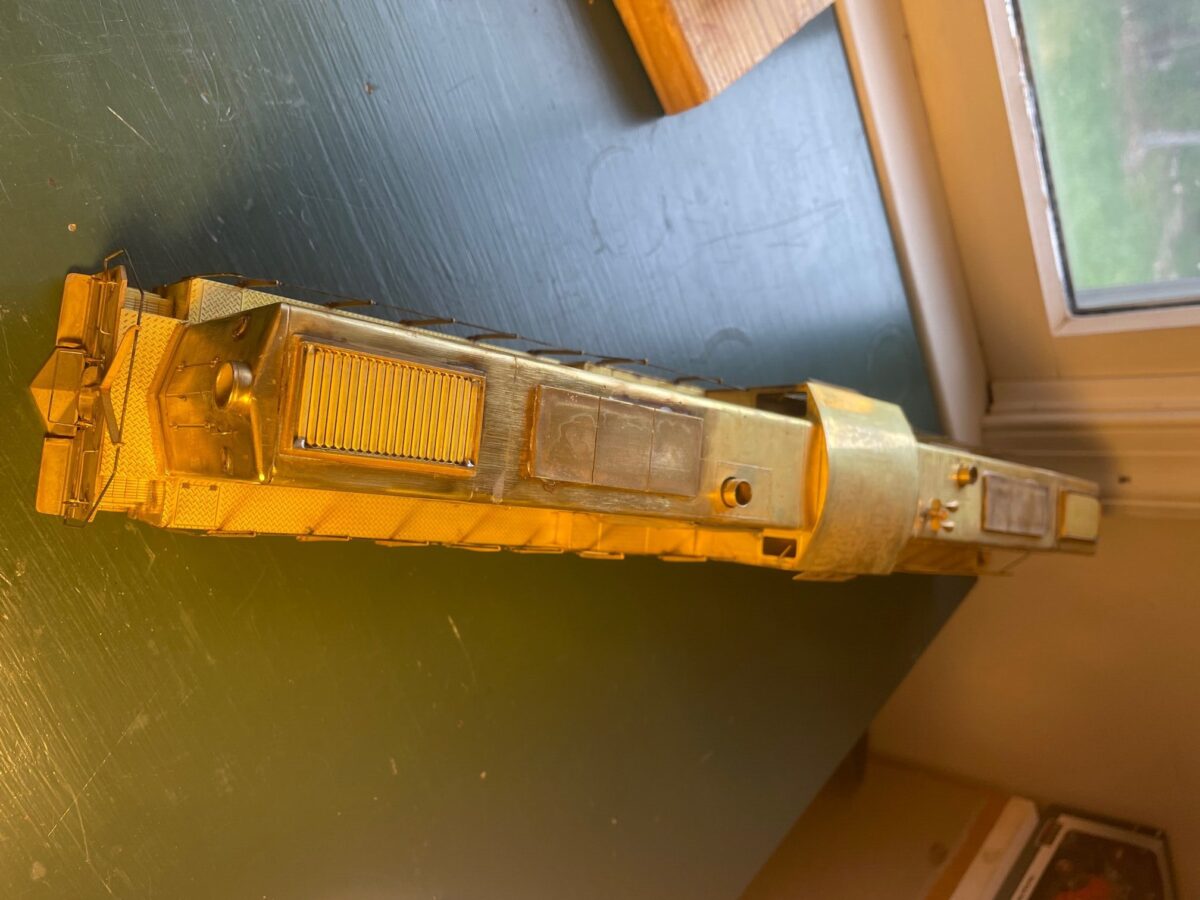
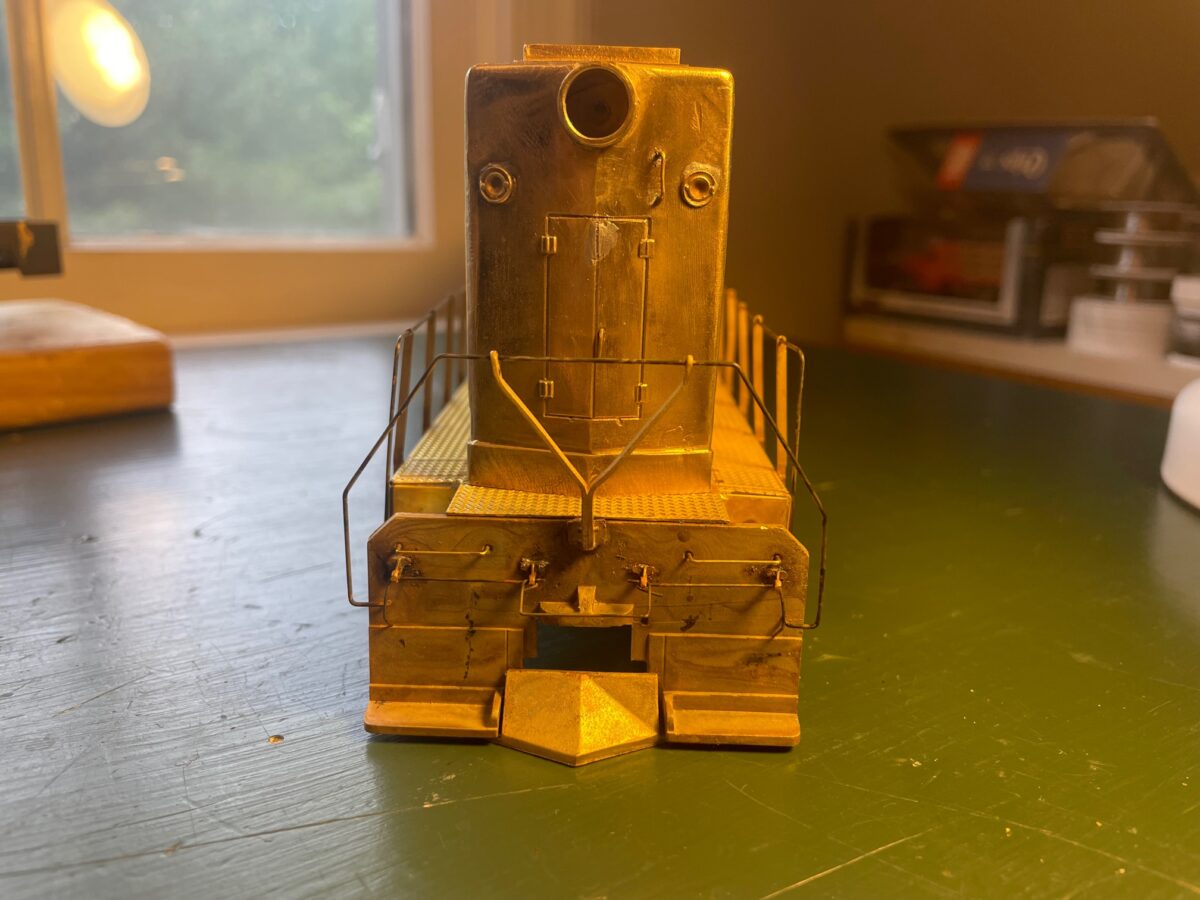
Next up is a long awaited Central Locomotive Works PRR RT-624. This project started as a run of the CLW Baldwin DT 6-6-200 kit being custom built by Lou Houlemard, the owner of CLW.
Some of the PRR modelers pointed out the differences between the original kit and the PRR version of the locomotive, the RT-624. So Lou had new art drawn up for the PRR version and had new etchings made for the PRR locomotive. Lou offered the locomotives with or without Dynamic Brake and with or without Trainphones.
The CLW PRR RT-624 as it came out of the box
The drive is built by Jay Criswell of Right-O-Way and was set up for Proto48. It runs nice an smooth and quiet just set up for DC running. I still need to paint, decorate the model and install the DCC into this, but I’m very pleased with this custom built locomotive.
Having grown-up in the New Jersey suburbs around Philadelphia, I saw a lot of Baldwin locomotives in the area and they are a favorite of mine.
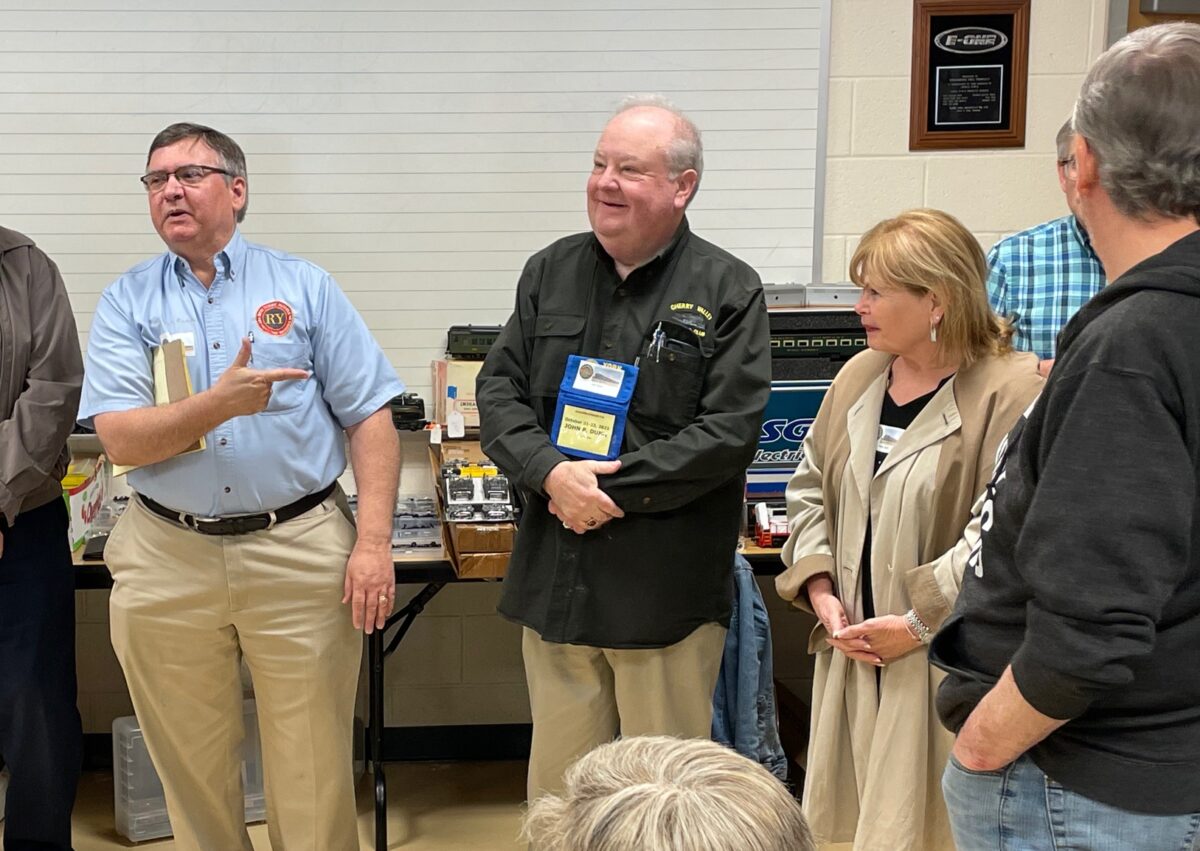
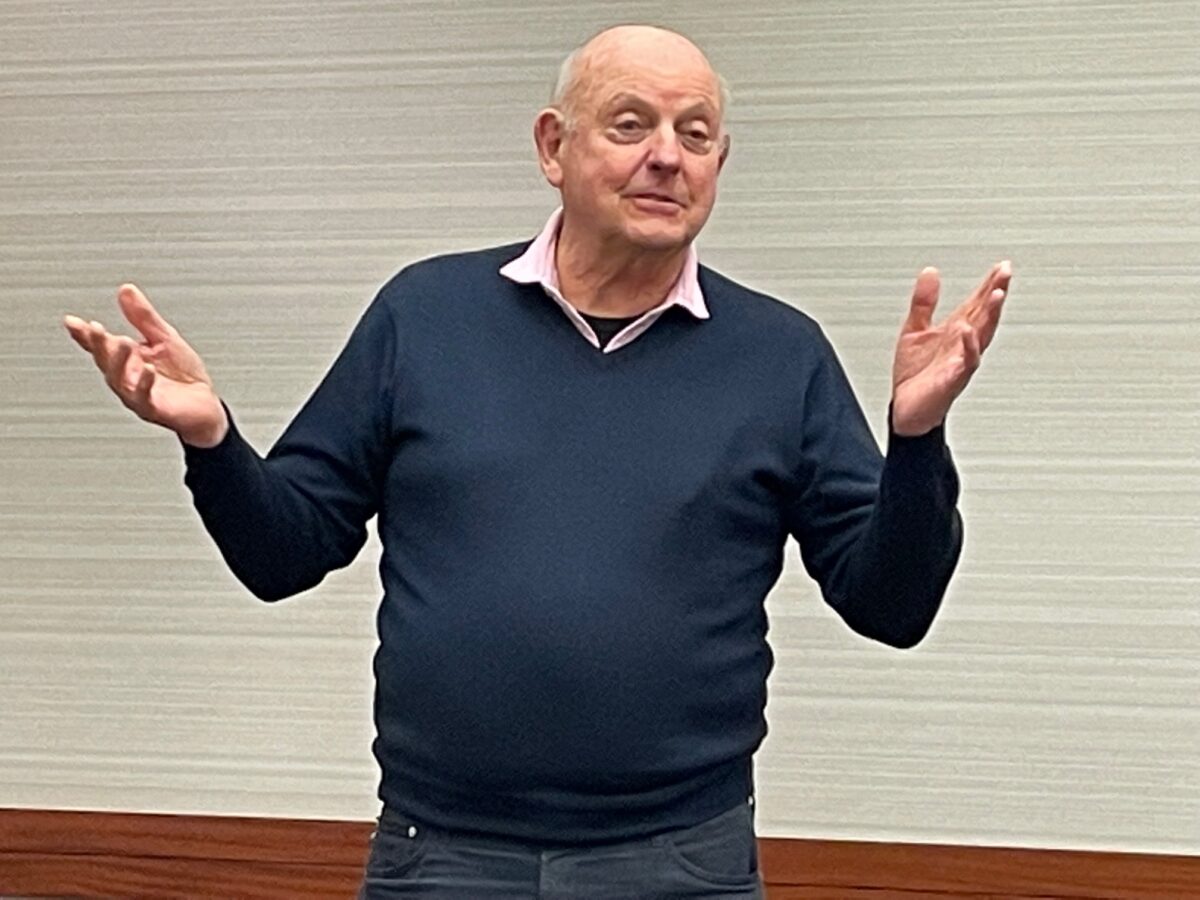
Rich Yoder speaking to the crowd before the show opened with John and Patty Dunn.
The Strasburg Show happened today. Before the show opened, John Dunn spoke to the crowd. John went through their normal announcements talking about the modules set up in the bay and the tree-building demonstration that was scheduled.
Then Rich spoke and announced that John was retiring from hosting the shows with Rich. Rich spoke about John’s contributions to the show over the years they have been putting them on. While Rich was speaking he also smartly recognized John’s wife Patty’s help and contributions to the shows. Their combined leadership has made the show a success.
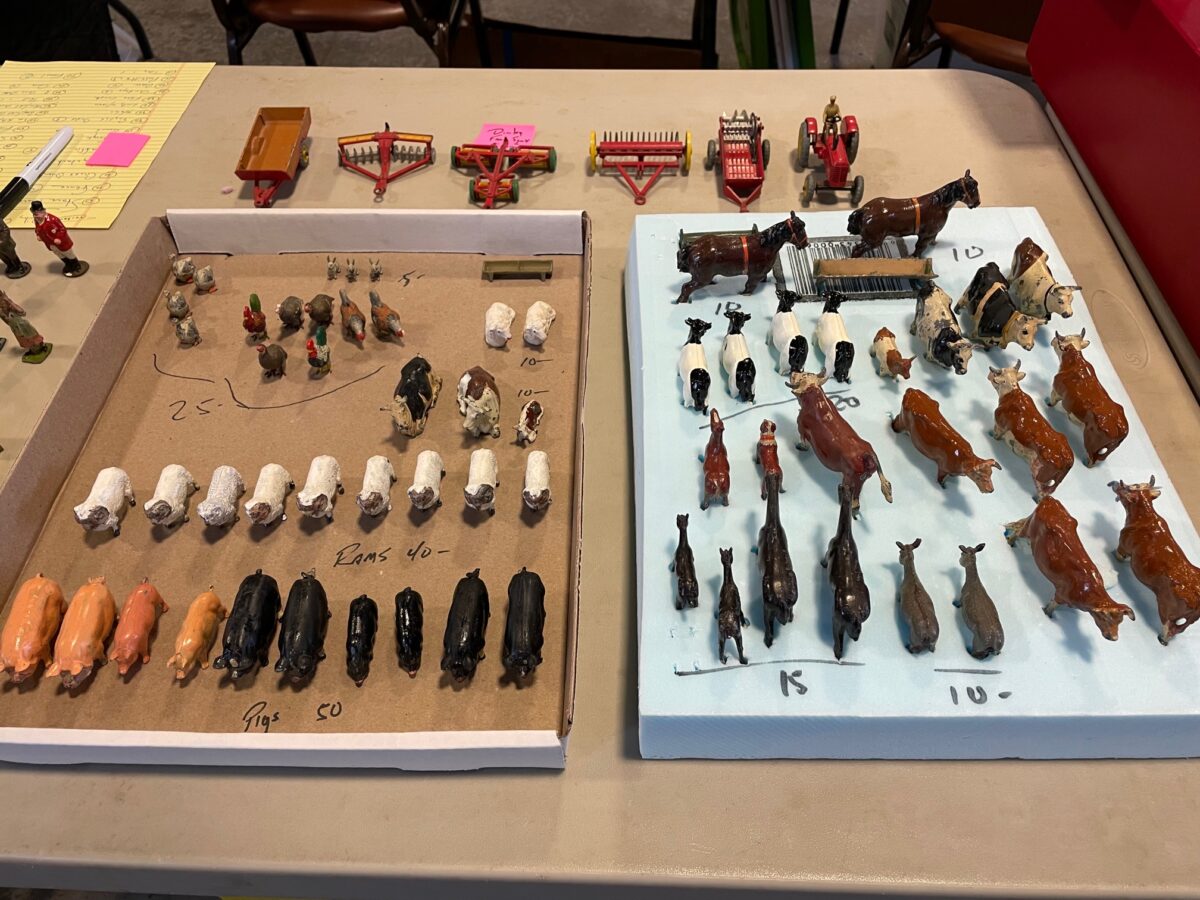
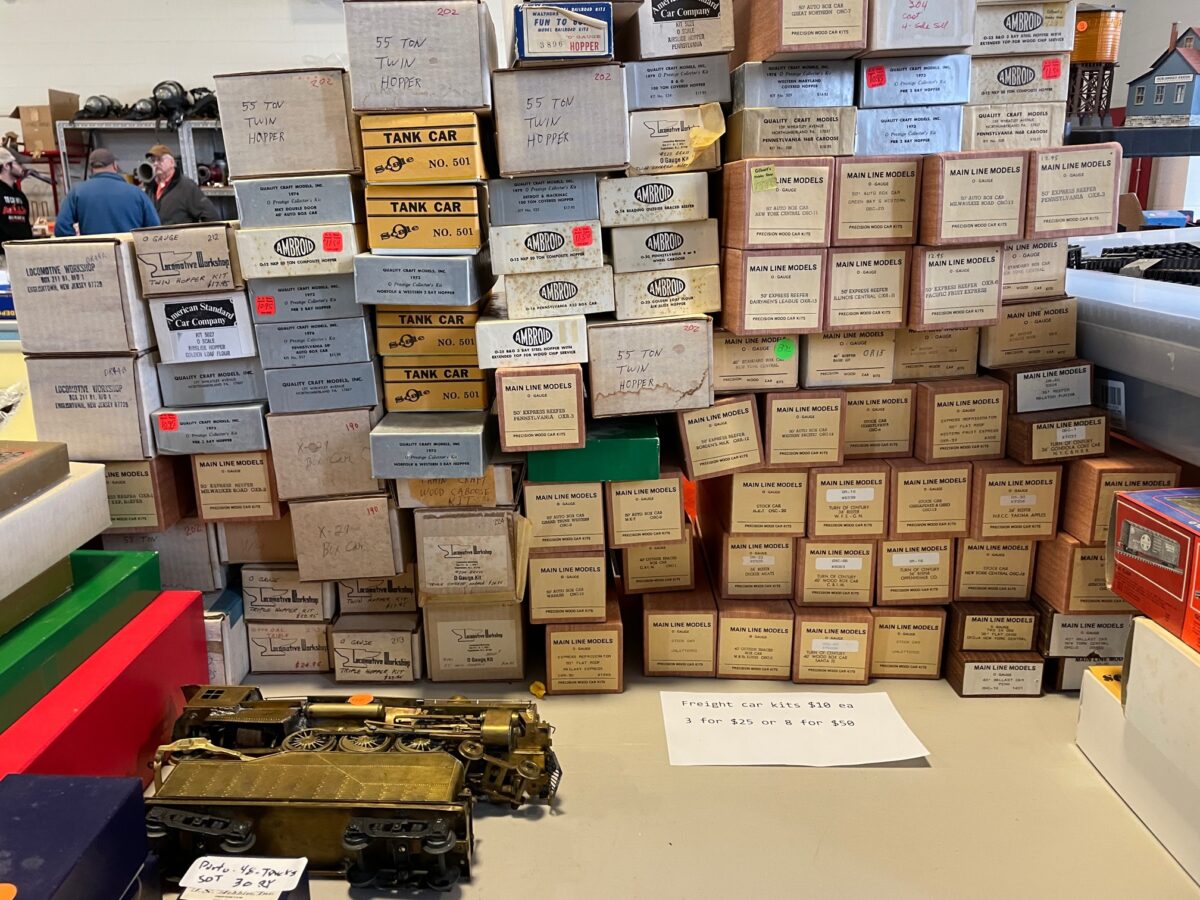
After that surprise announcement, they let the public into the show. They had a very strong turn out for the show. It was later mentioned that it was one of the best attended shows ever. Traffic was steady throughout the day. The buying was also spaced out throughout the show. I know I almost emptied my table by the end of the show.
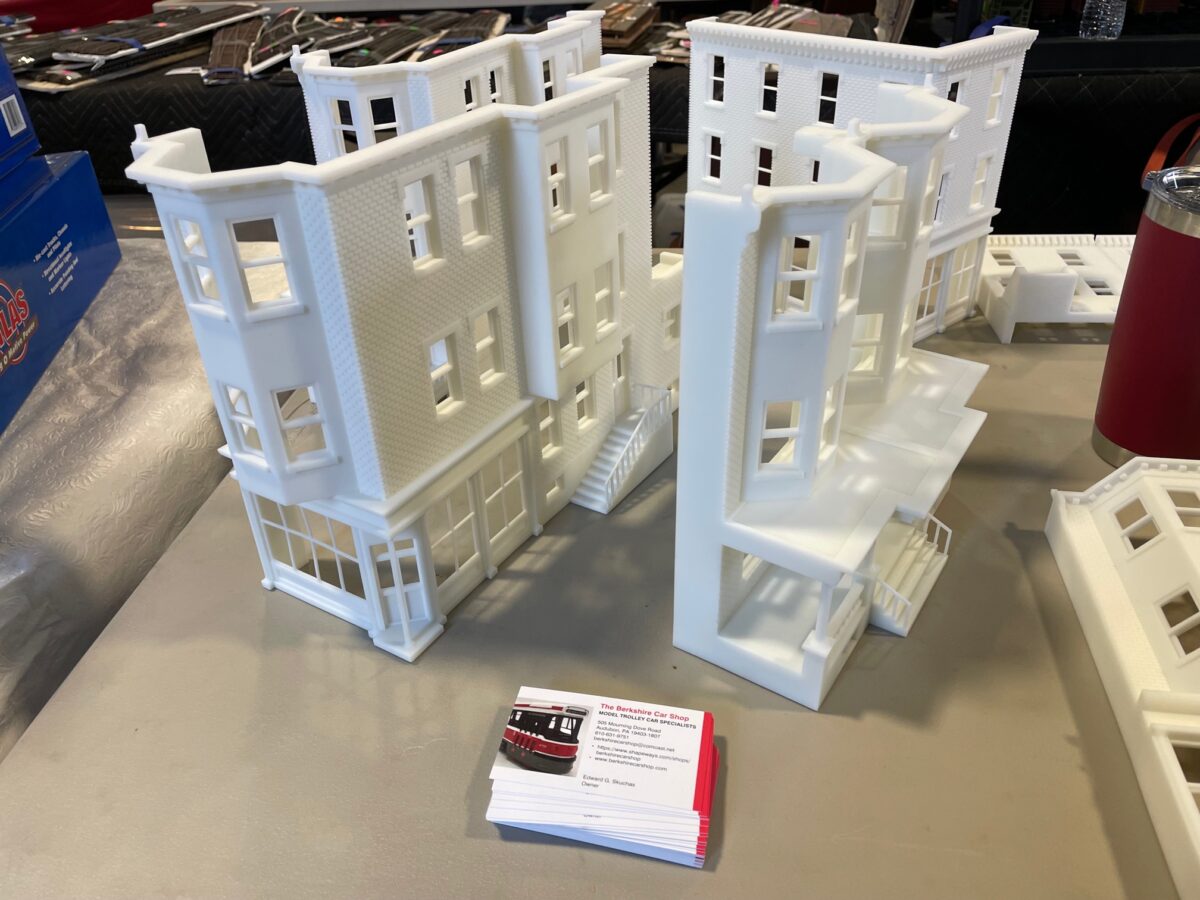
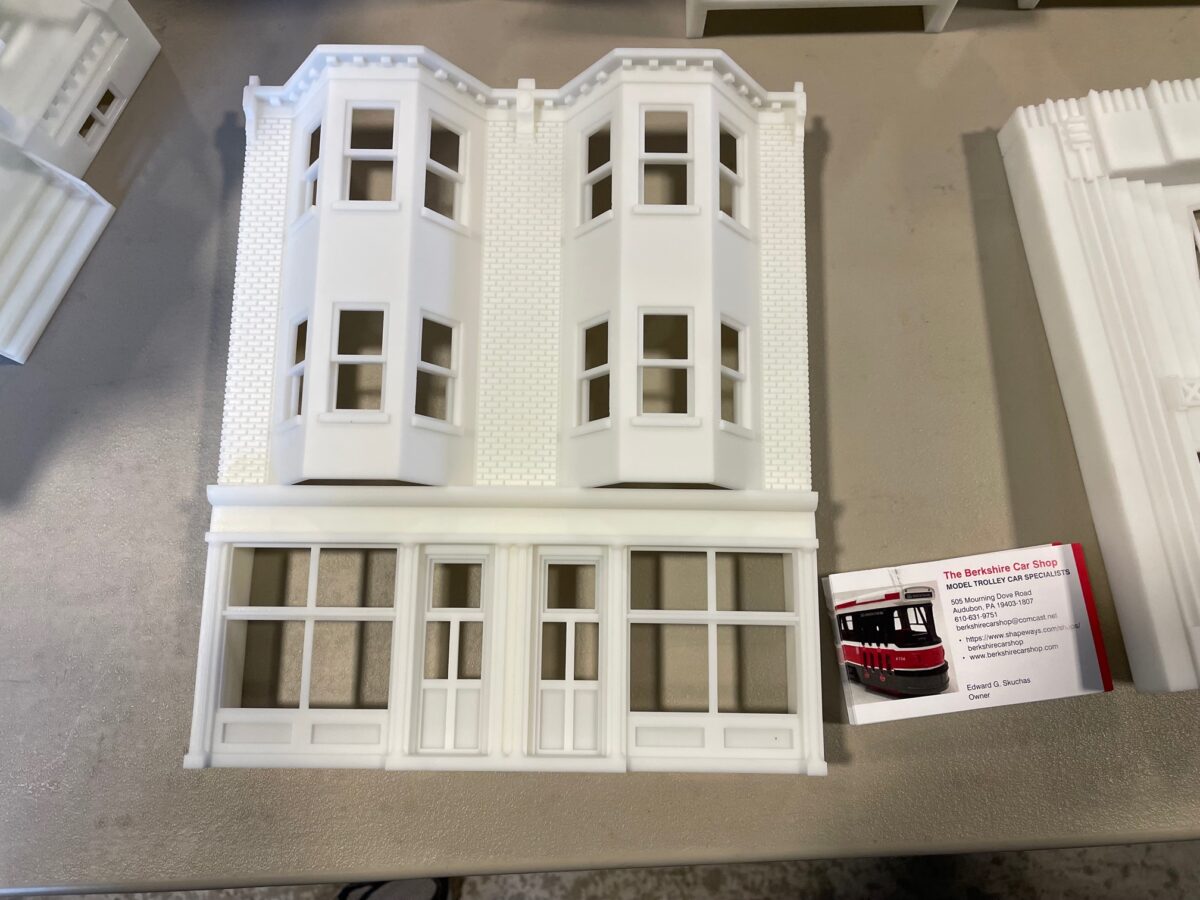
Berkshire Car Shops with their great high quality 3D printed buildings. These looked great but I didn’t get a chance to talk to them about their products as there was always a crowd when I went by their tables.
Berkshire Car Shops had some great high quality 3D printed buildings.More Berkshire Car Shops 3D printed buildings
For the Reading modelers, I did see a couple of the SGL cars in the room on two different tables. A nicely painted RY Models Fishbelly Twin Hopper made a short lived appearence on a table before heading under my table.
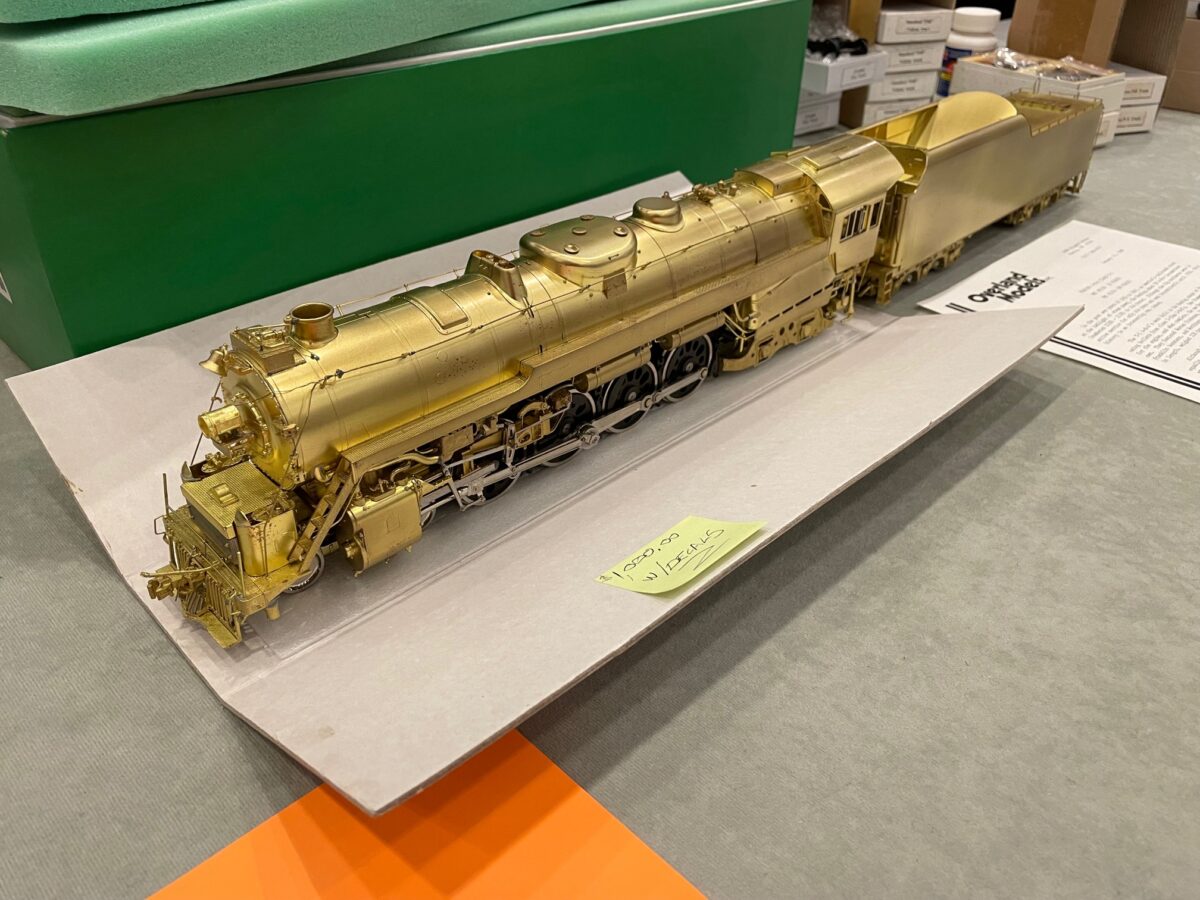
There was an Overland T-1 at the show. It was a very clean example of a nice model and even had a set of the Overland decals included. Late in the morning, I saw it under its new owner’s arm as it was going to it’s new home.
For the Reading Modelers, there was a Overland T-1 at the show.
On the Proto48 front, there was also a very brief siting of some Overland Conversion wheels for some of their diesel models. They quickly found a new home.
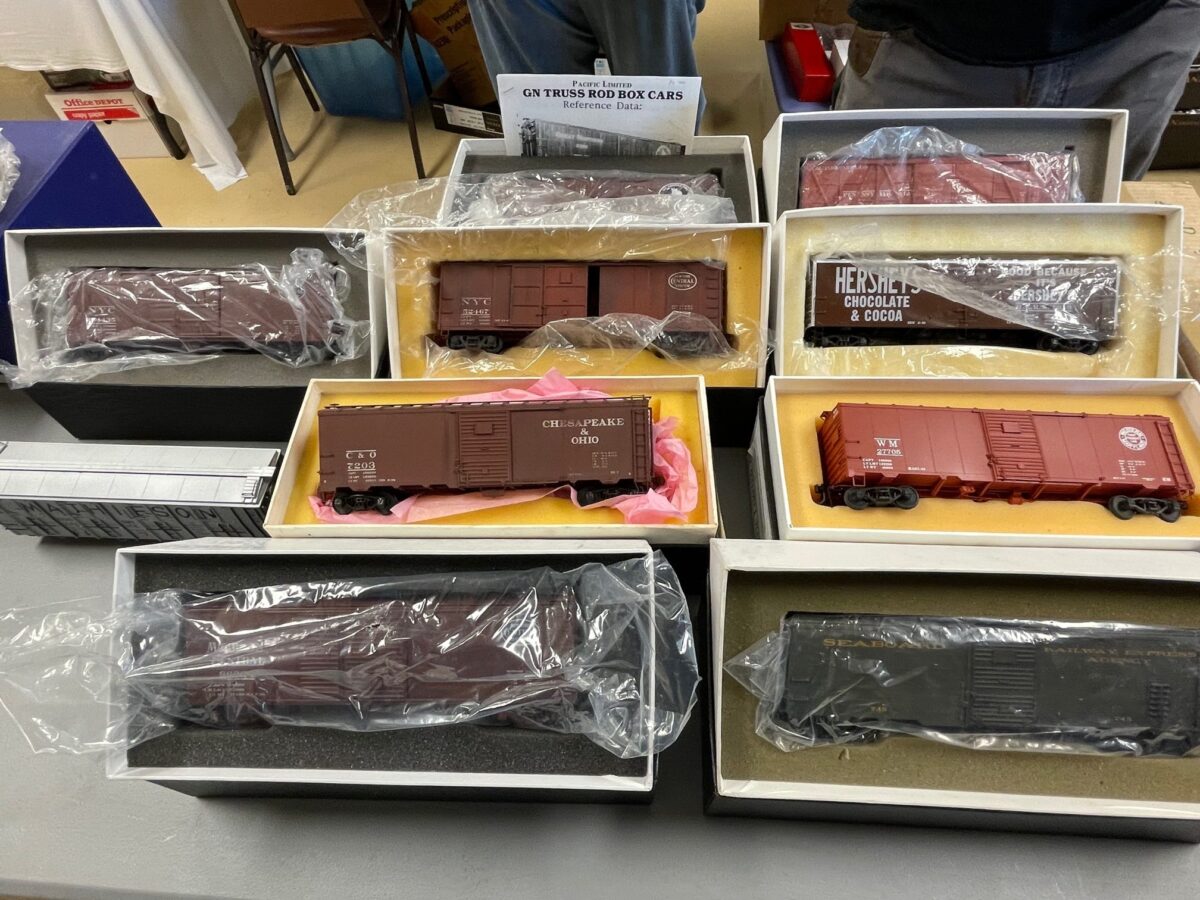
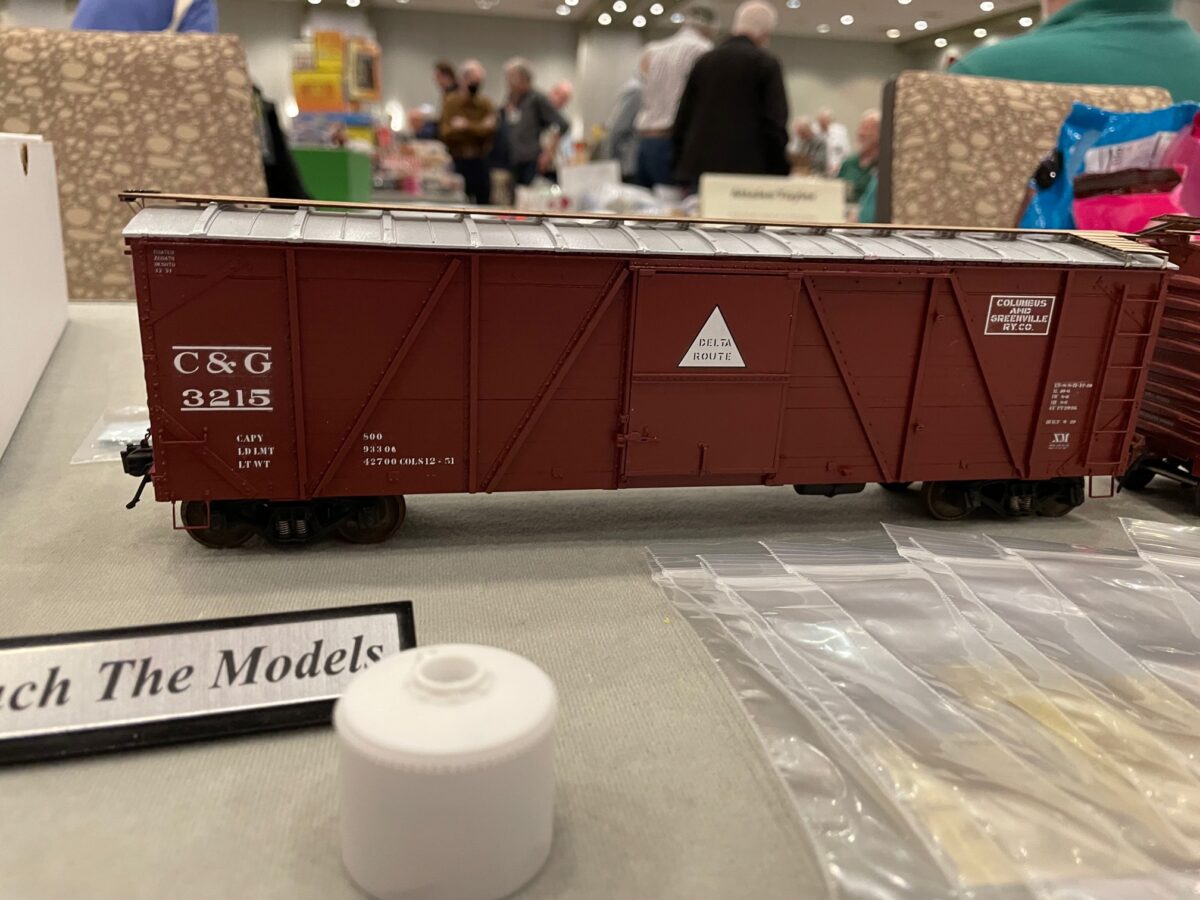
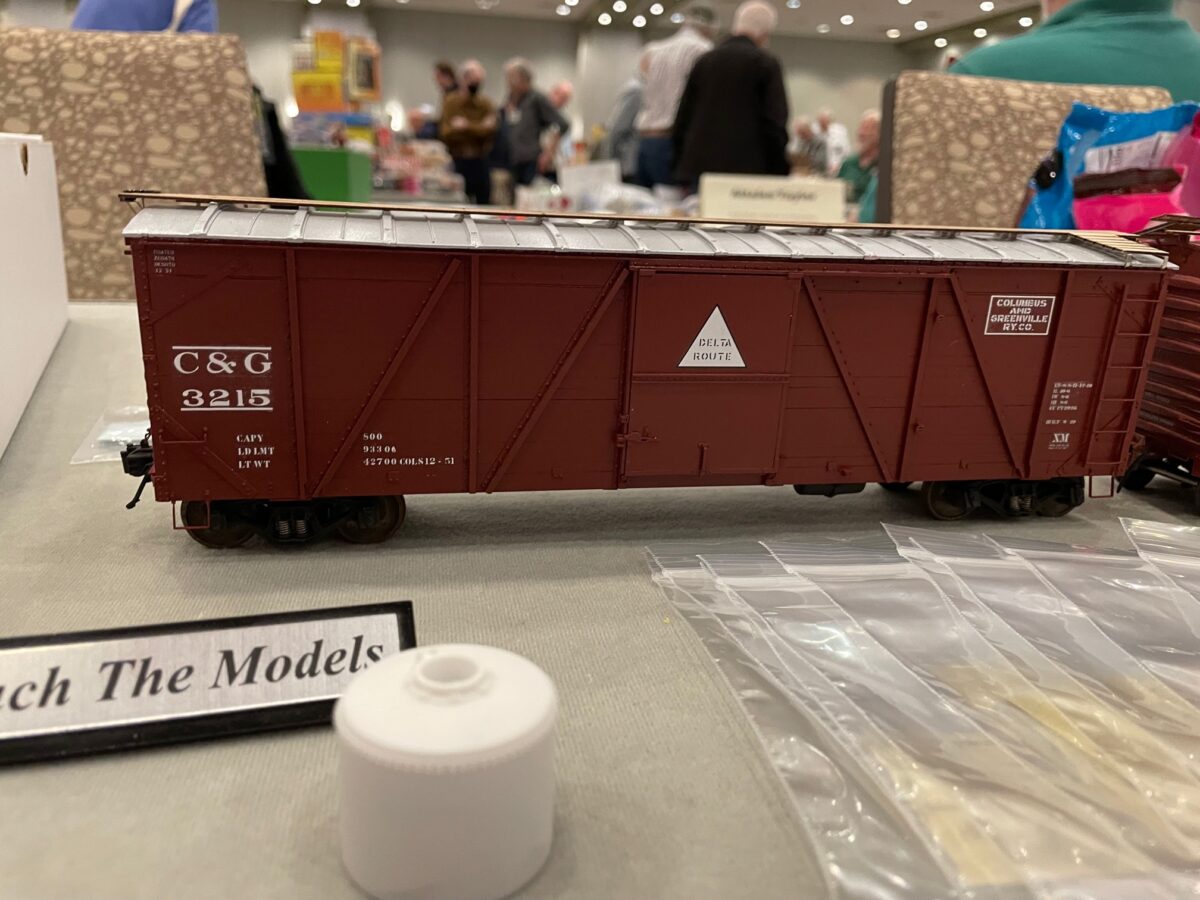
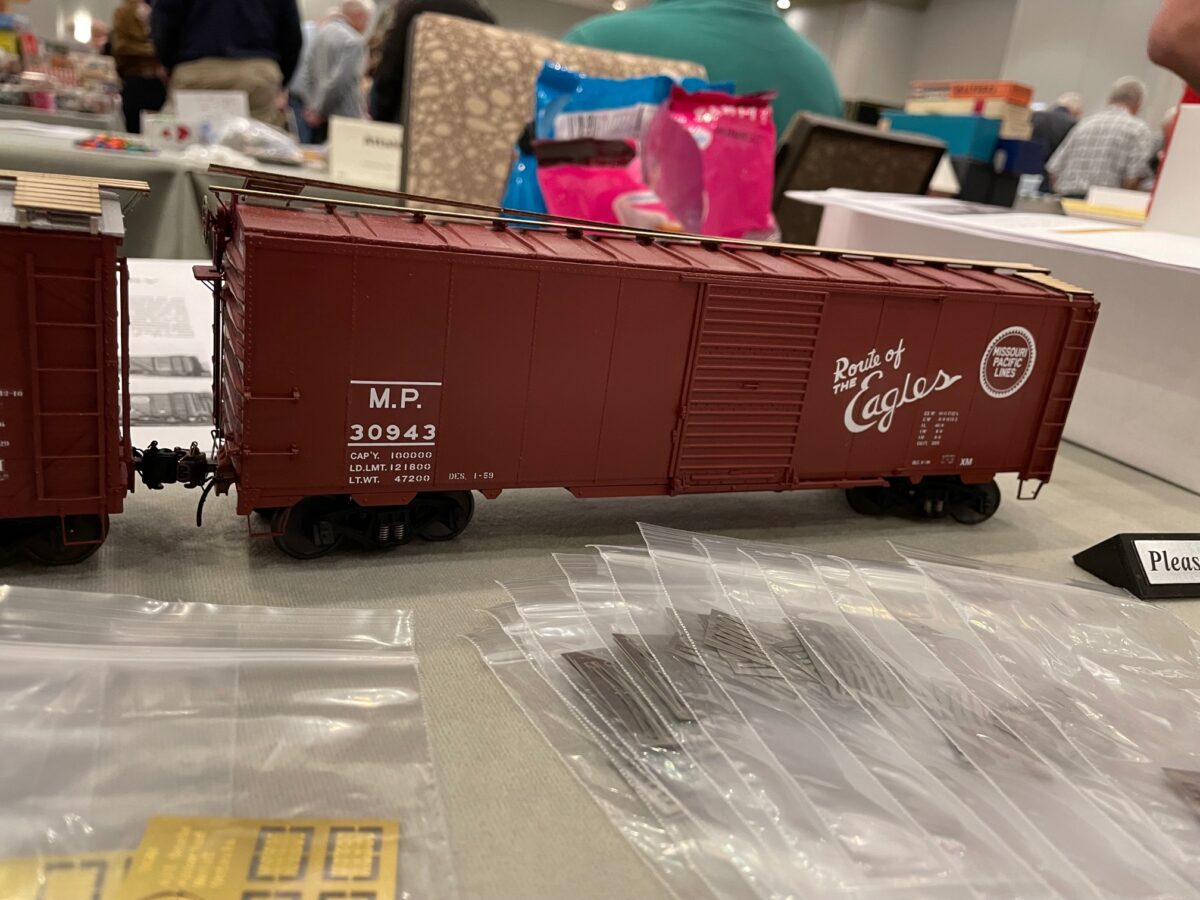
A selection of Pacific Limited box cars and a reefer.
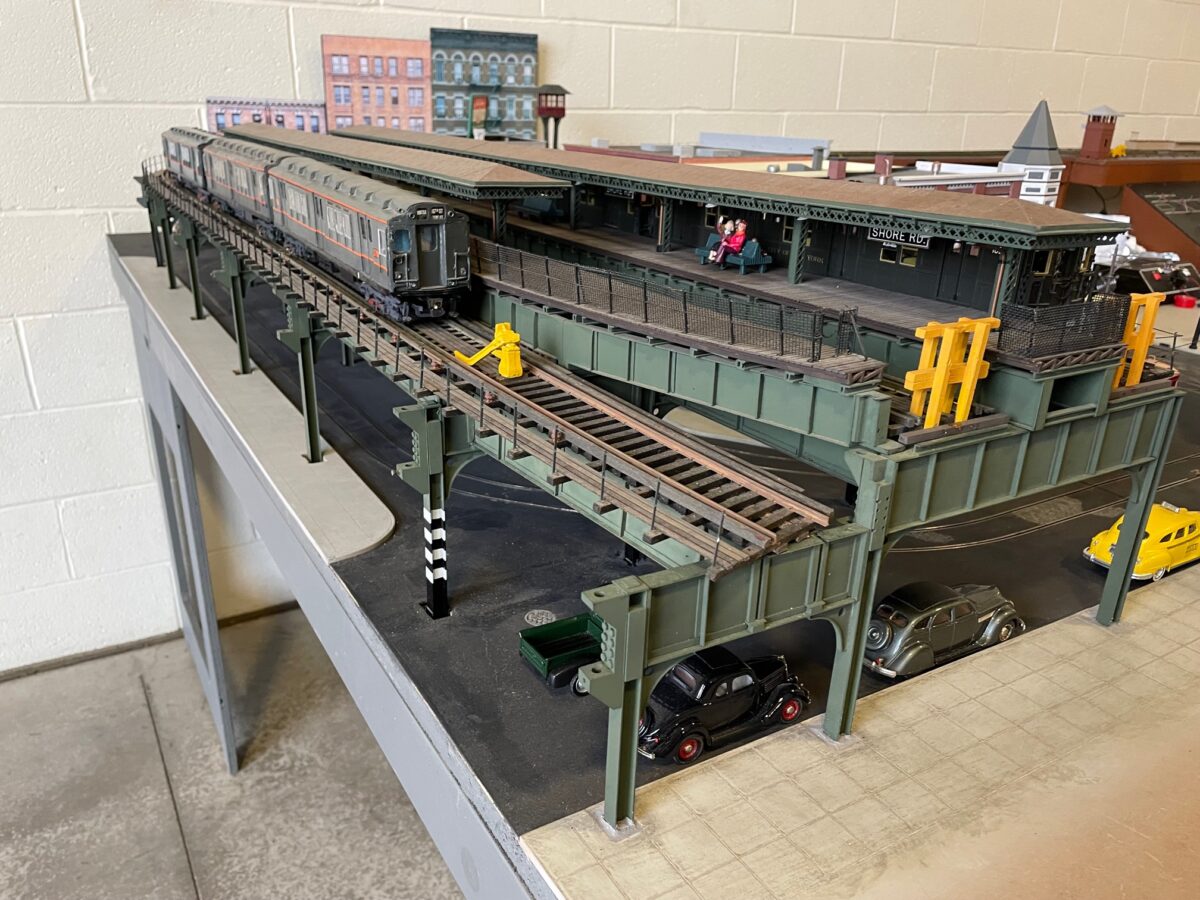
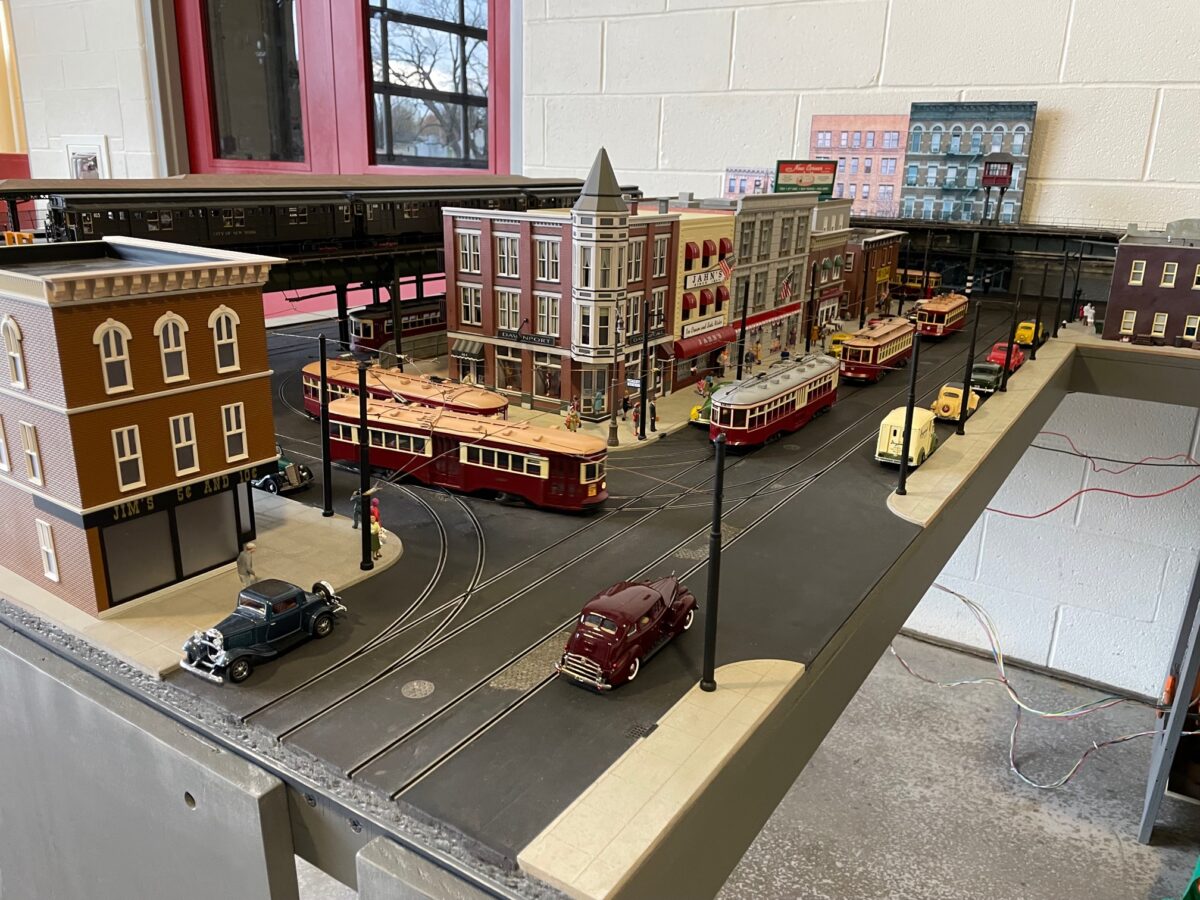
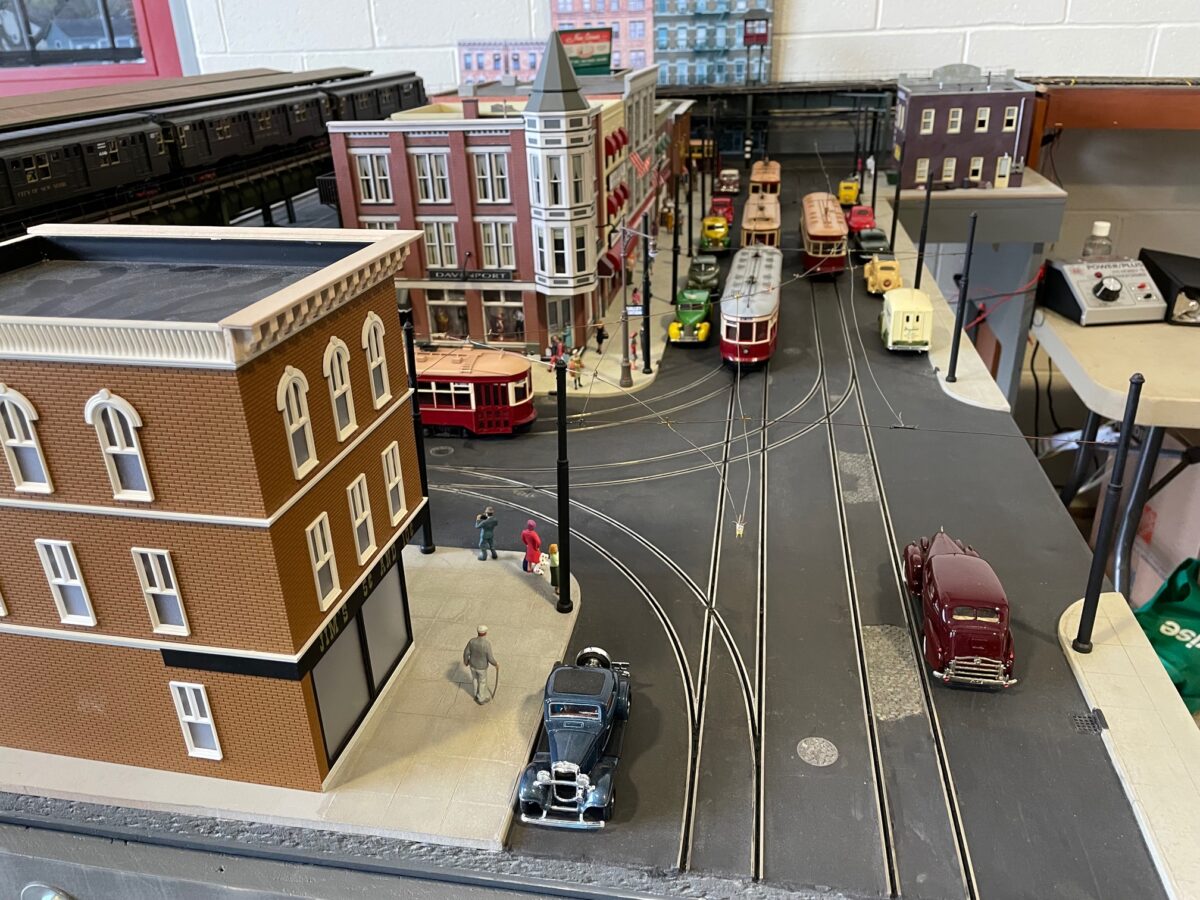
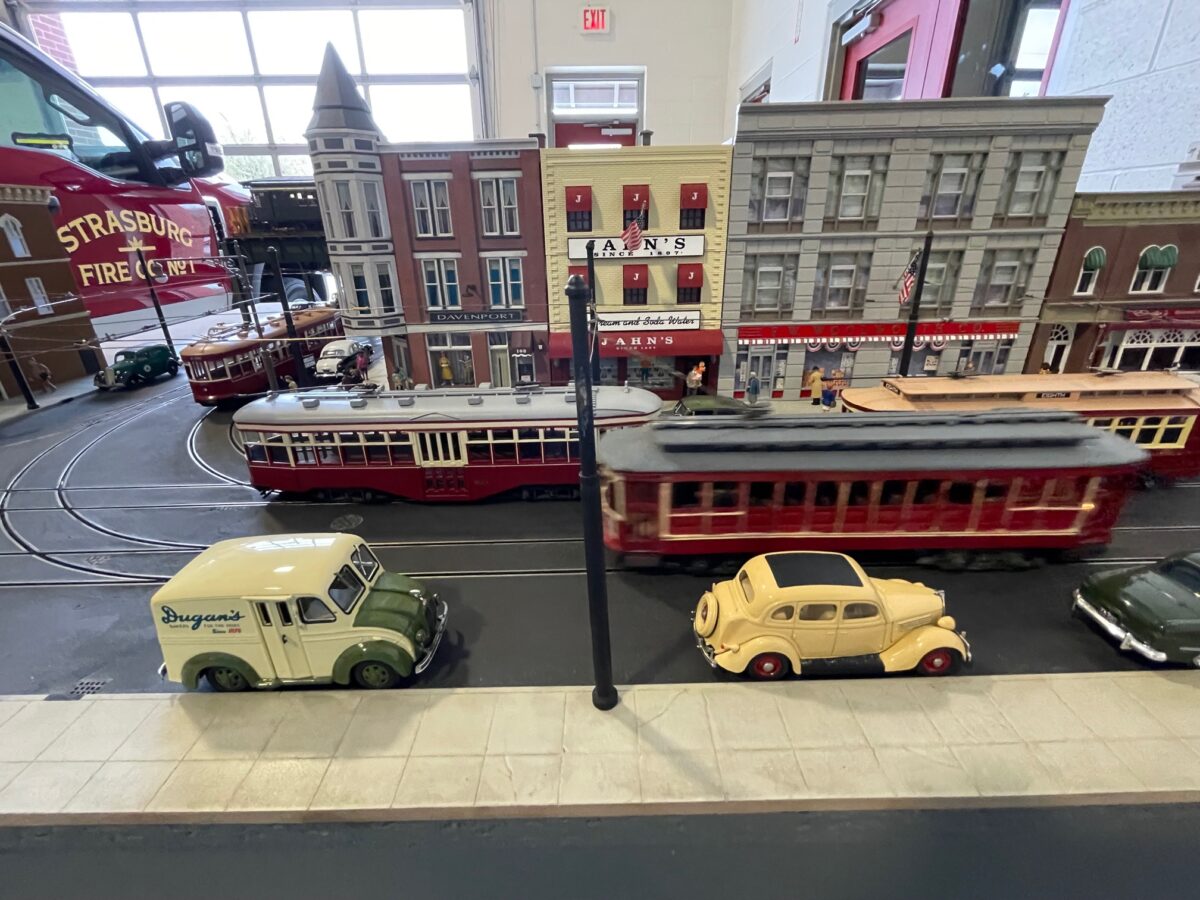
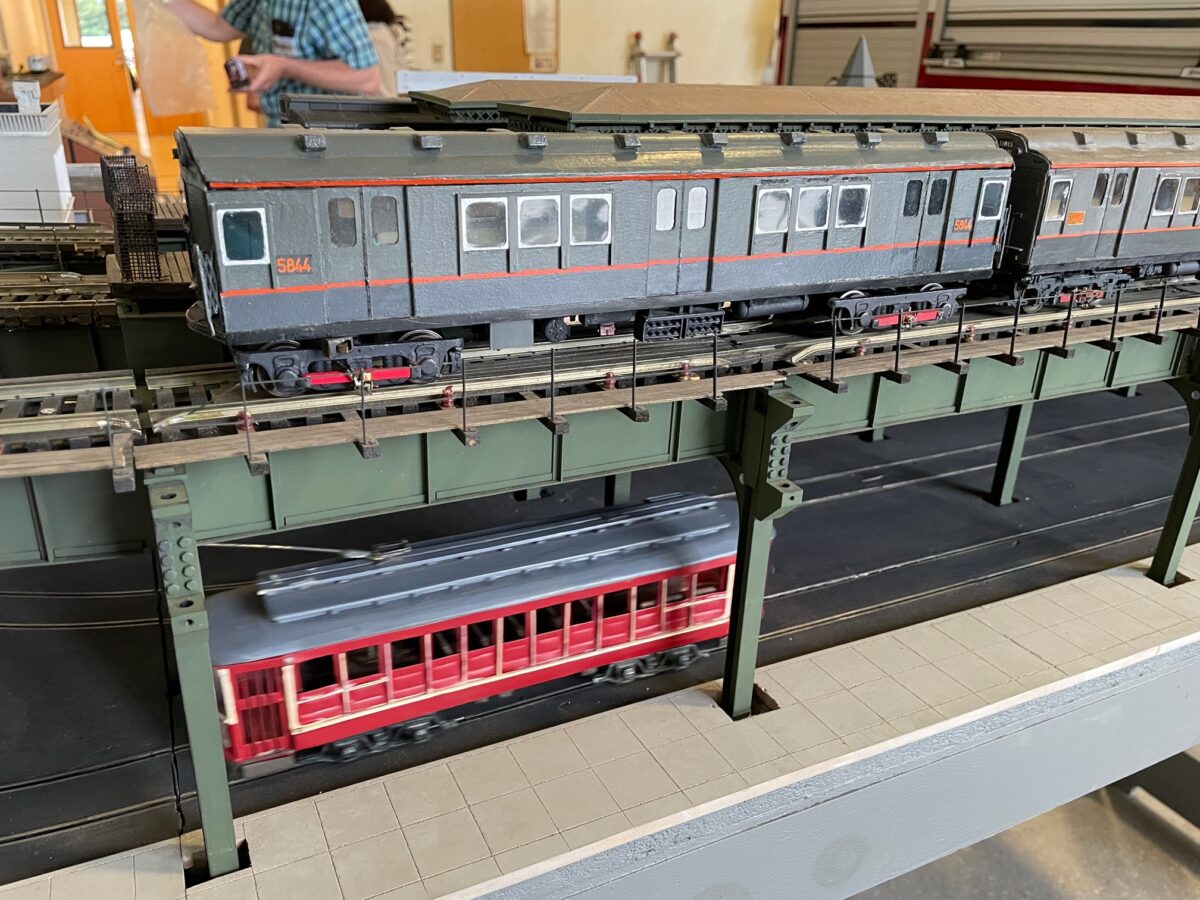
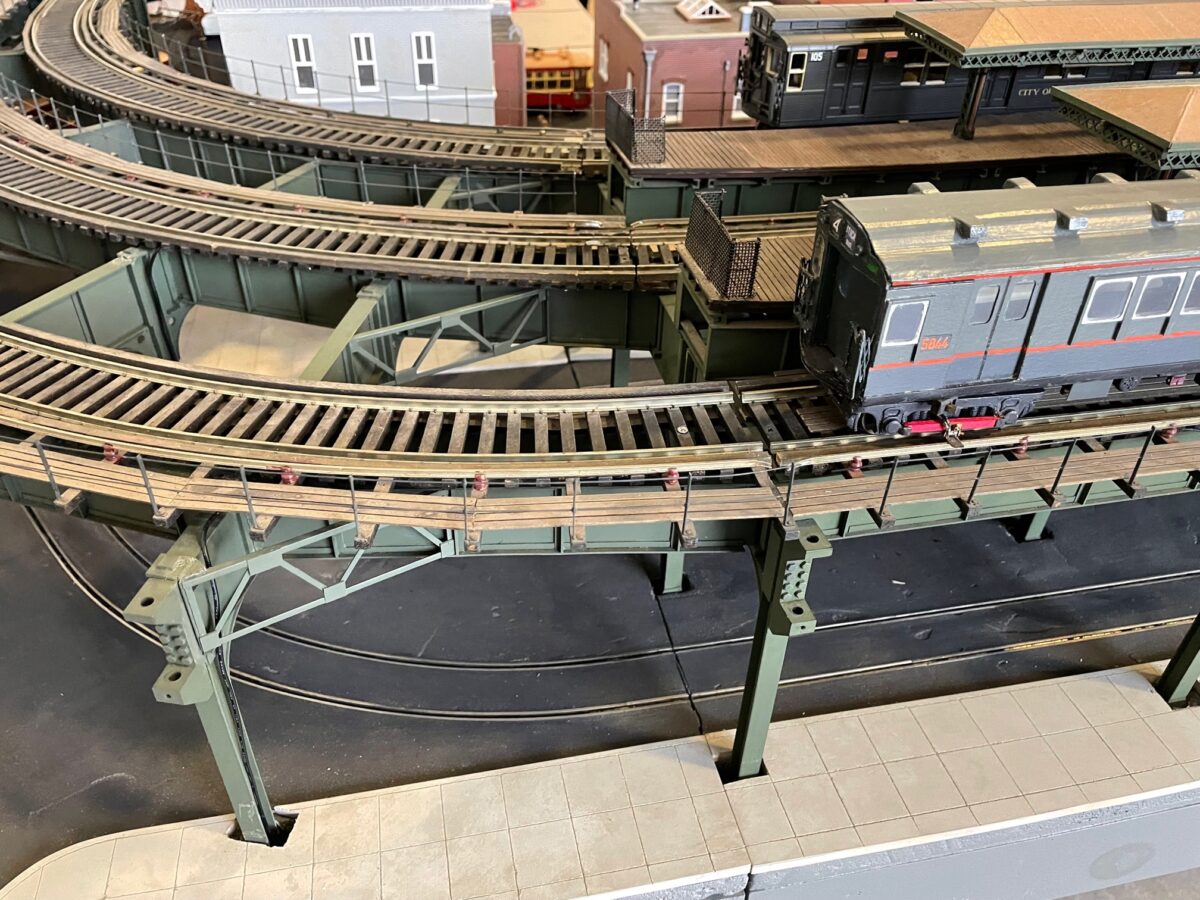
The show also featured a nice traction module set up in the engine bays at the Fire Hall. The Module set up featured both an elevated section and surface line in a nice city scene.
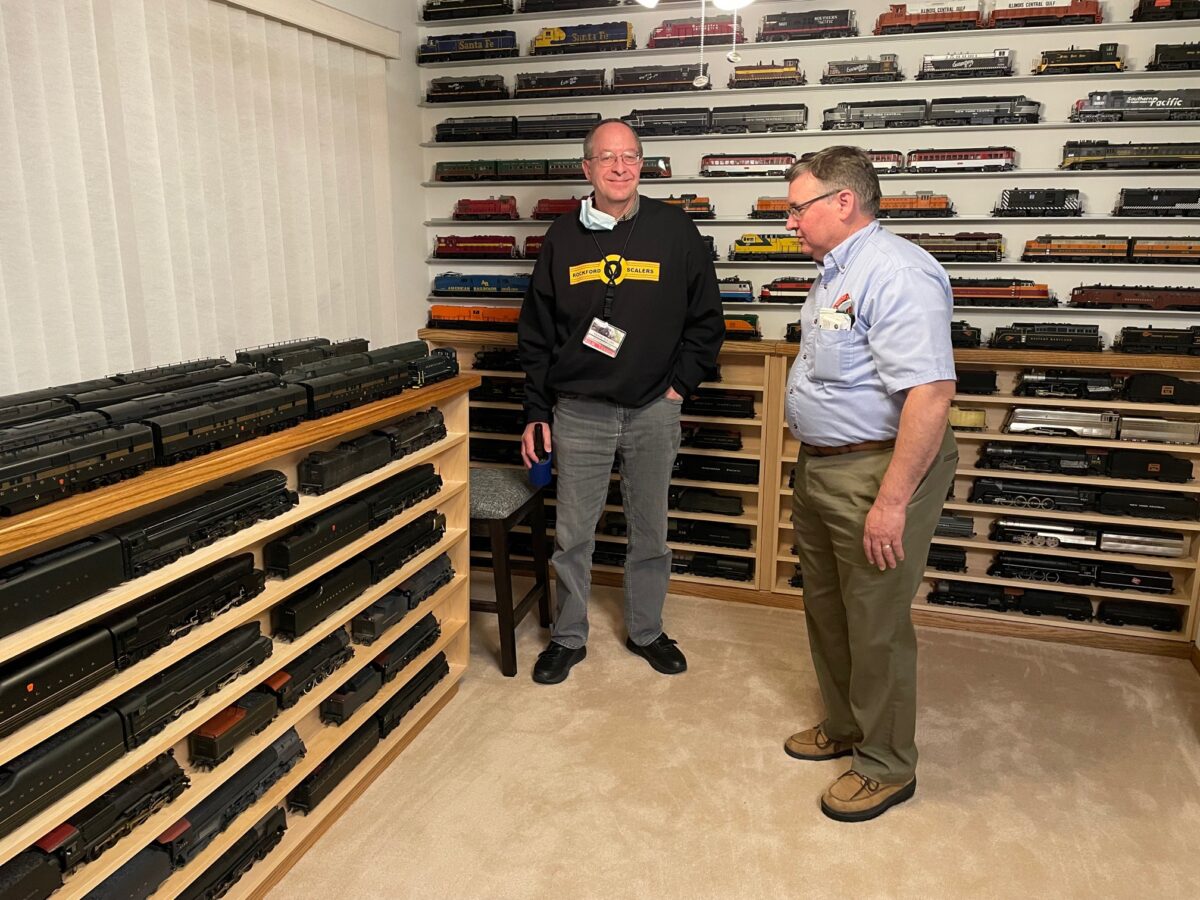
One of the nice things about going to the Chicago Show over the years has been going out on layout tours. I have had the chance to see a bunch over the years. This year we rode out to the Rockford O Scalers’ layout.
Even though the Rockford O Scalers have been a regular on the layout tour, I had not been to the layout before. Usually worked out that that the group I was riding with didn’t want to travel that far to see the layout. It was about an hour drive to get there. I have to say that it was absolutely well worth the drive.
The layout is 57×30 plus a staging area and is basically two double-track mainlines. One on the outside of the room and another loop on the inside of the room. The “club” started in the 1990’s as a modular group. The modules were used to make up the inner loop.
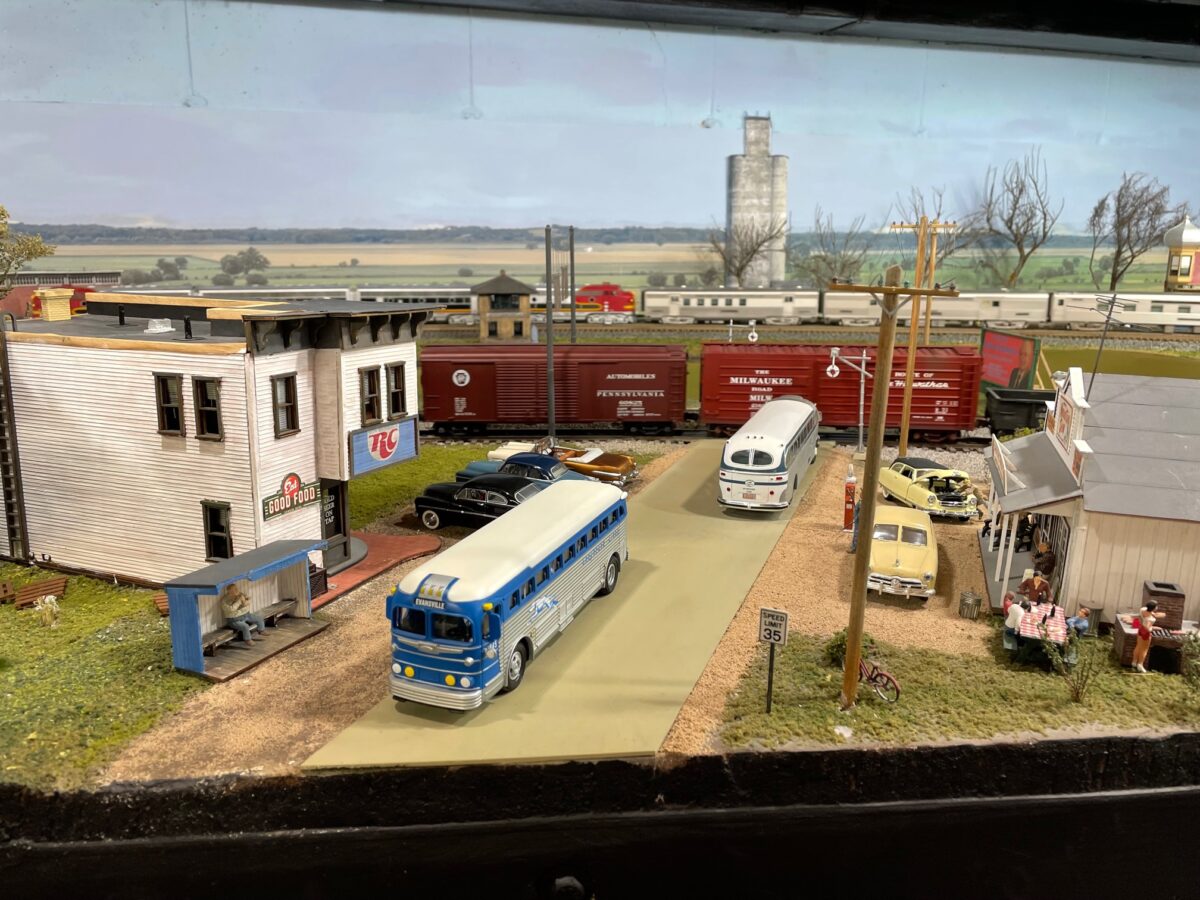
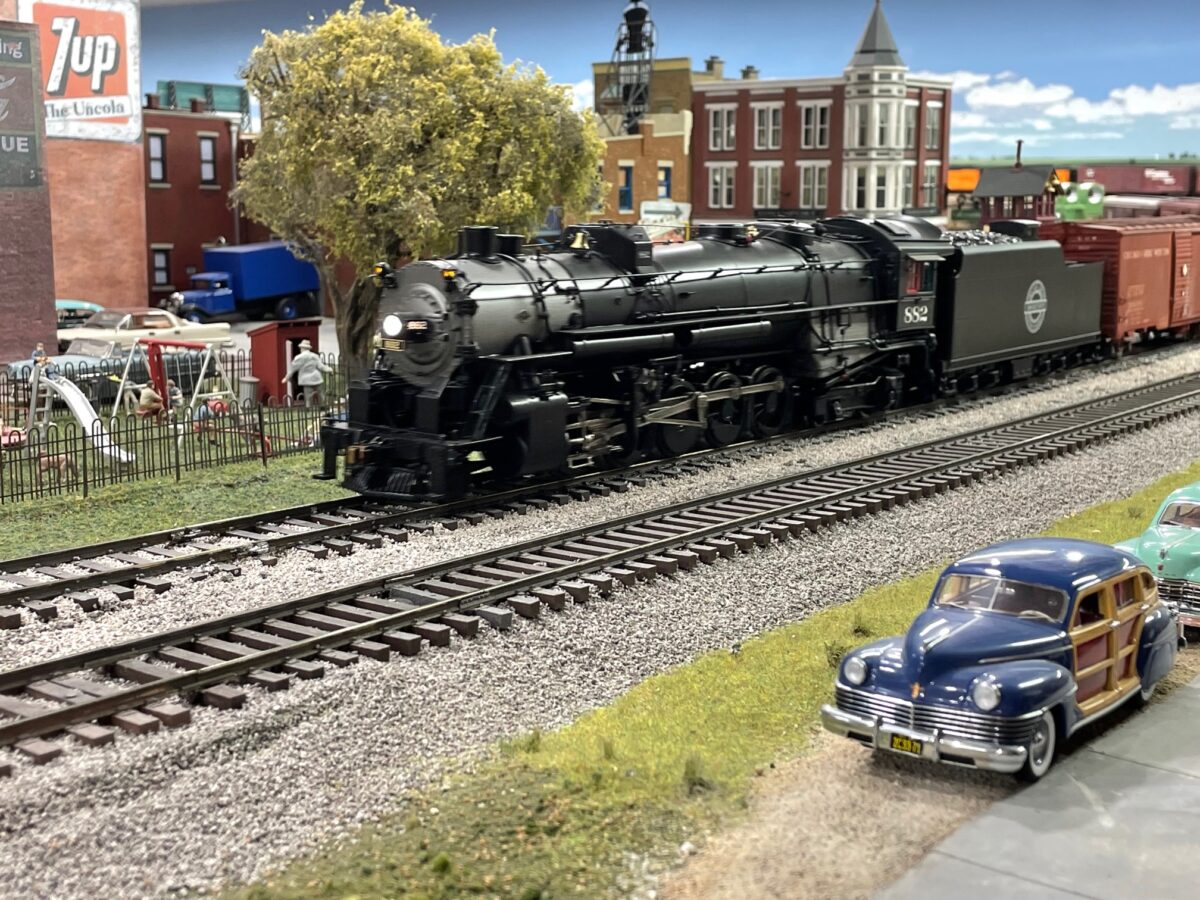
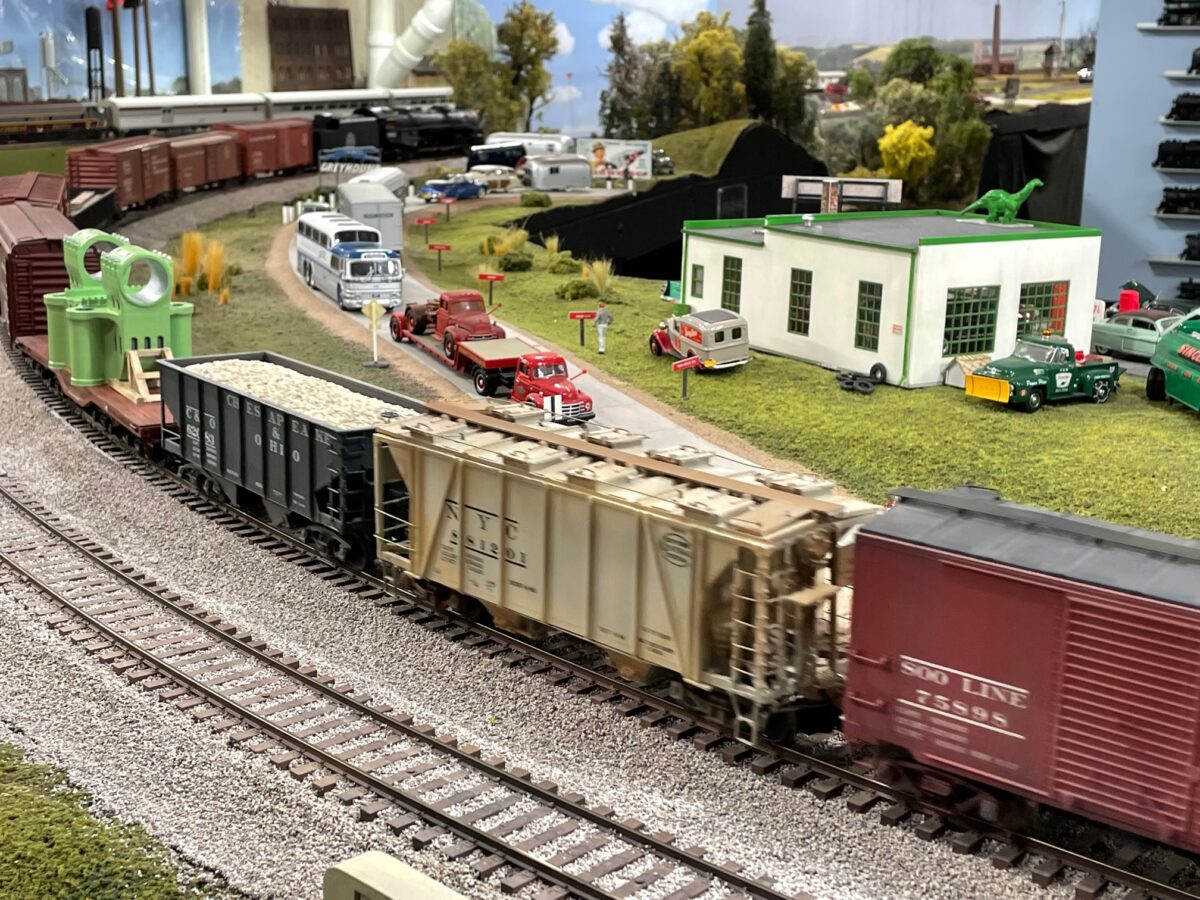
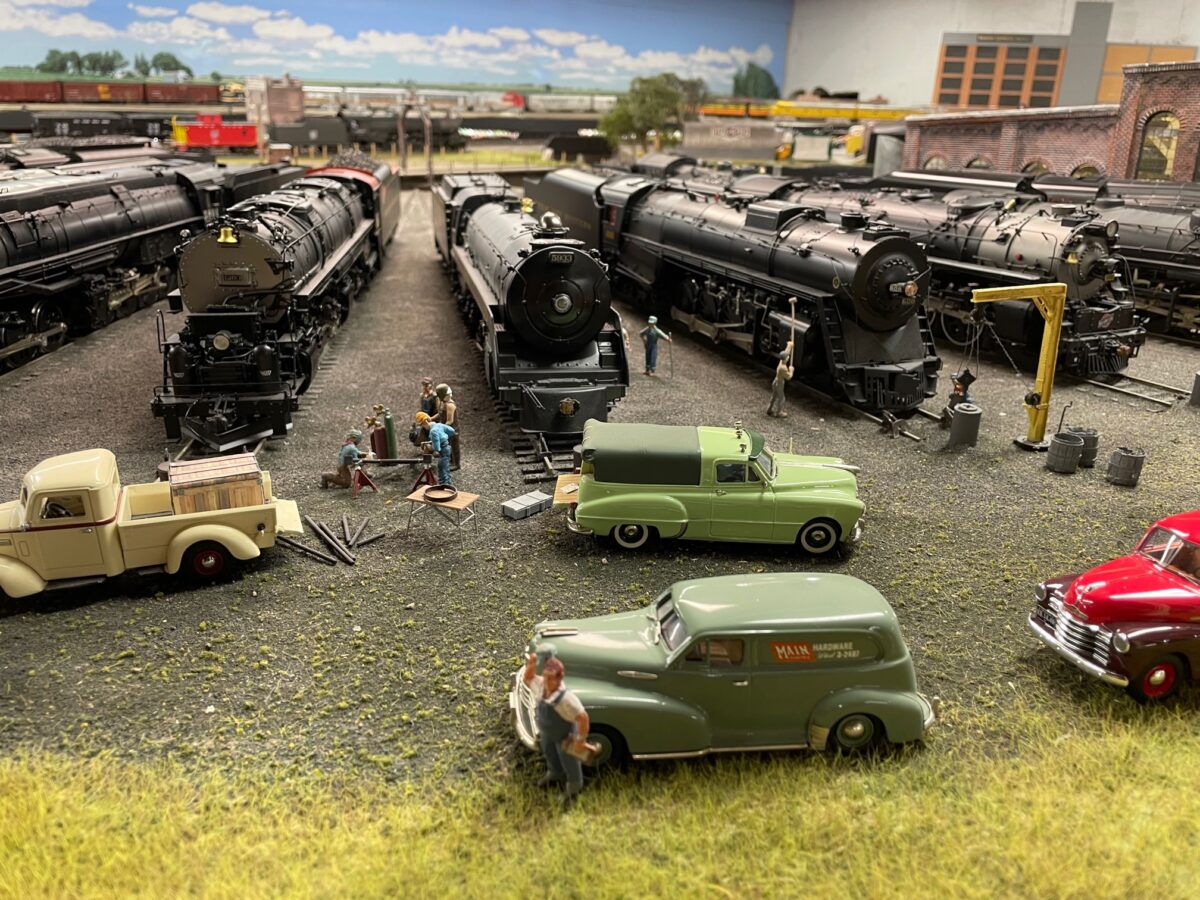
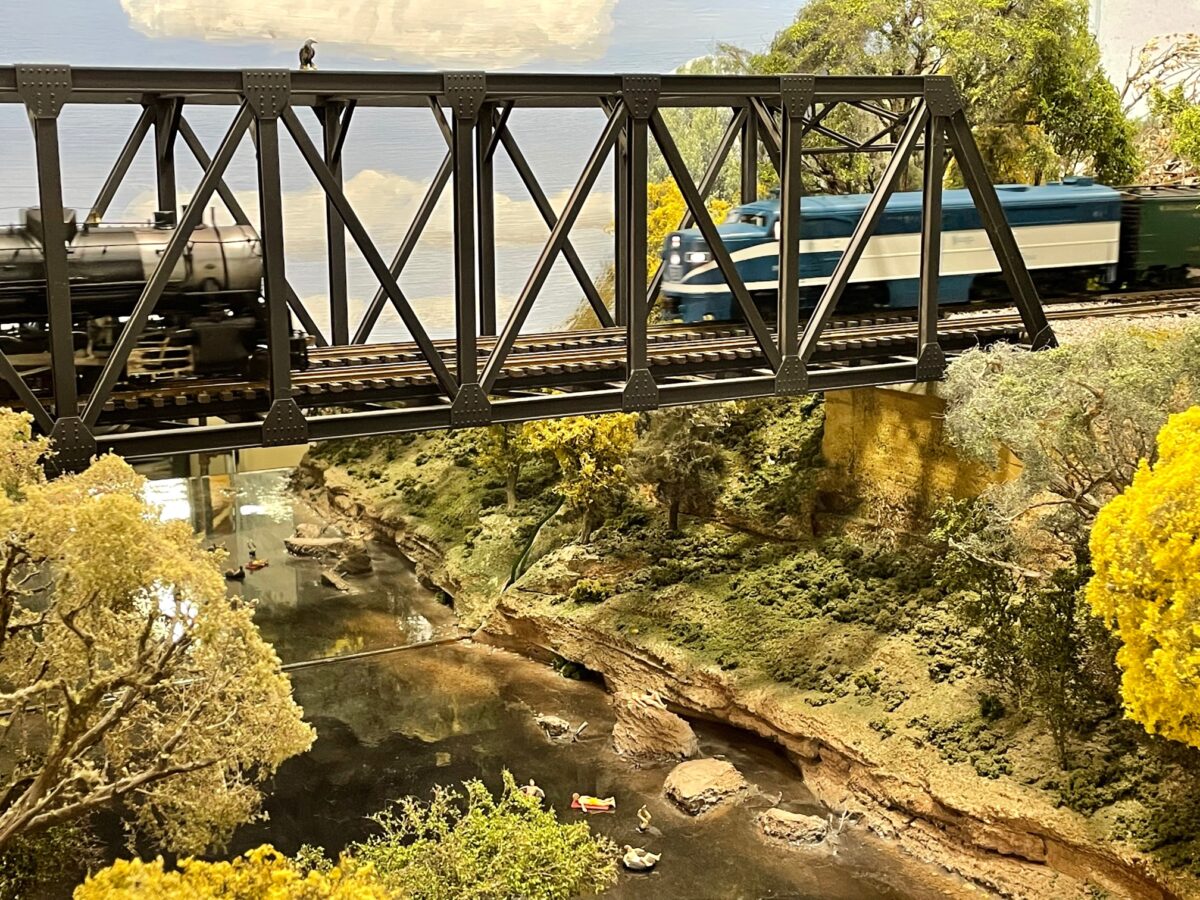
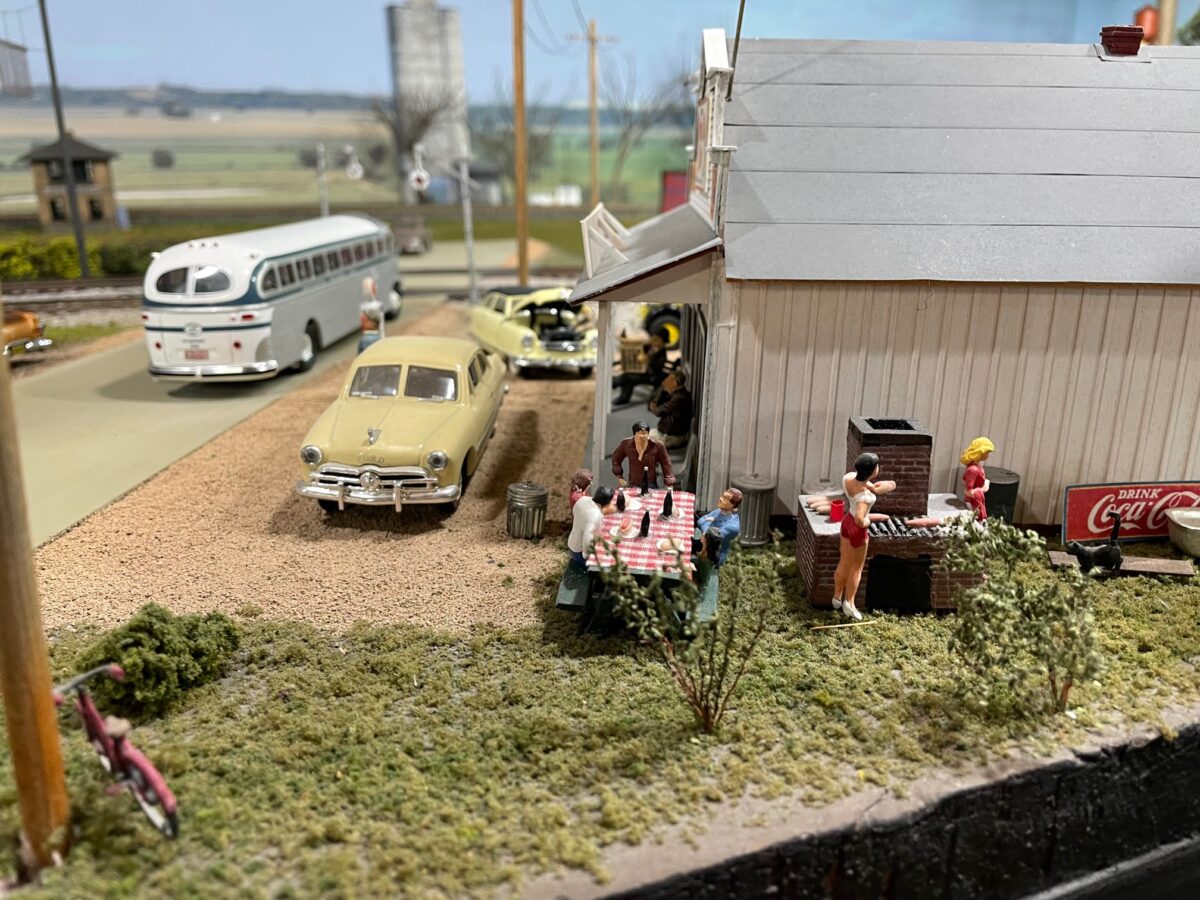
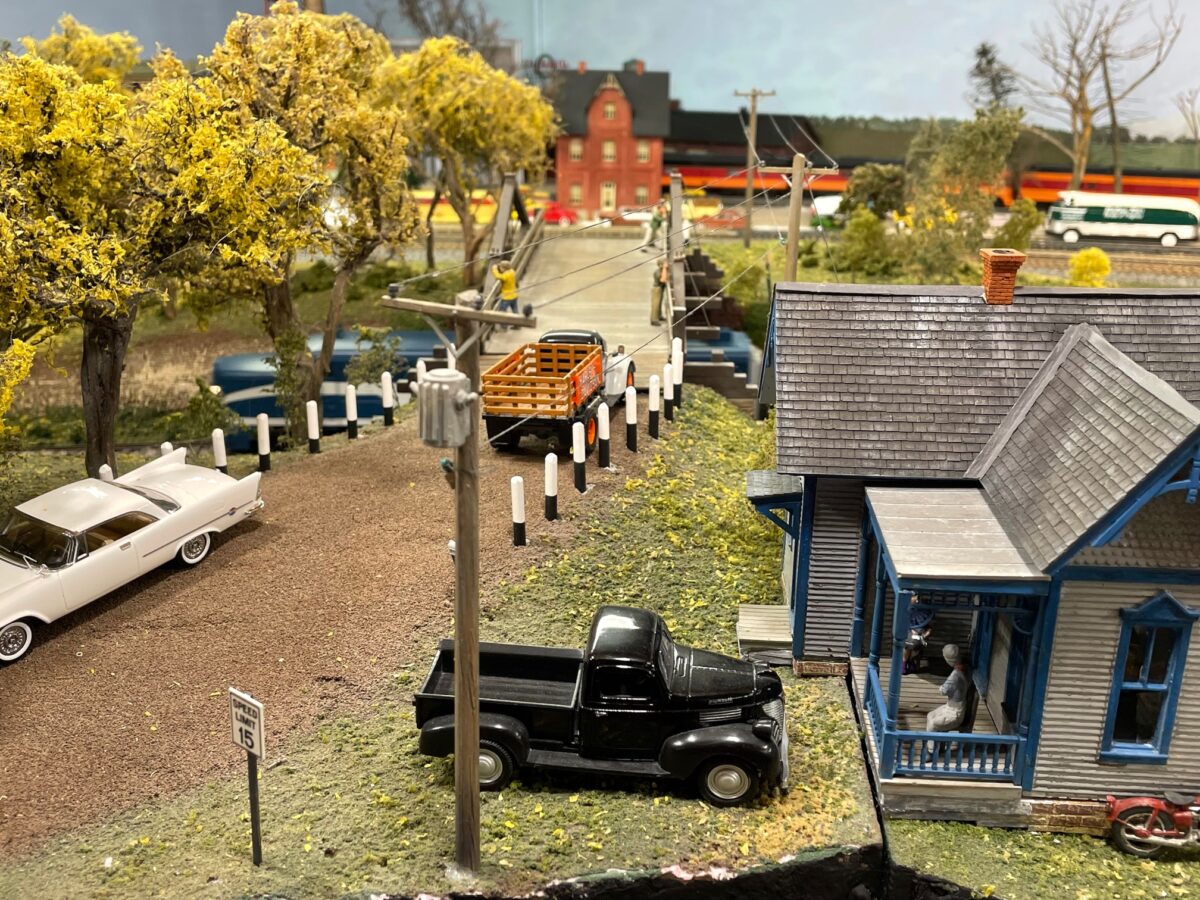
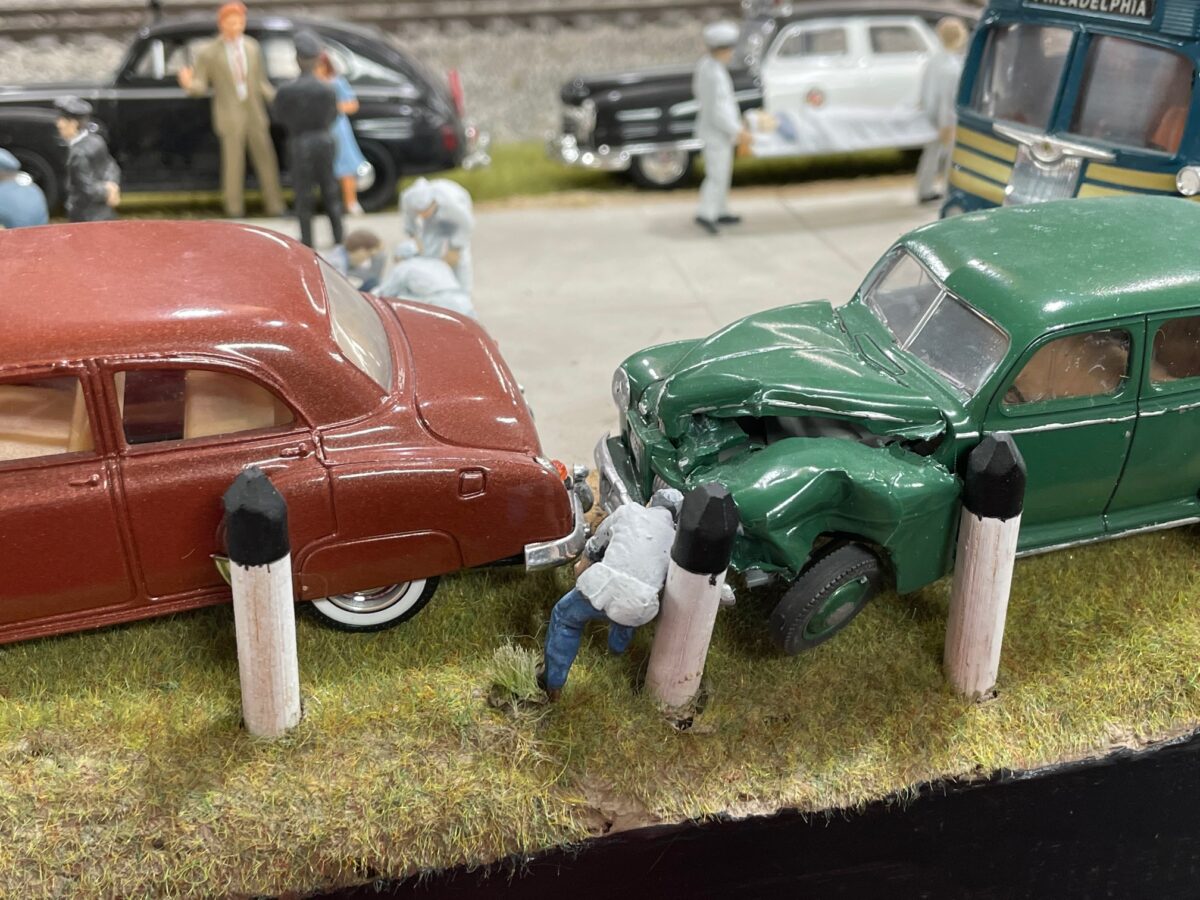
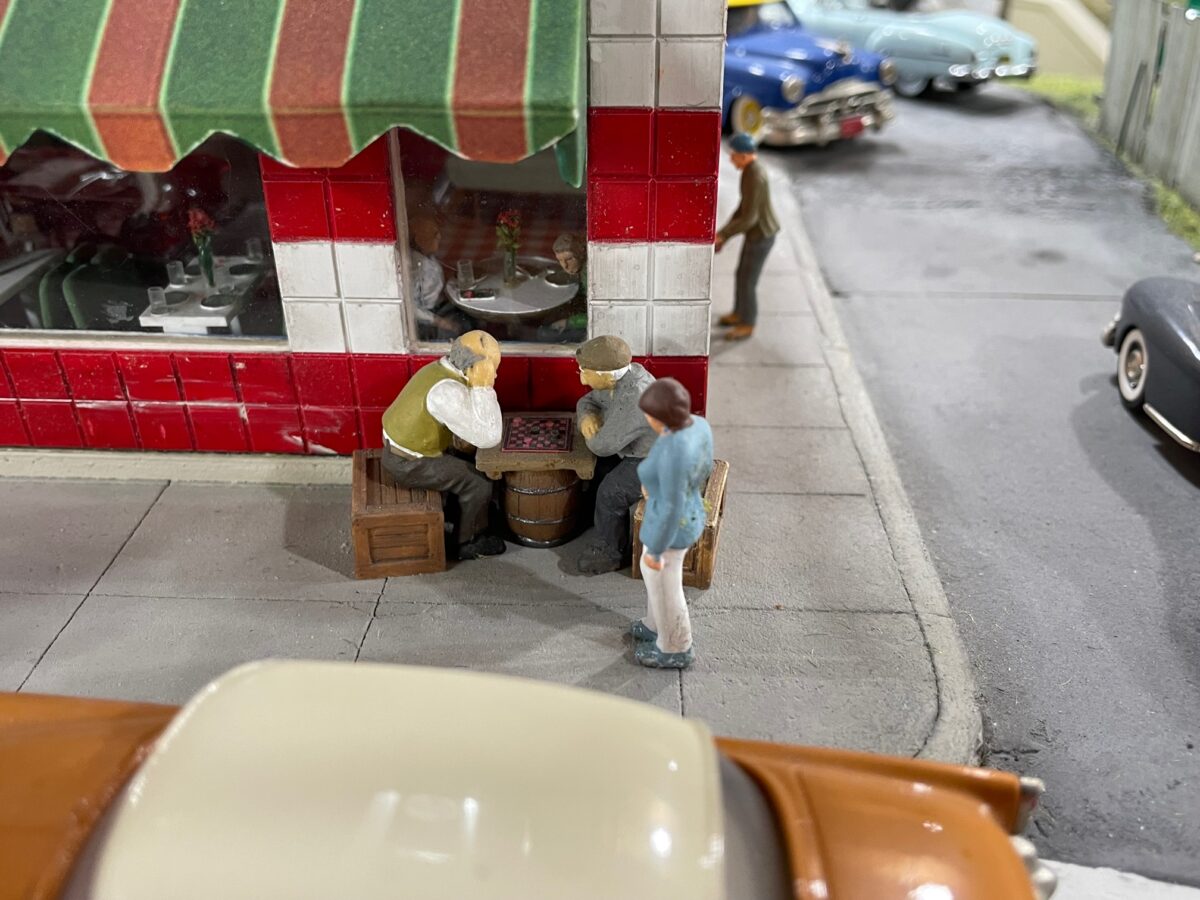
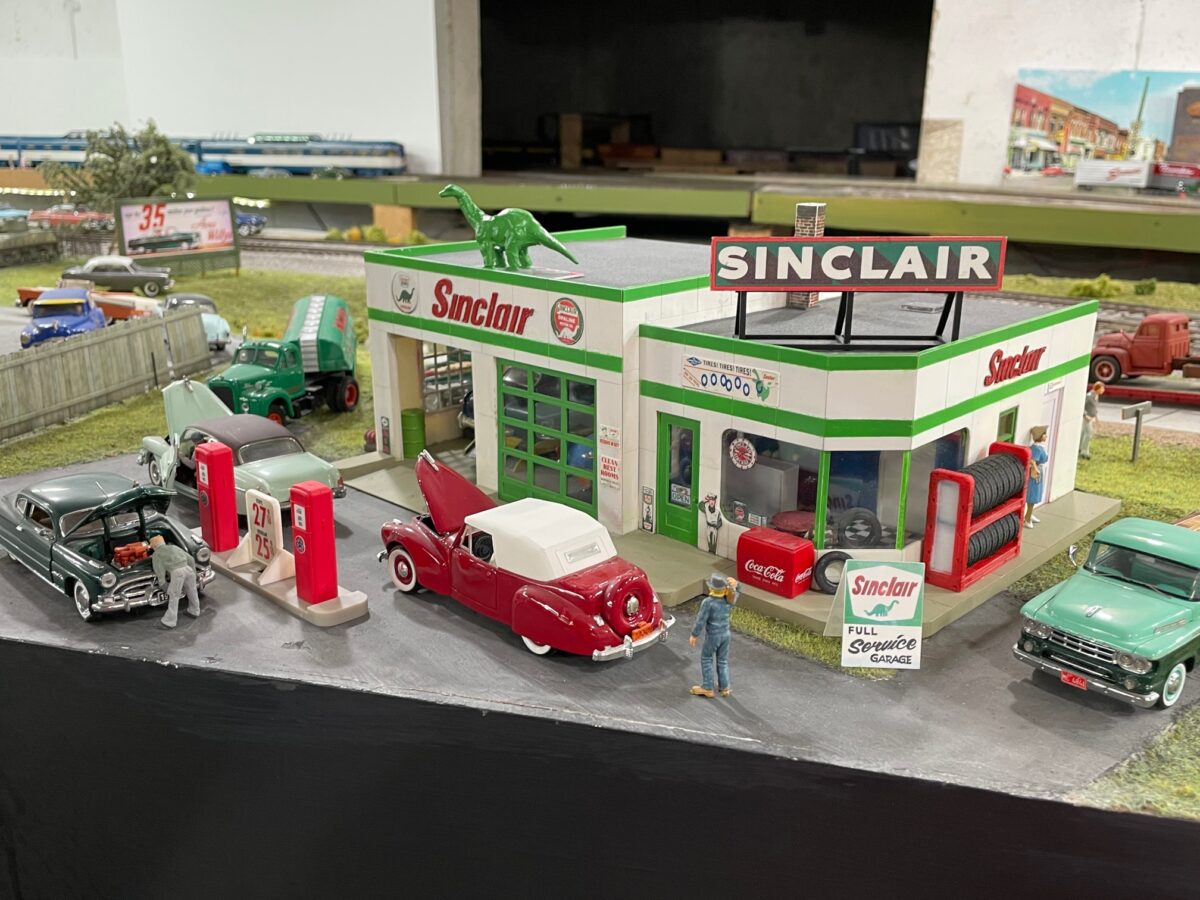
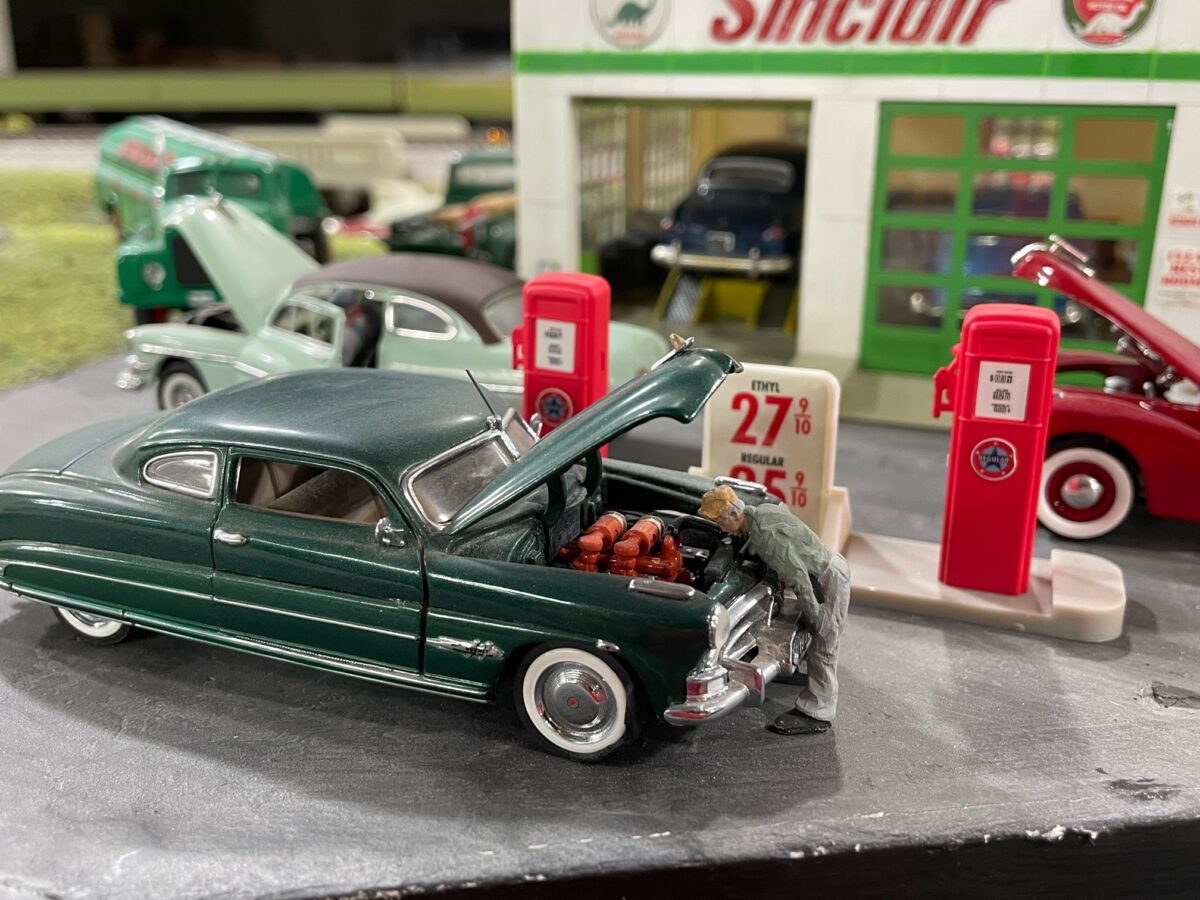
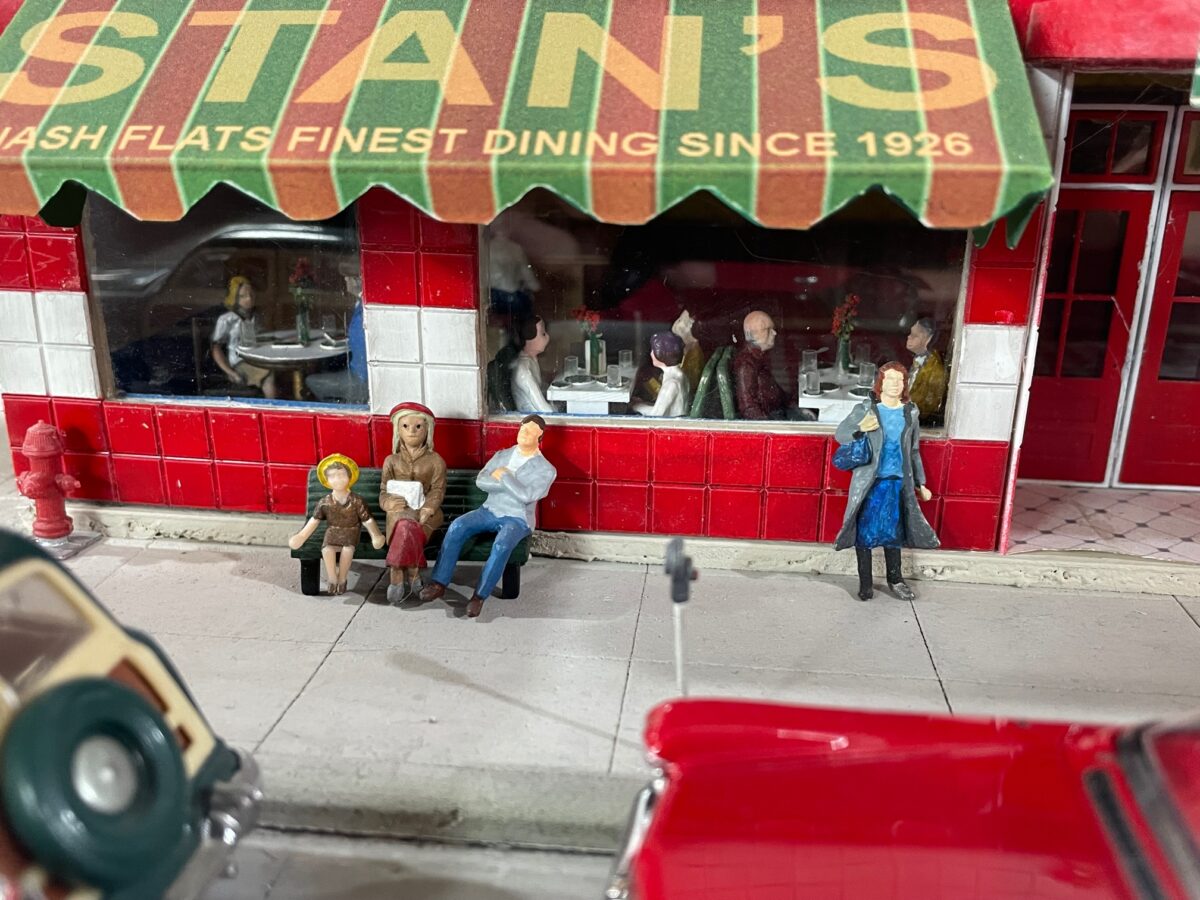
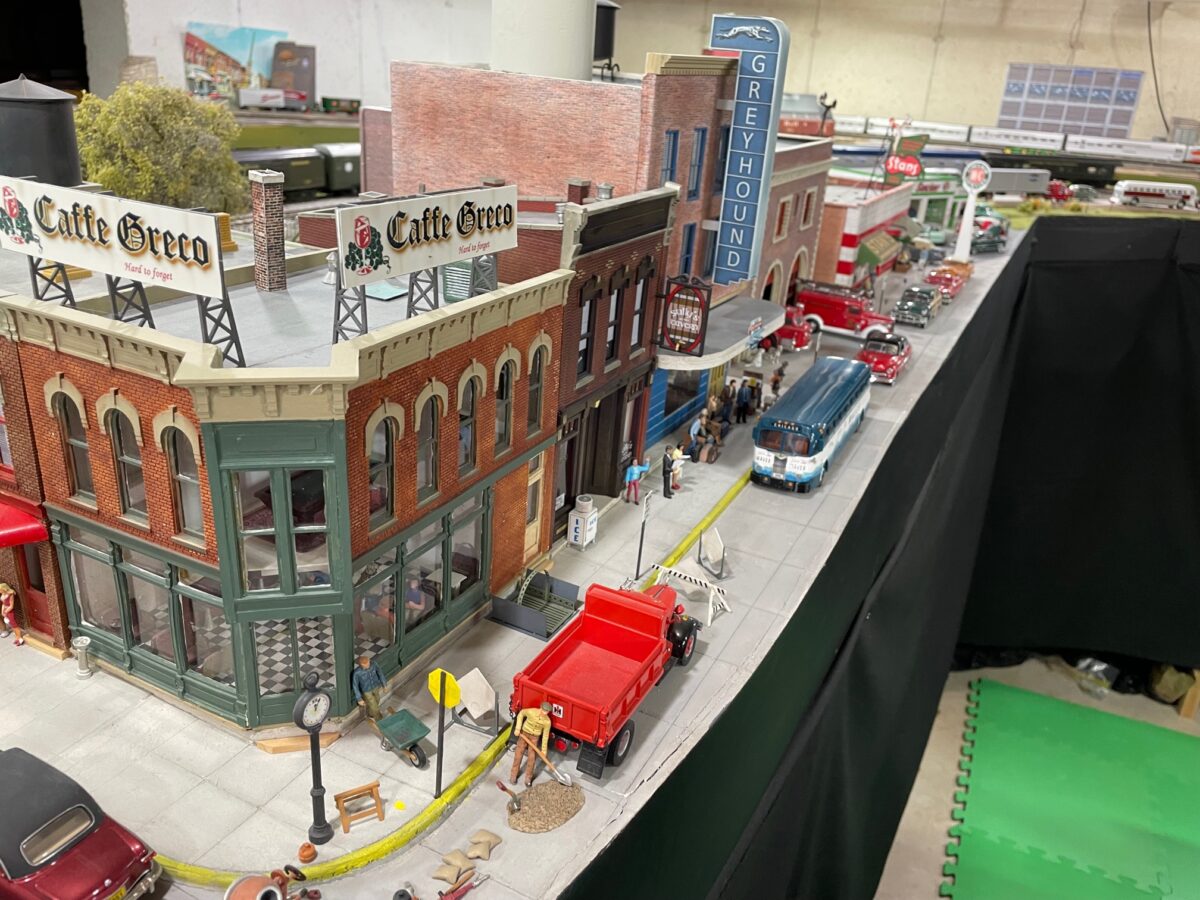
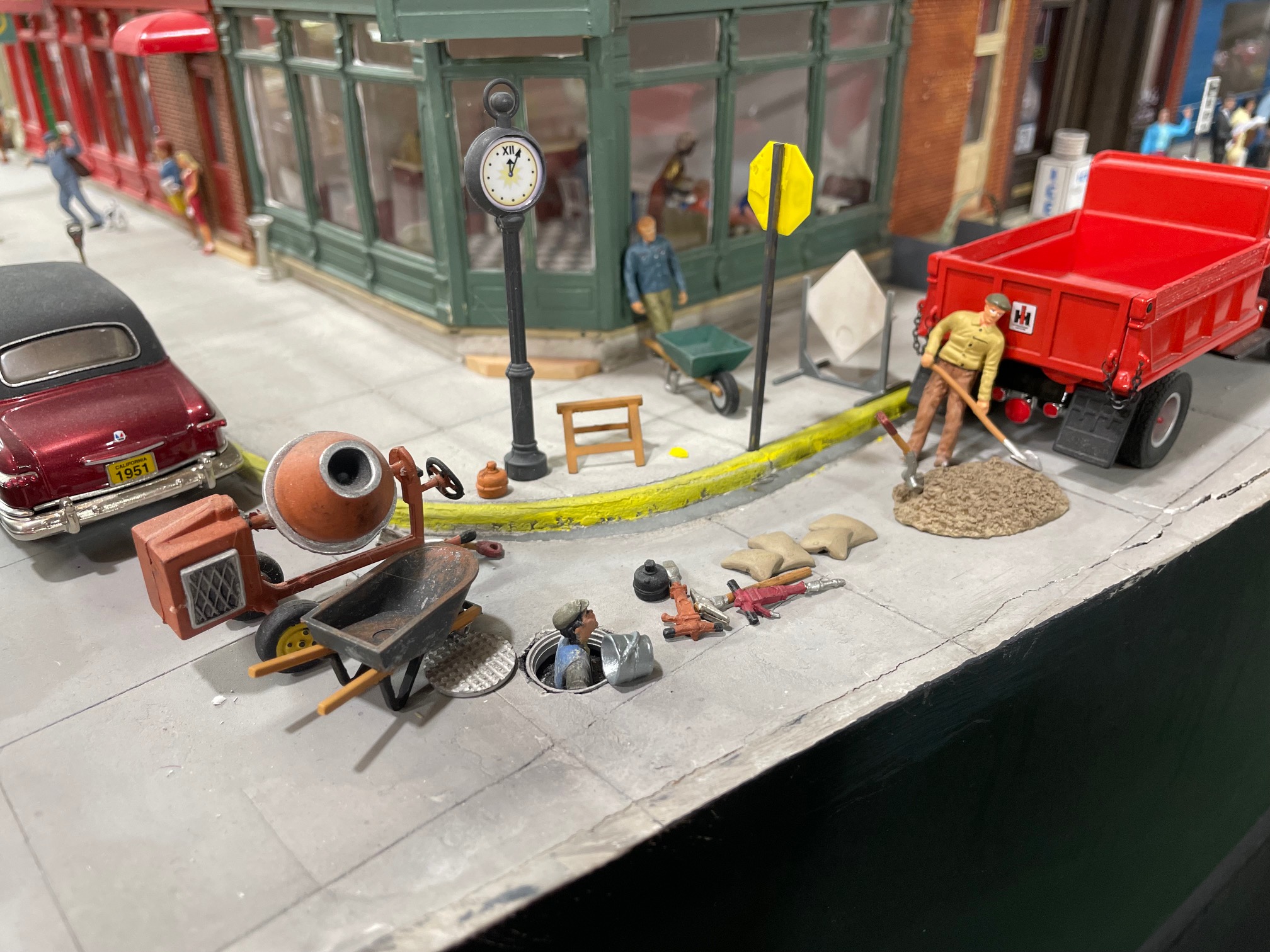
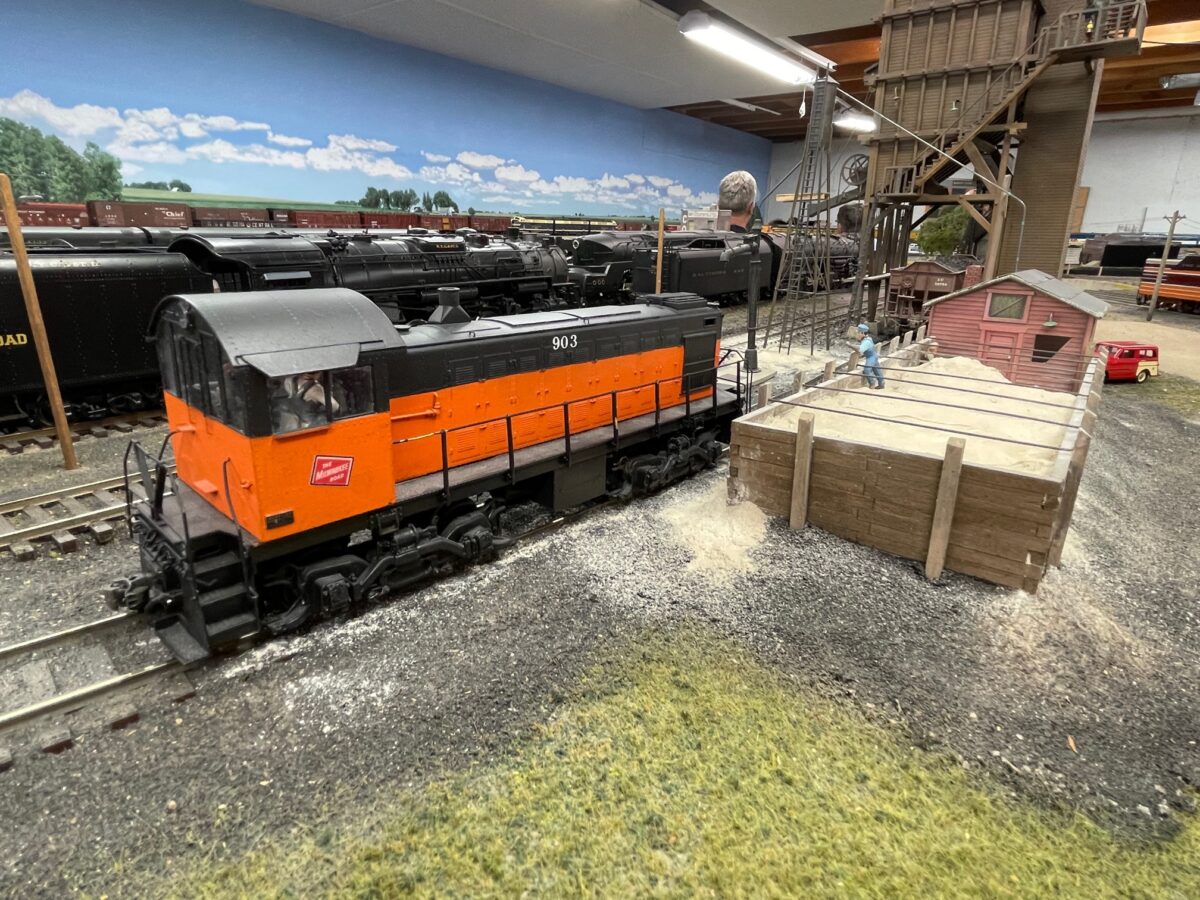
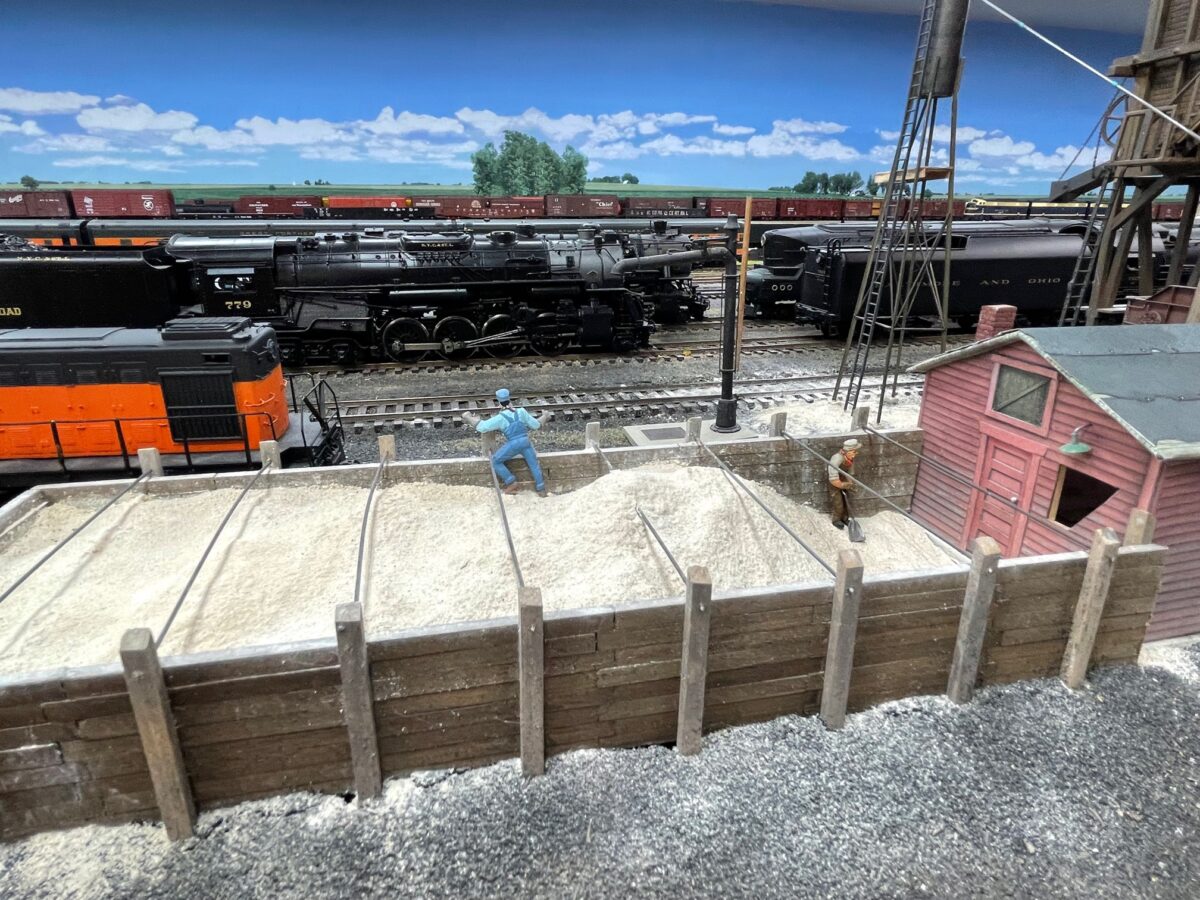
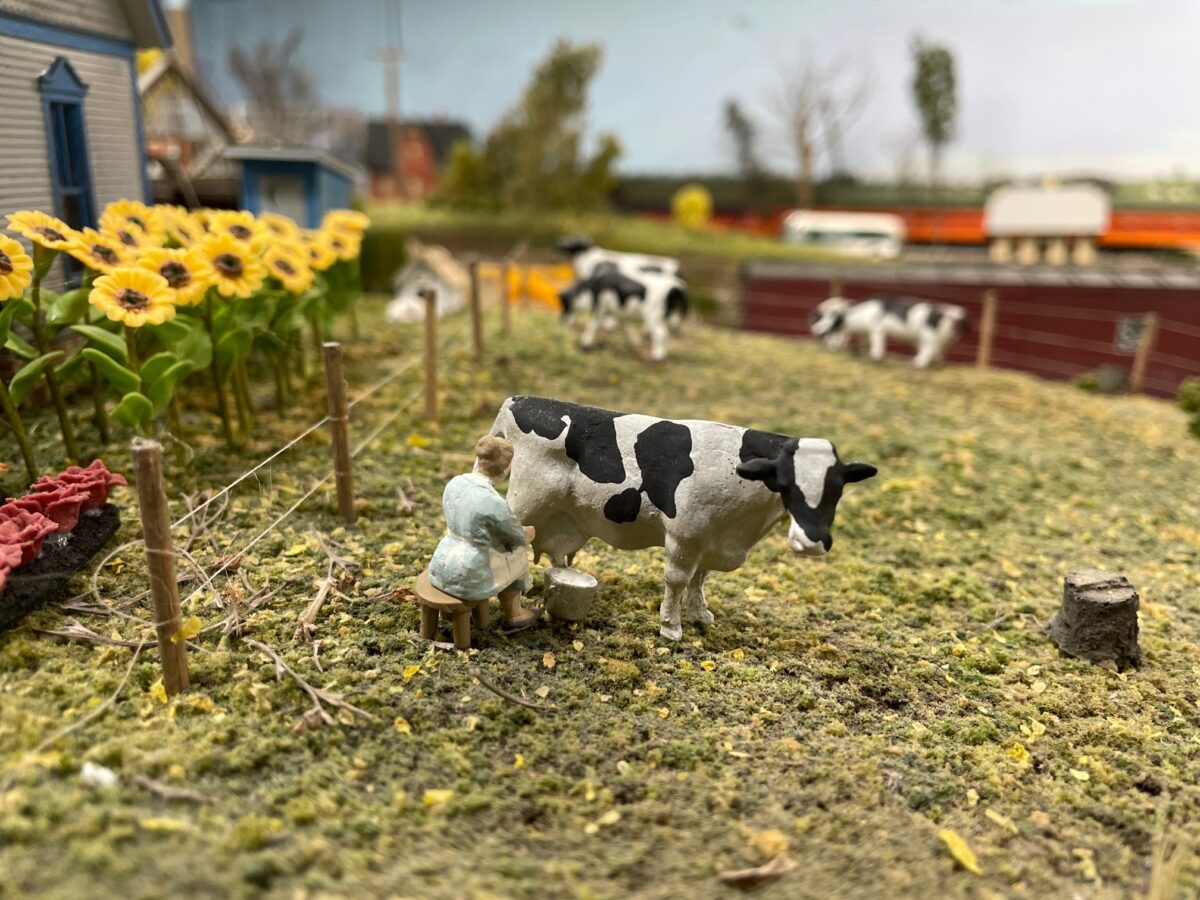
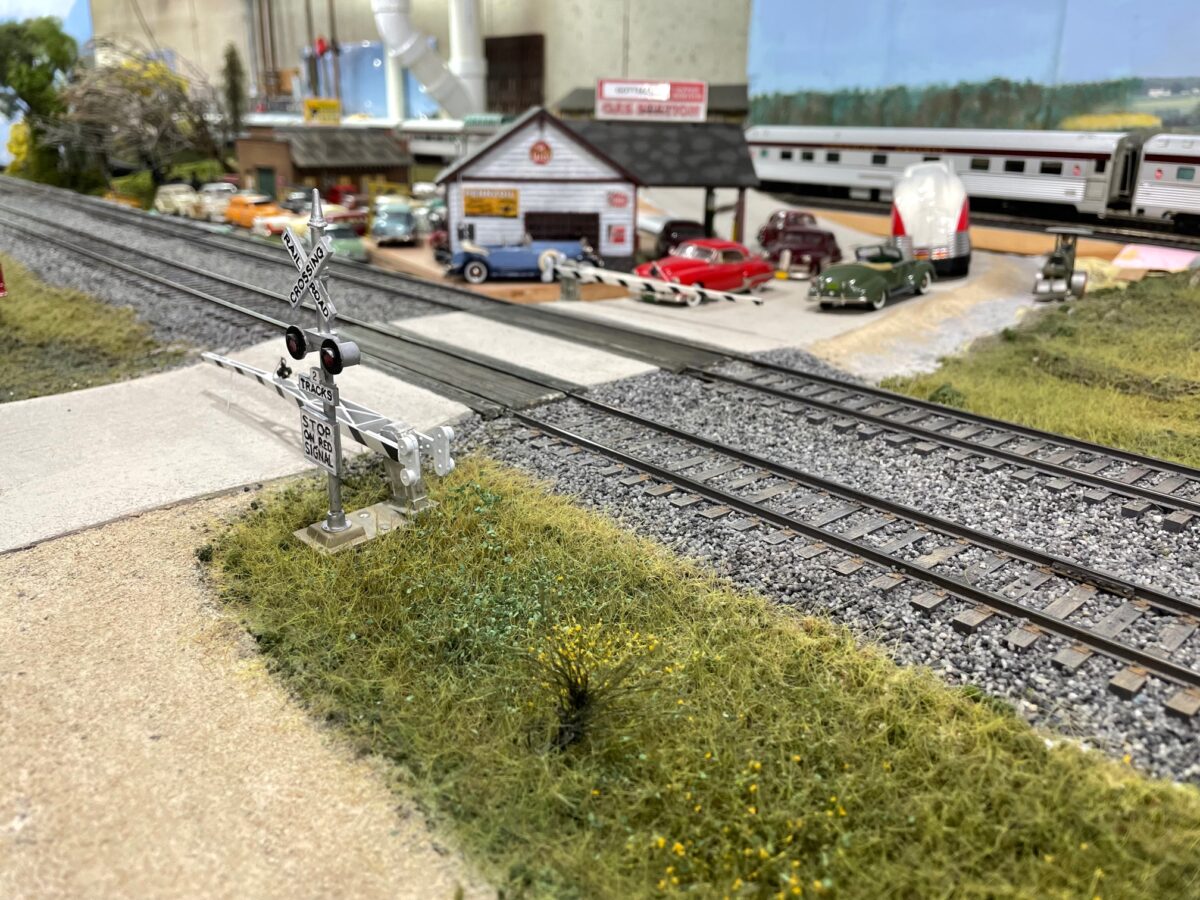
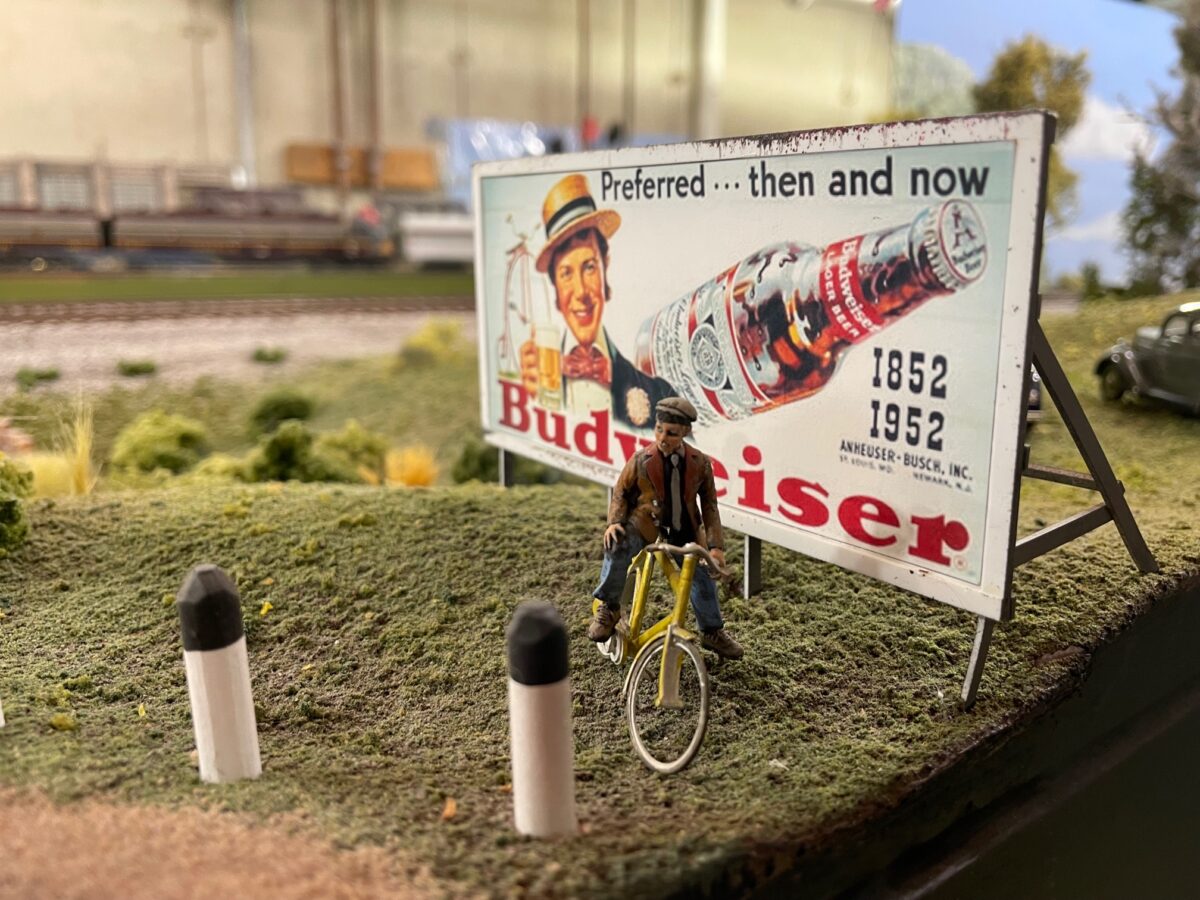
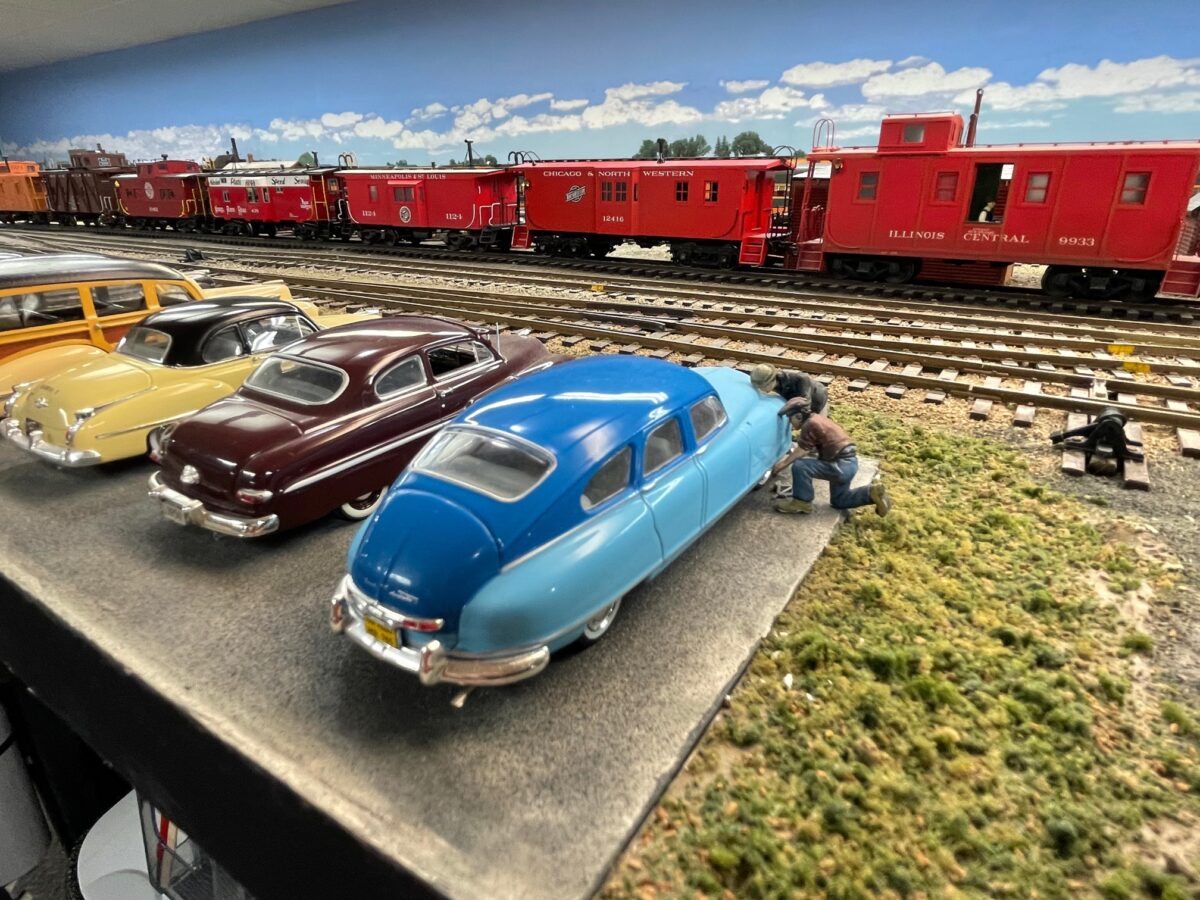
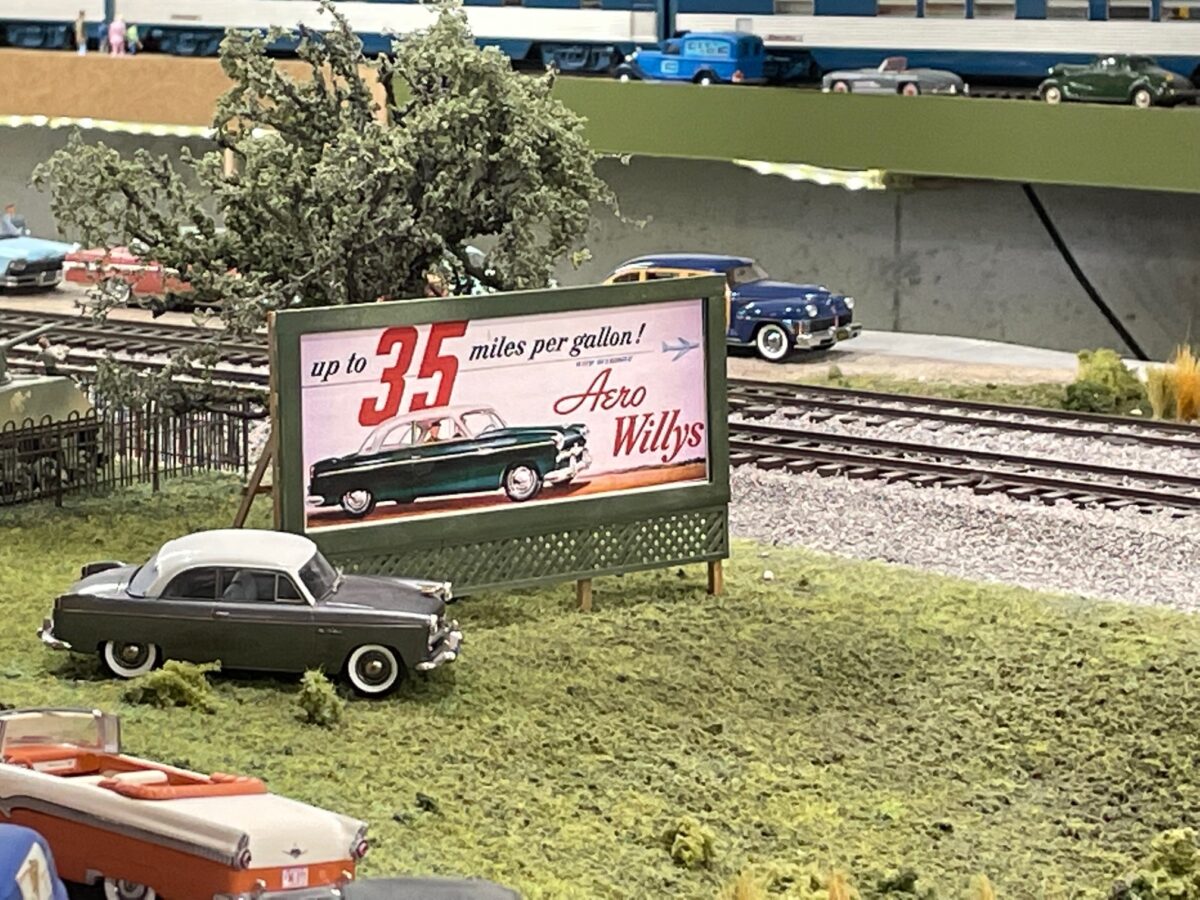
While some may find the track plan too basic, I think the simplicity of the plan allows the railroad to be completed and enjoyed. For me, the most impressive thing about the layout was how it was brought to life by the small everyday scenes modeled. The use of people and vehicles makes you feel like the models are alive.
You really get the sense that the railroad is moving through the towns modeled, not like a lot of layouts where the everyday life is a second thought.
I want to thank our hosts for taking the time to share their railroad with us. We arrived close to the end of the scheduled open house and they found the energy to explain and showcase the railroad to us.
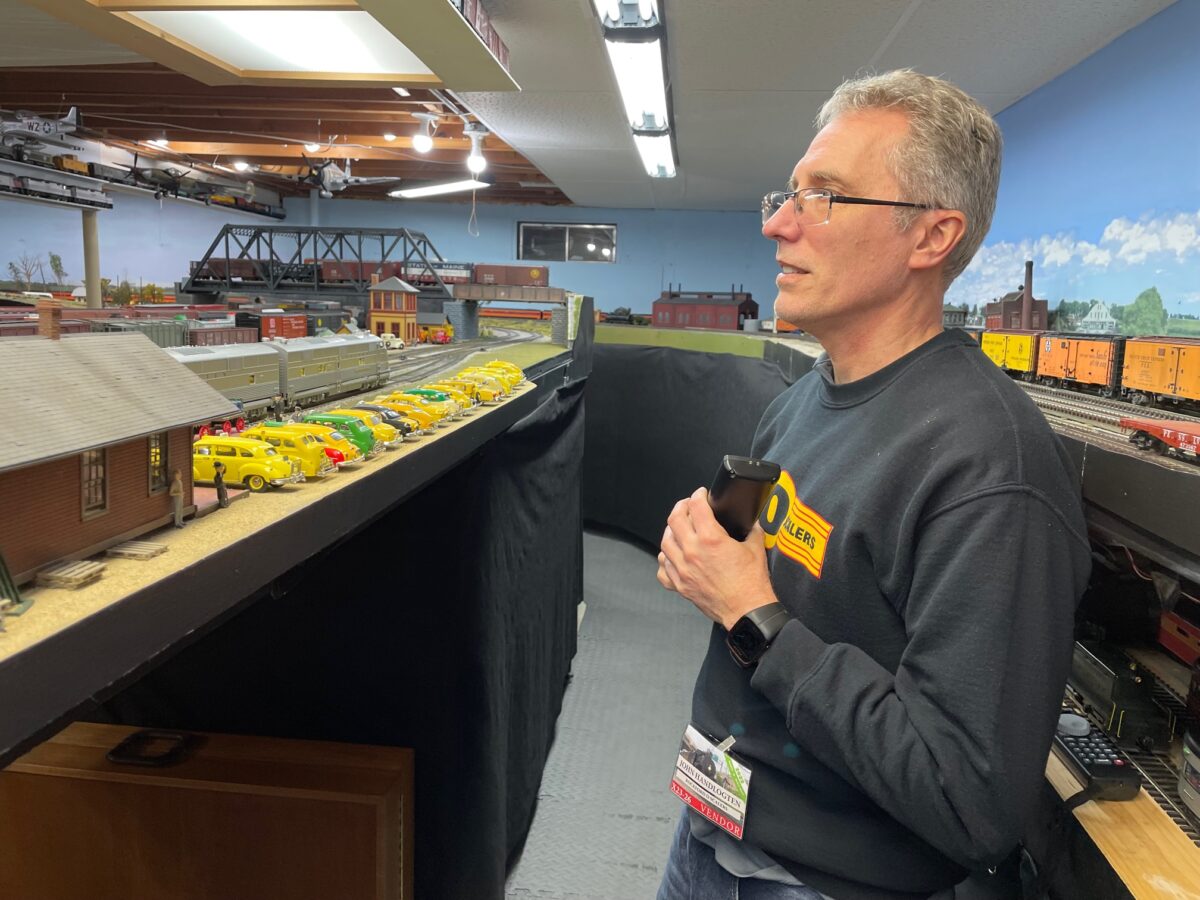
John Handlogten discussing the railroad with us.Frank McCabe talking with Rich Yoder about the models on display on the first floor.
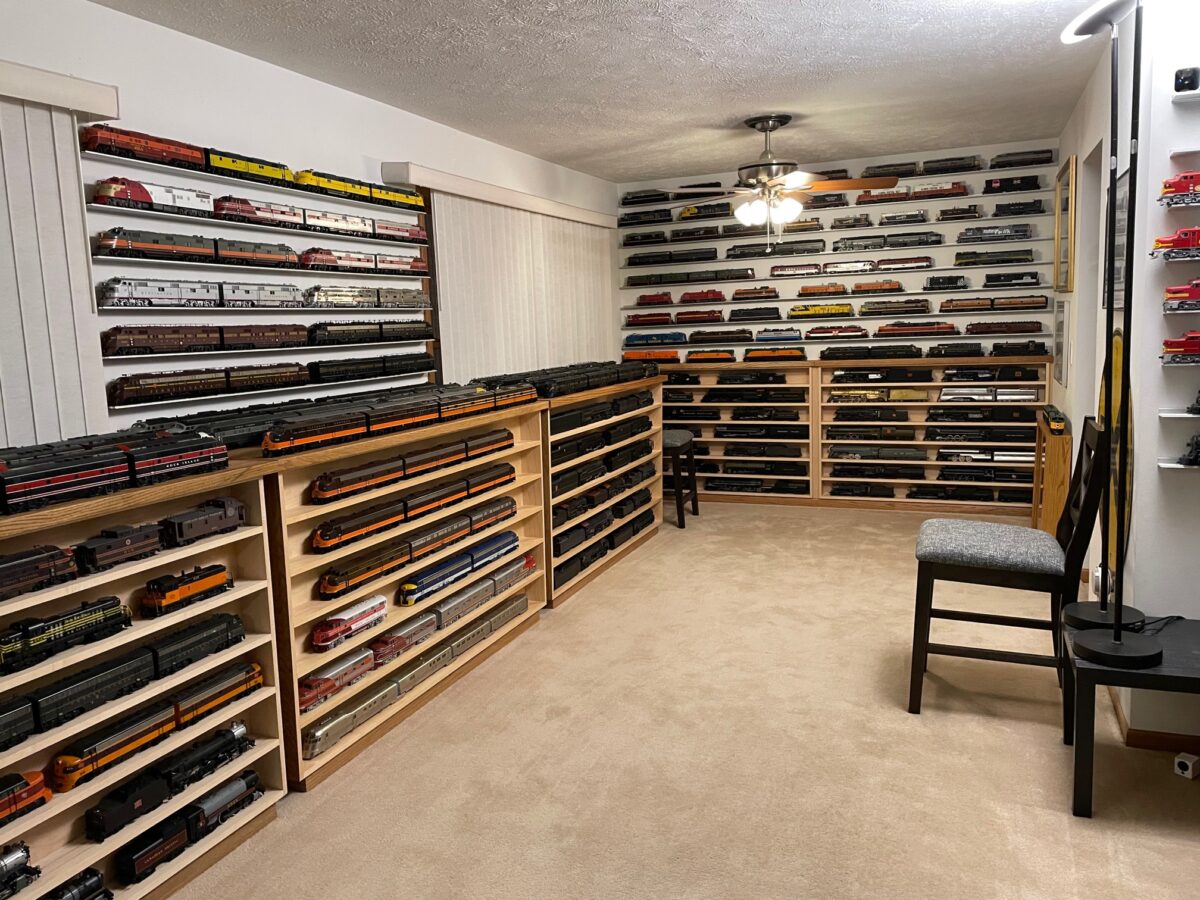
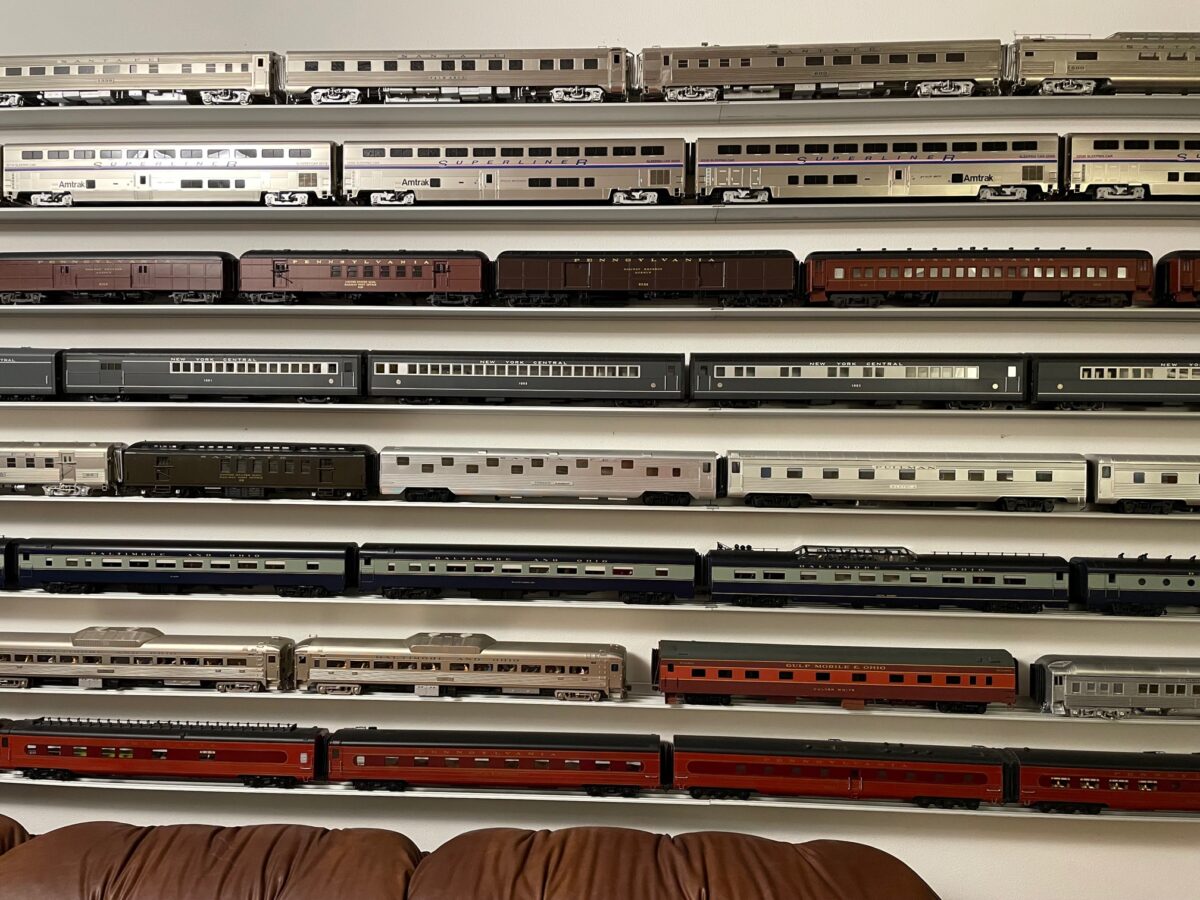
The first floor was equally amazing to see all the models displayed. Everywhere you looked there were models displayed.
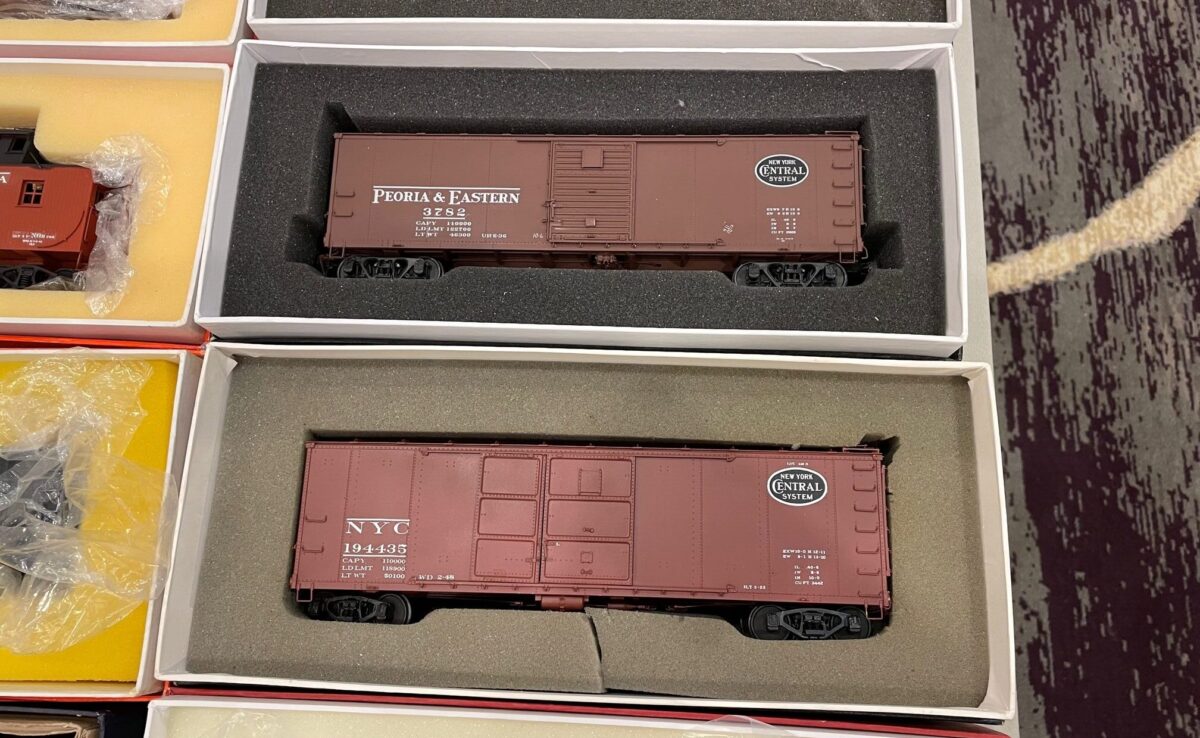
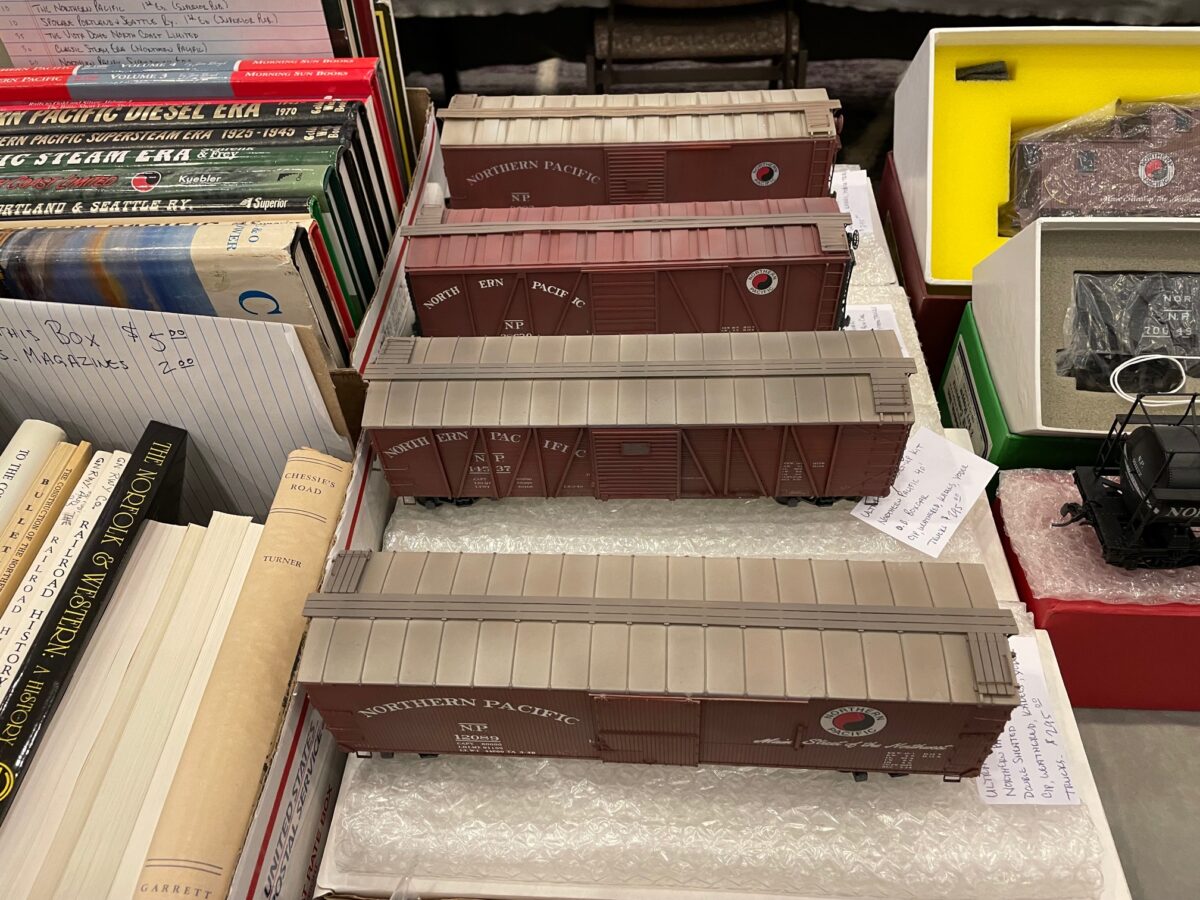
One of the best things about the Chicago show is just seeing so many nice models at the show. Here are some of them, not in any order just a ramdom sampling.
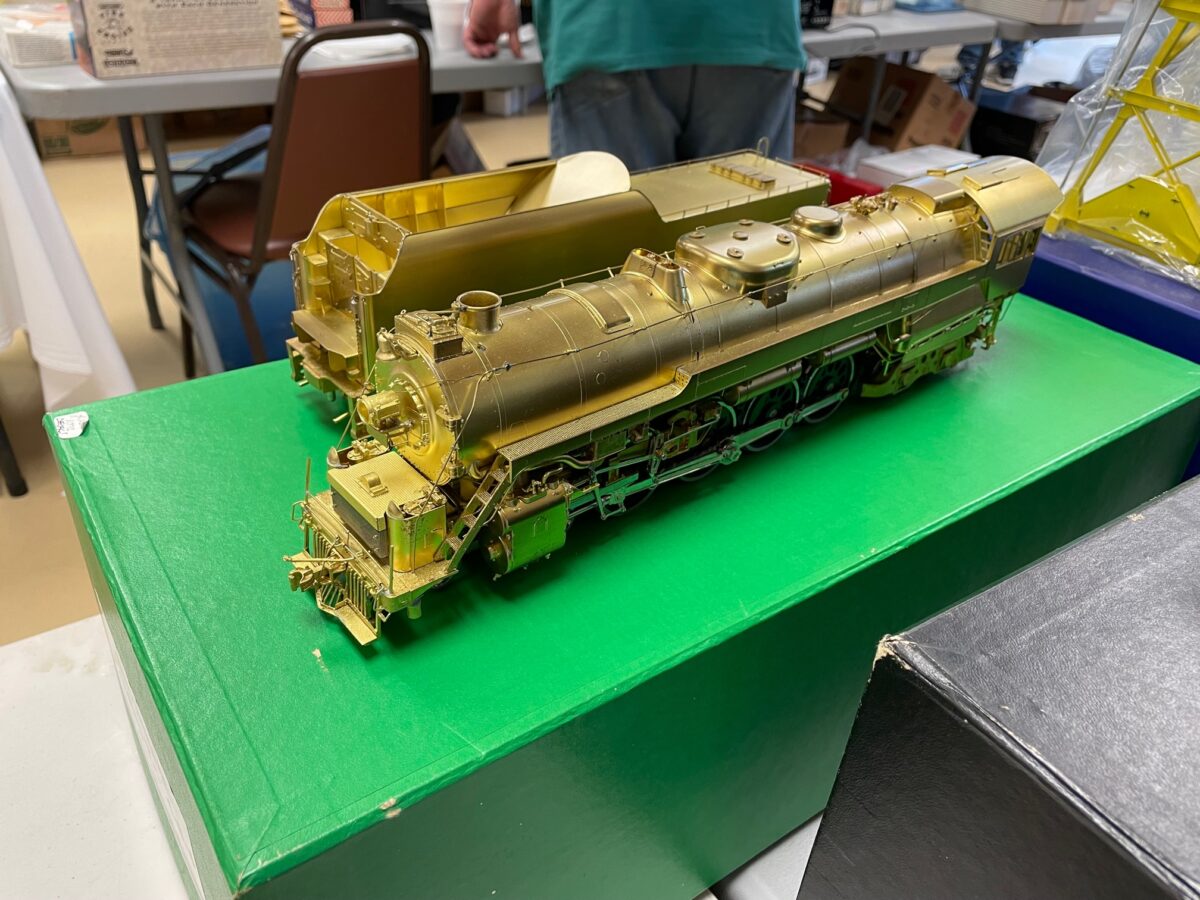
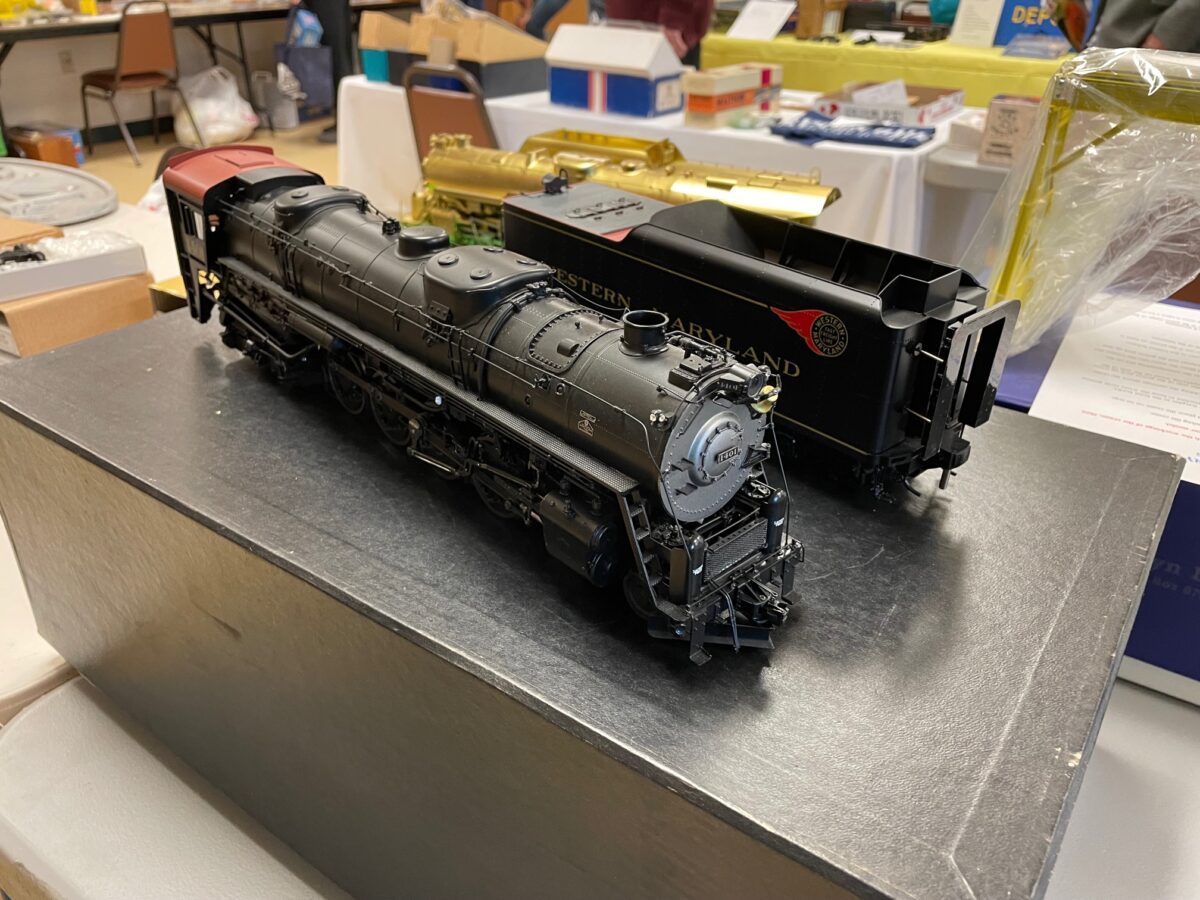
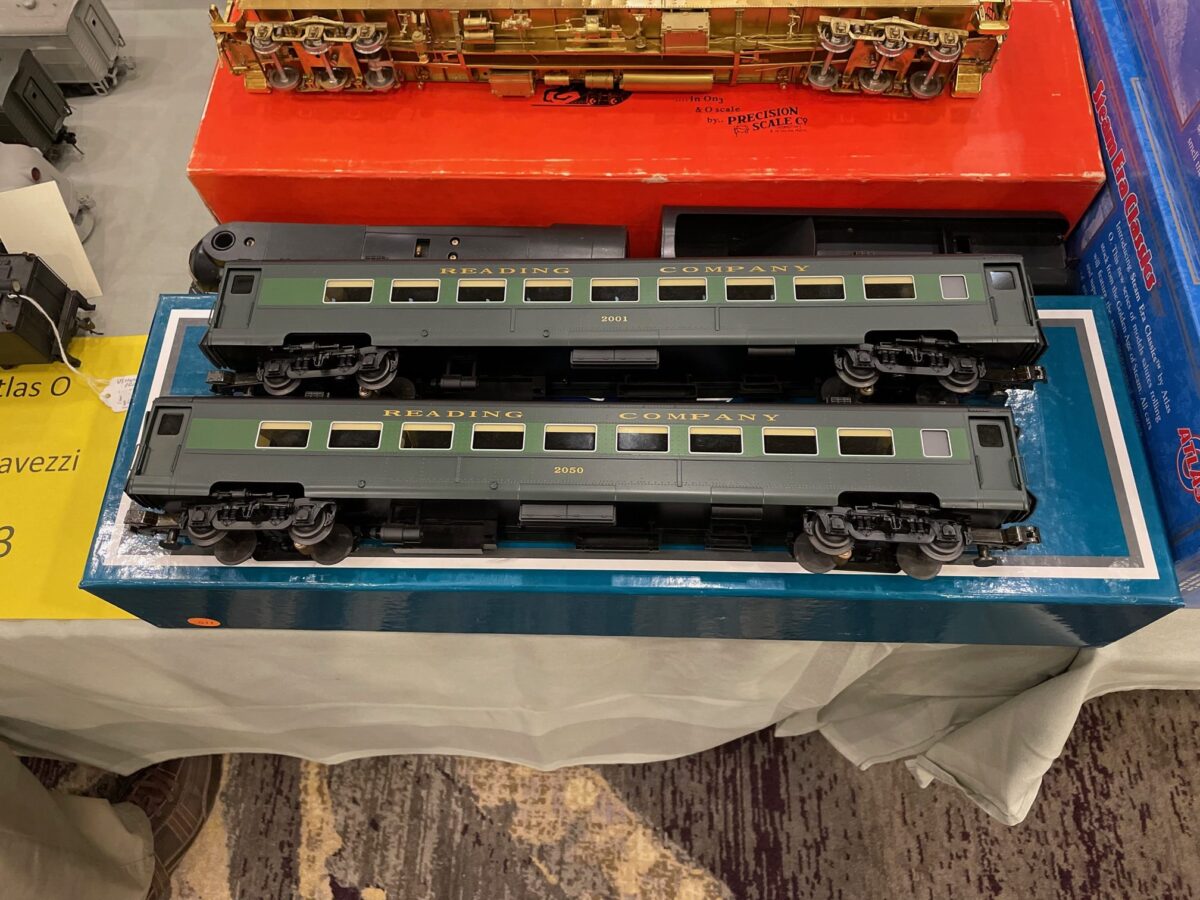
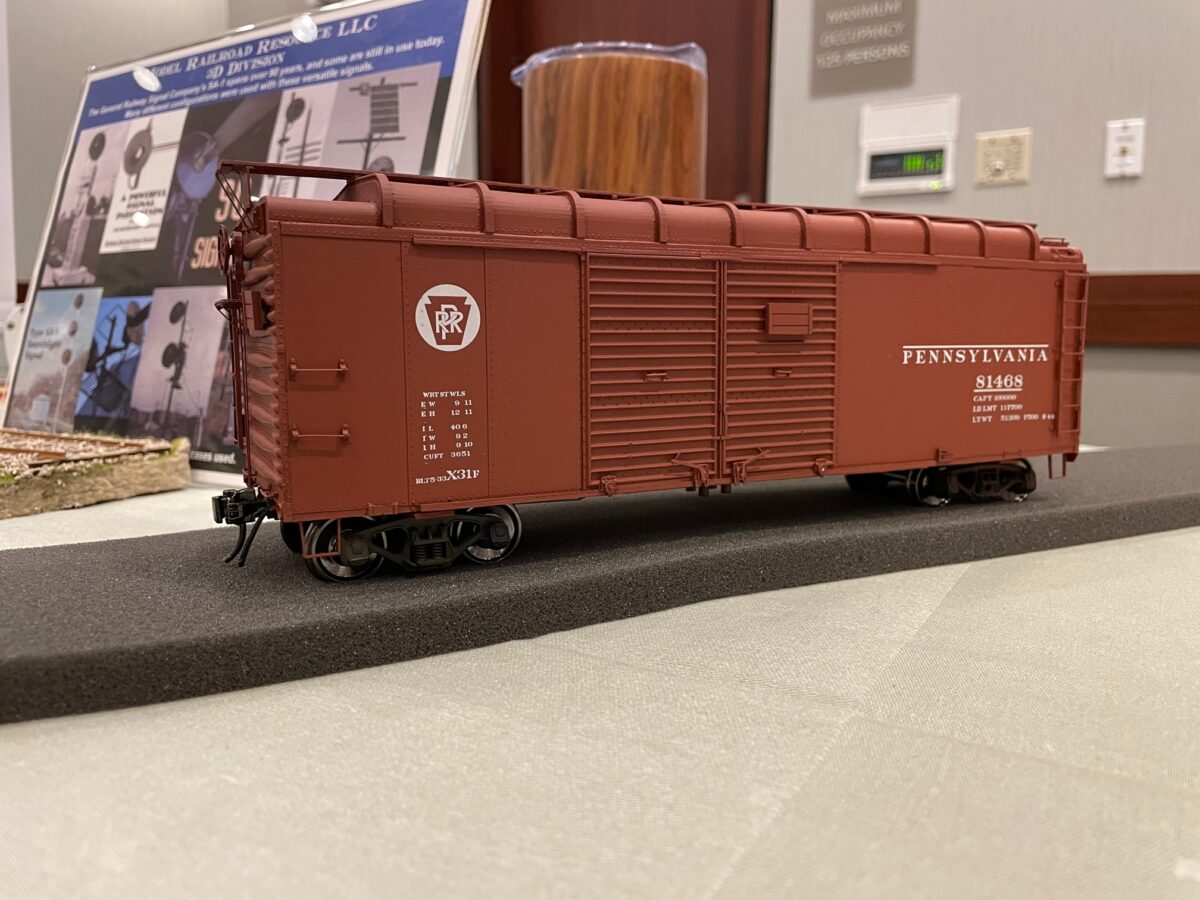
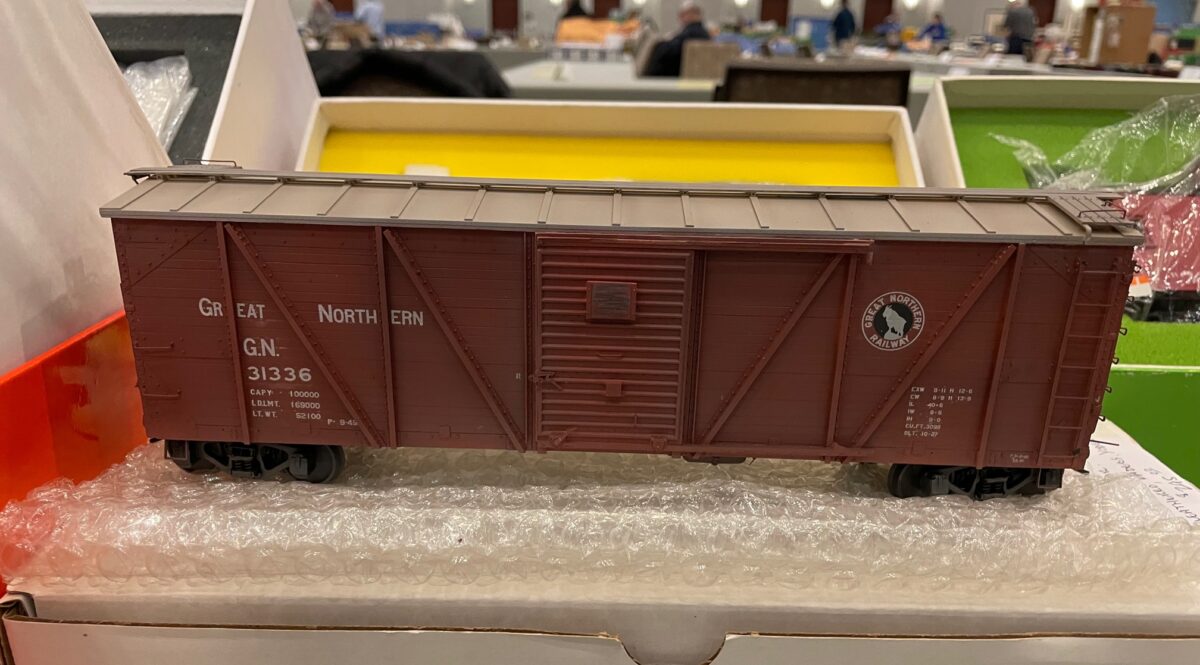
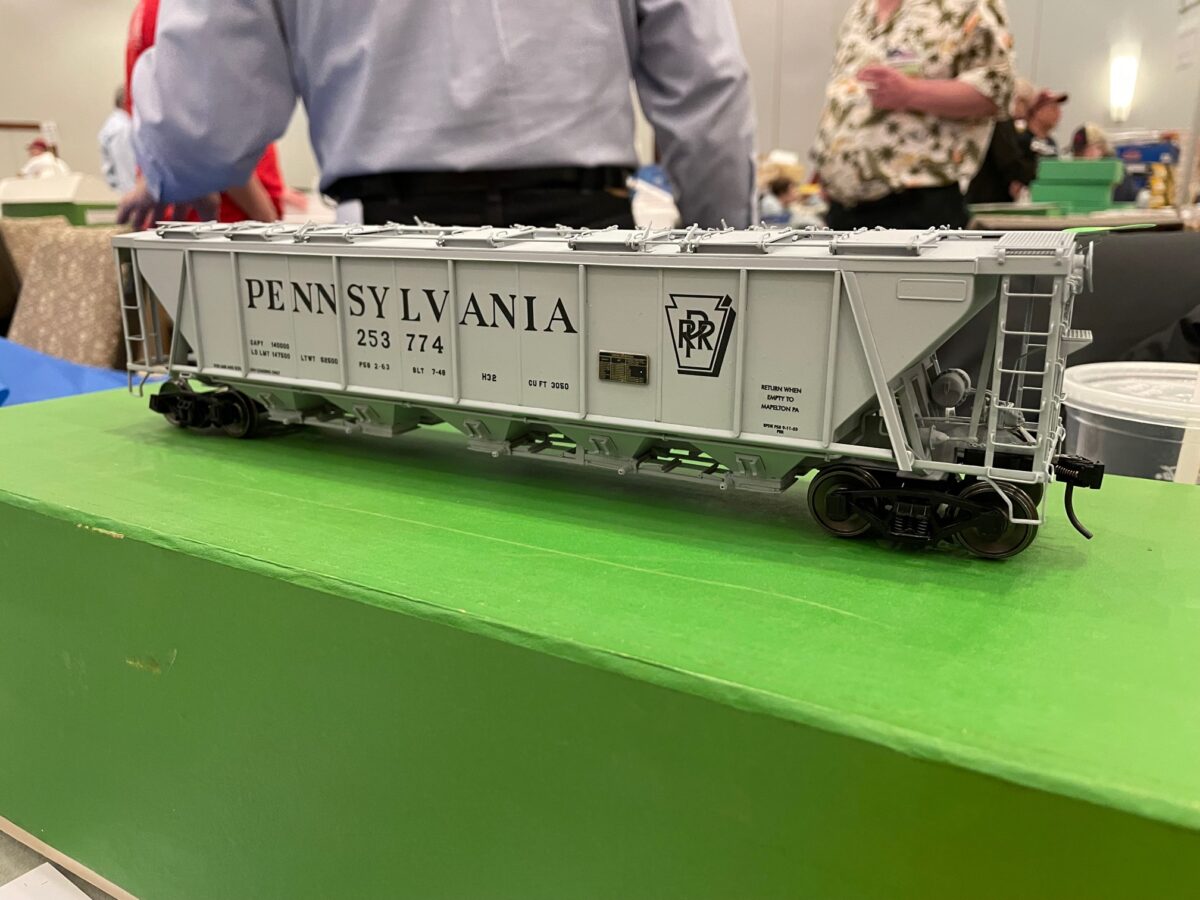
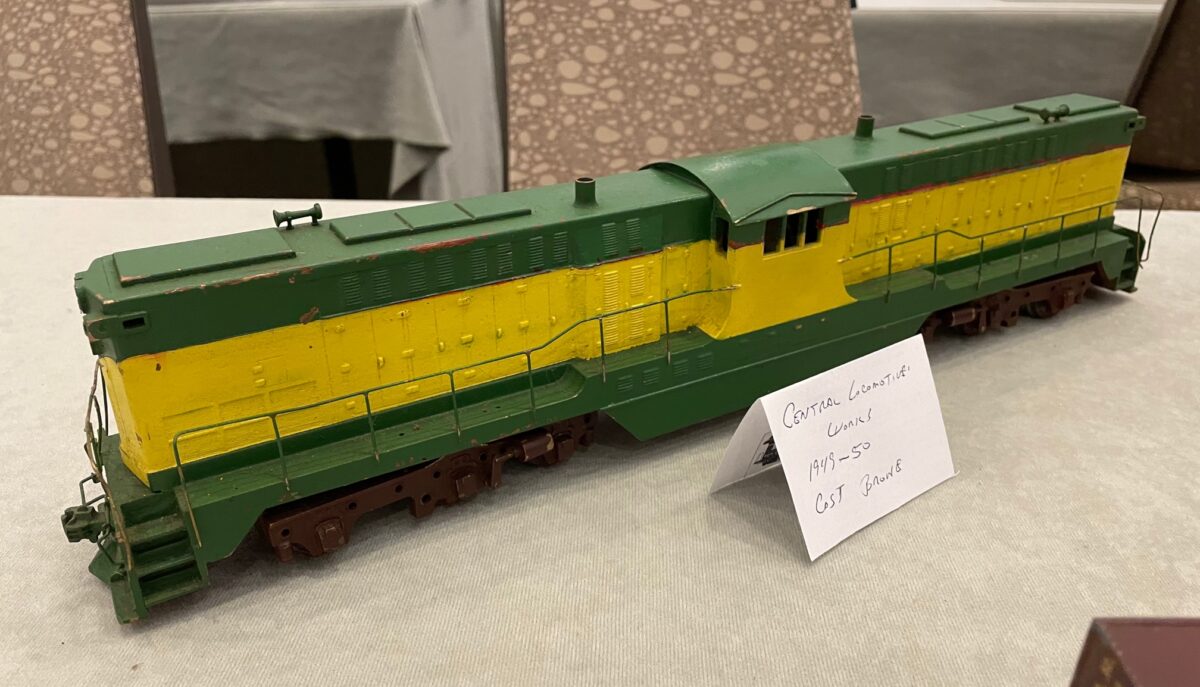
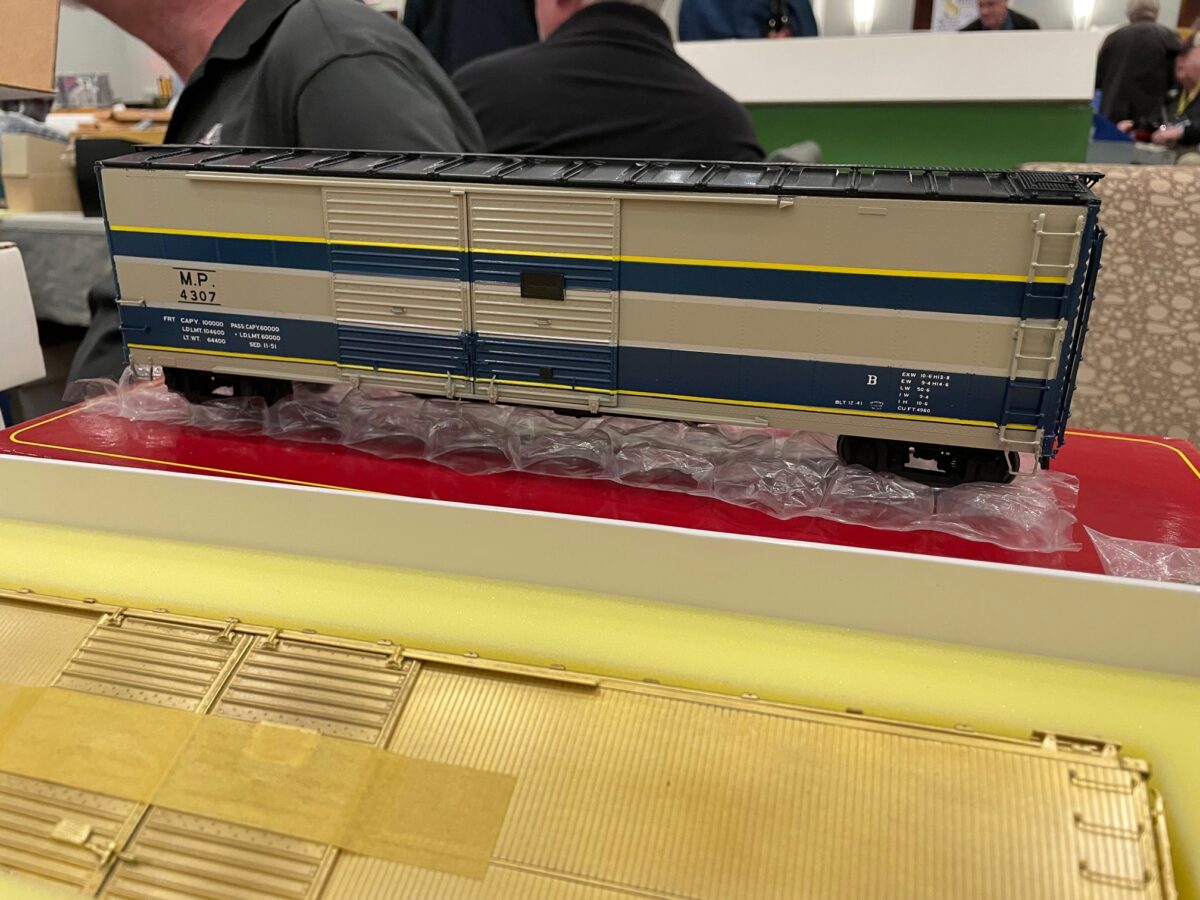
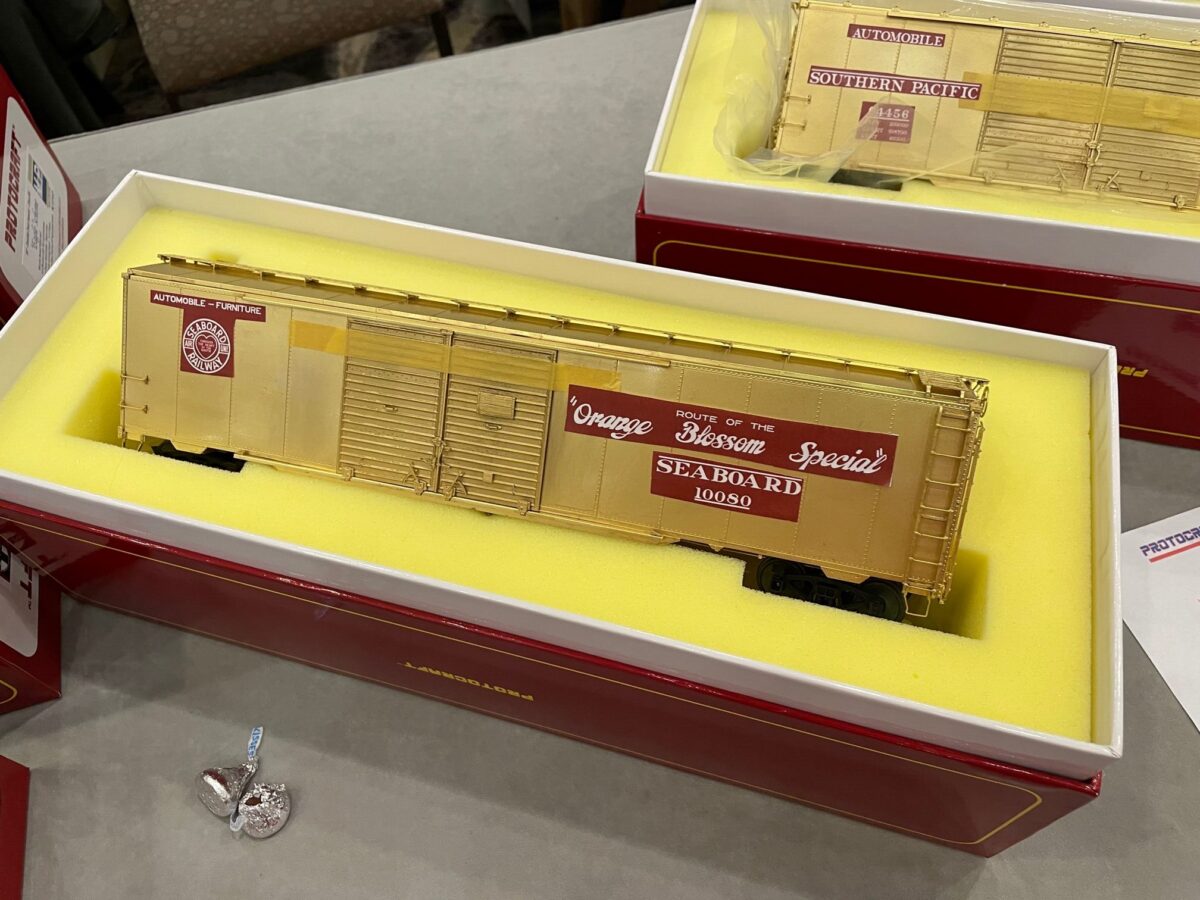
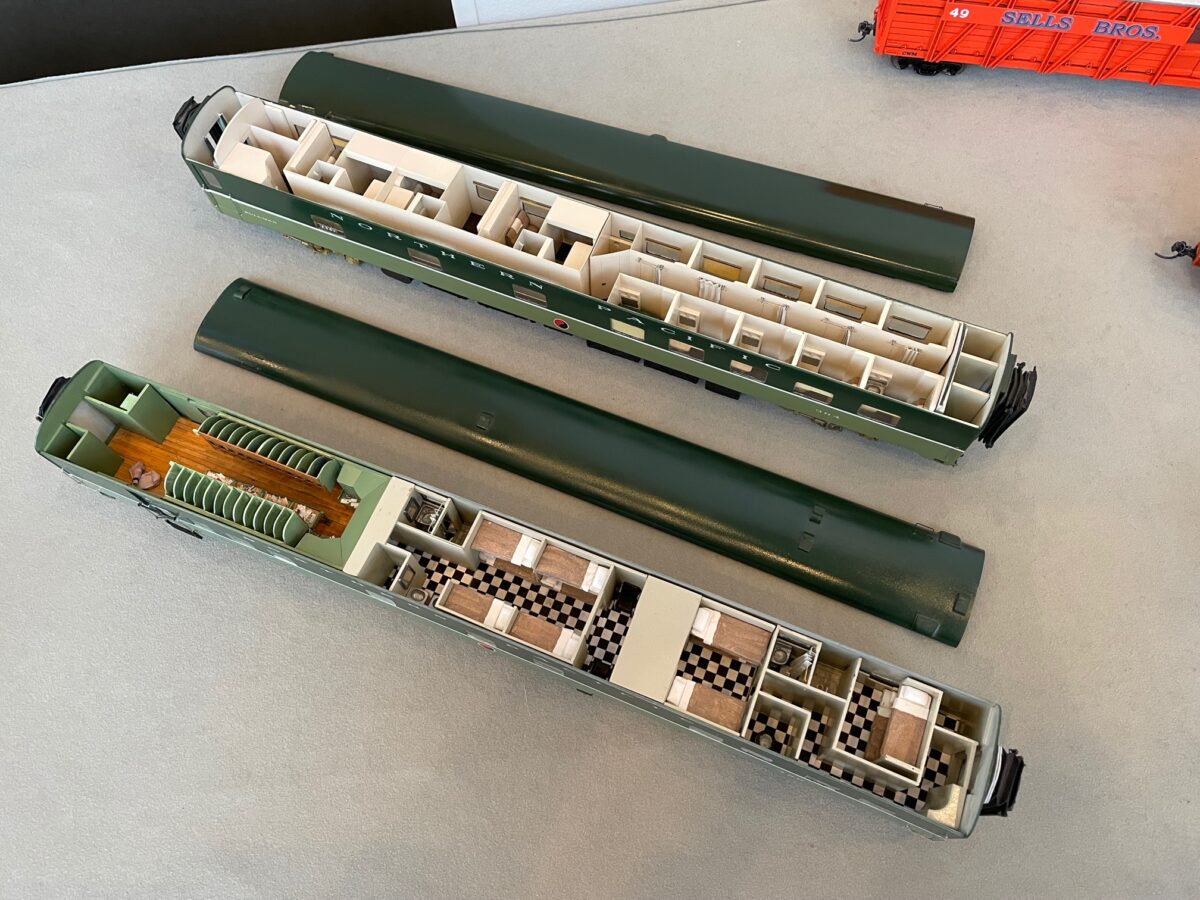
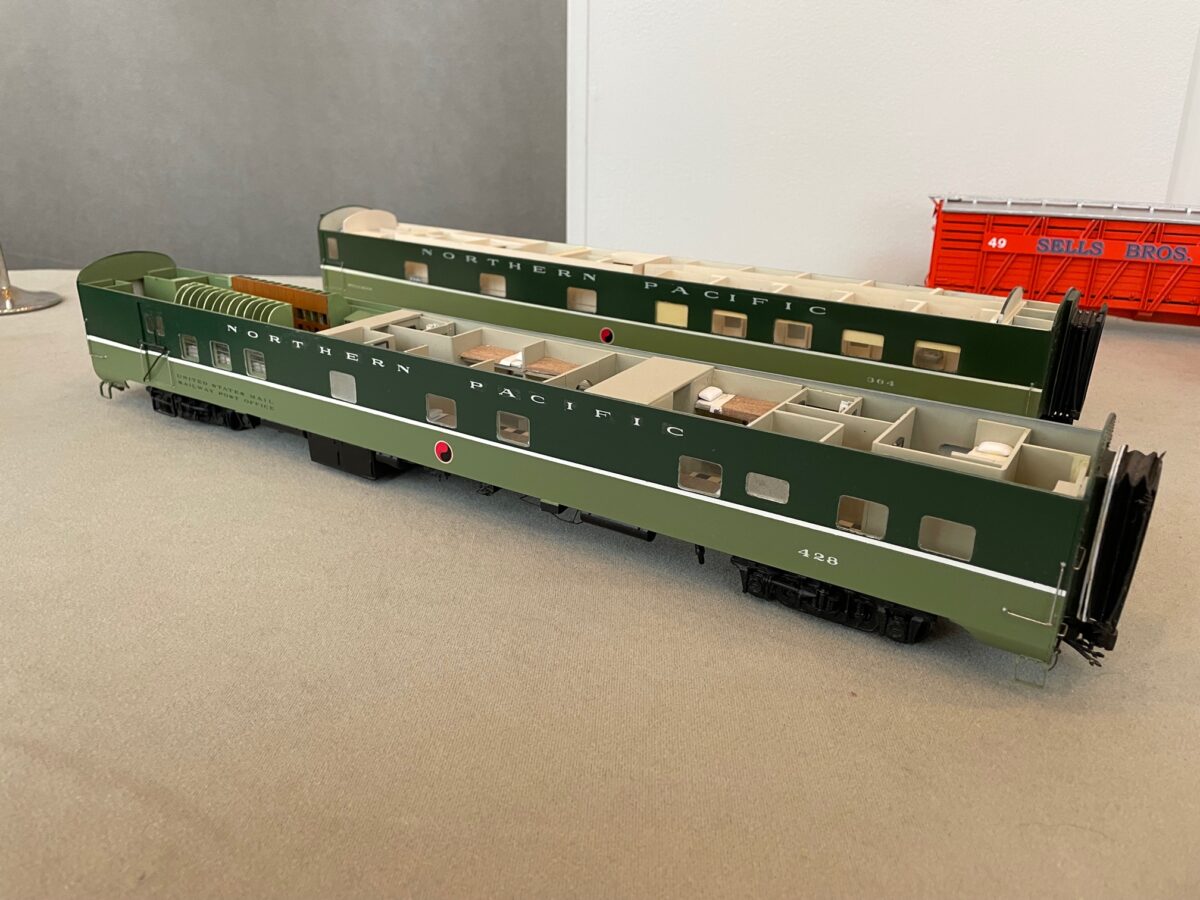
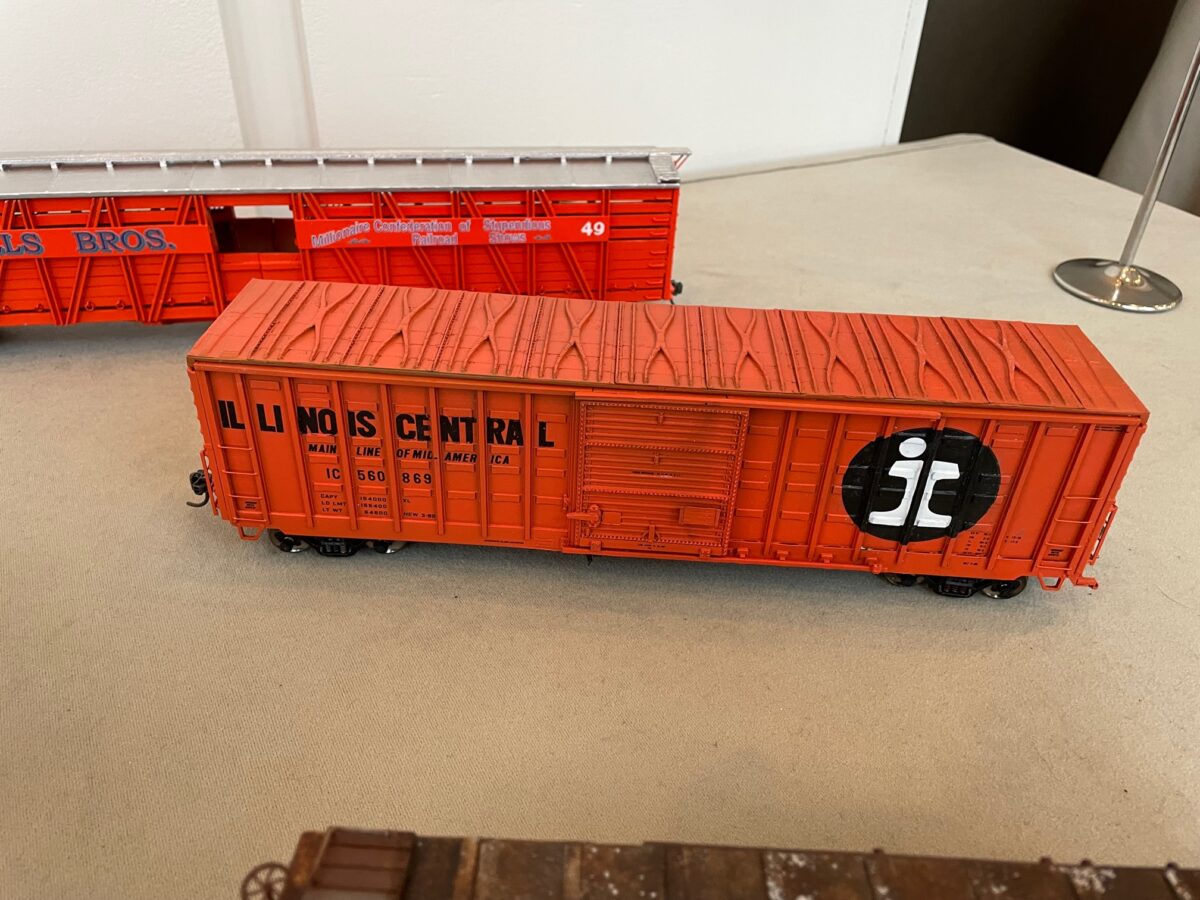
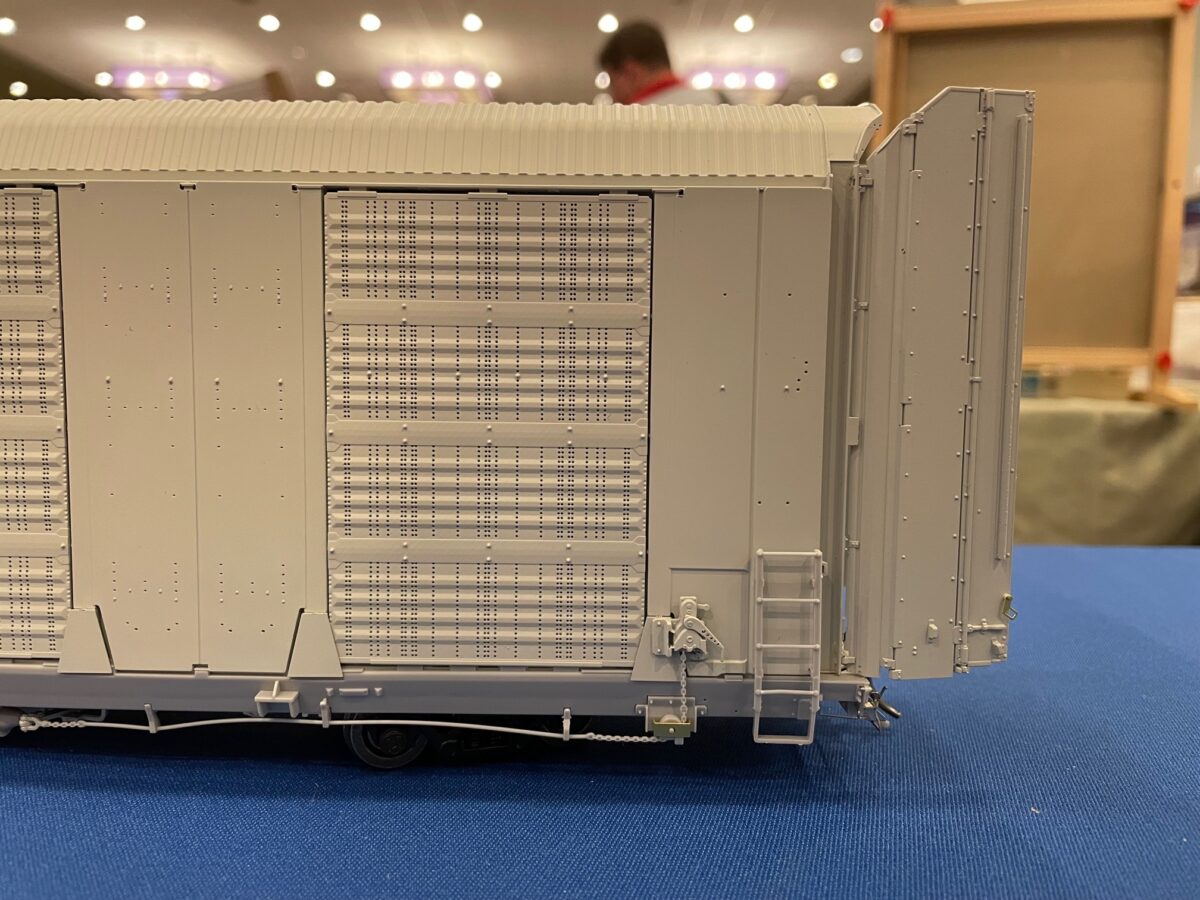
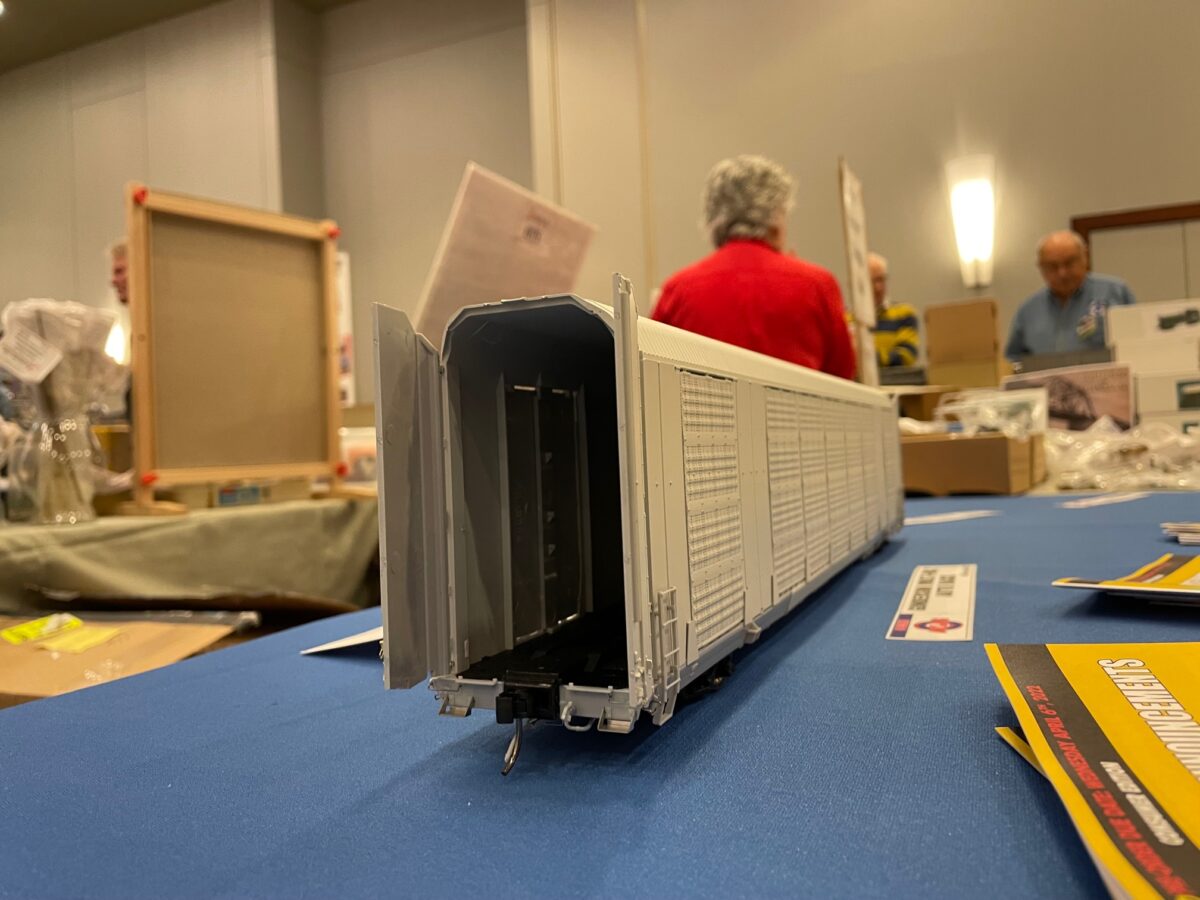
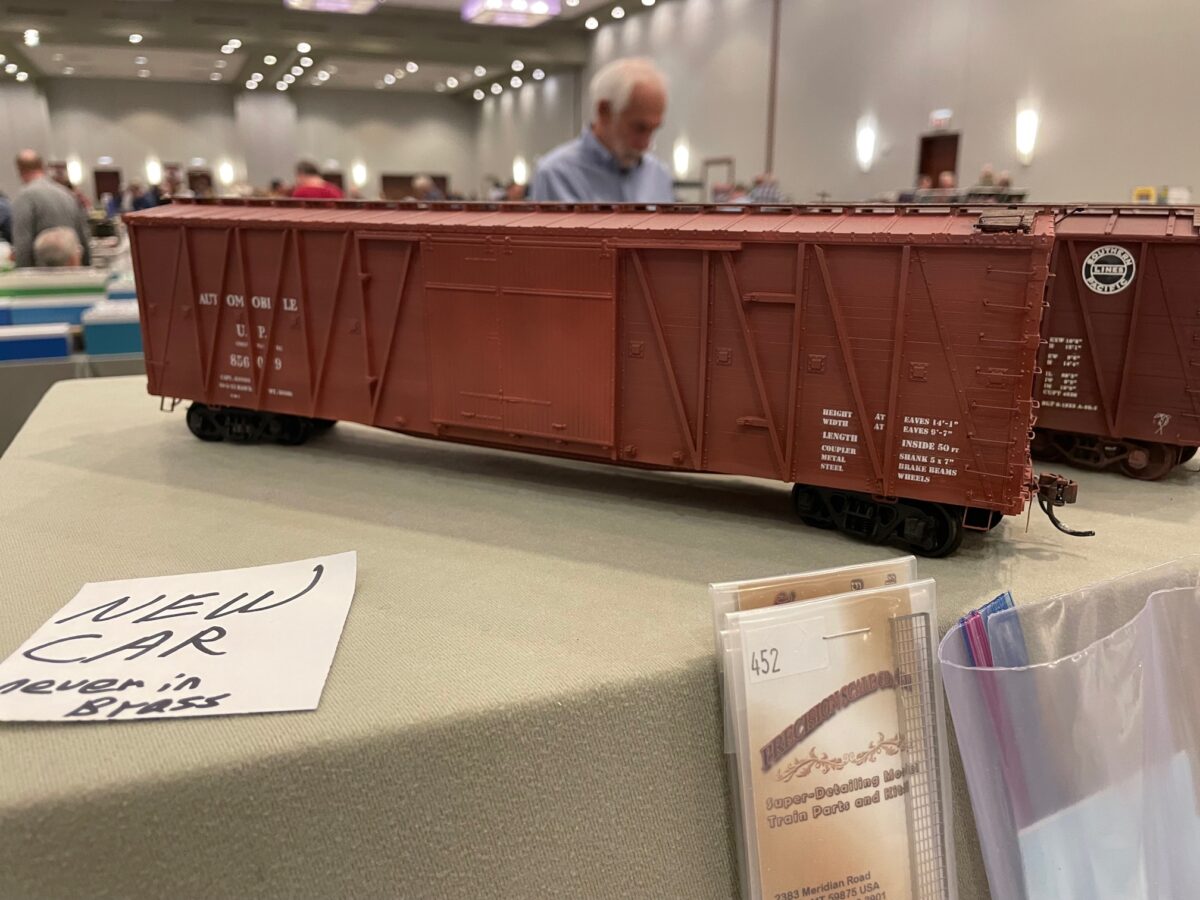
For the Reading Modeler’s, an Overland Reading T-1 on Rich Yoder’s table.Even a couple of SGL Reading coaches on a table.This is a new release from Atlas O Of an Auto Rack car.SC&F’s new release kit.This is the Yarmouth Models PRR X31f that Dan Dawdy has built.A couple of Pacific Limited cars on Tom Mapes’ table.Some nicely built-up Chooch Ultrscale KitsAnother nice built-up Chooch Ultrascale kit.A nicely painted Overland PRR H32An early cast Baldwin Center Cab unit. Looking forward to Central Locomotives run of this locomotive later this year.Protocraft had a painted version of their MP Express Car on the table.One of Protocraft’s new 50 ft boxcars
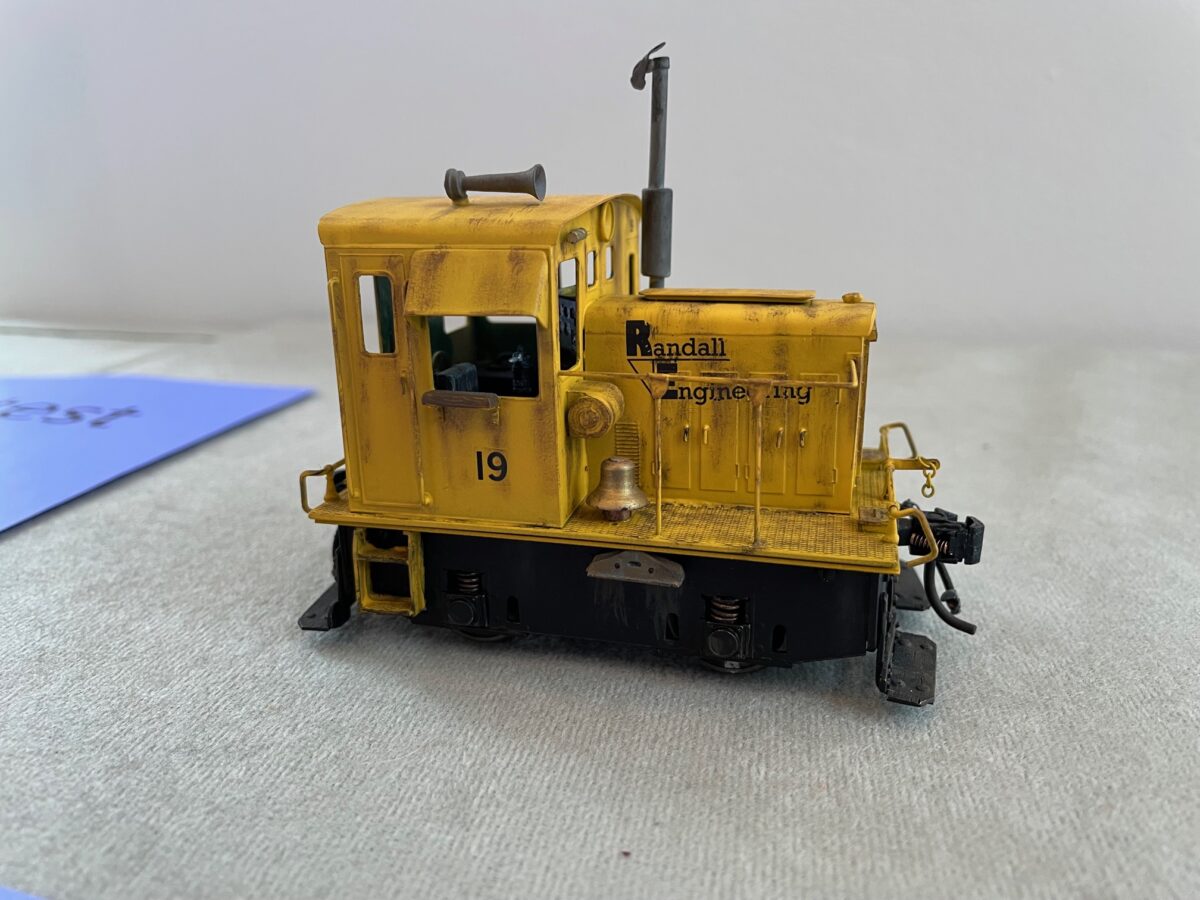
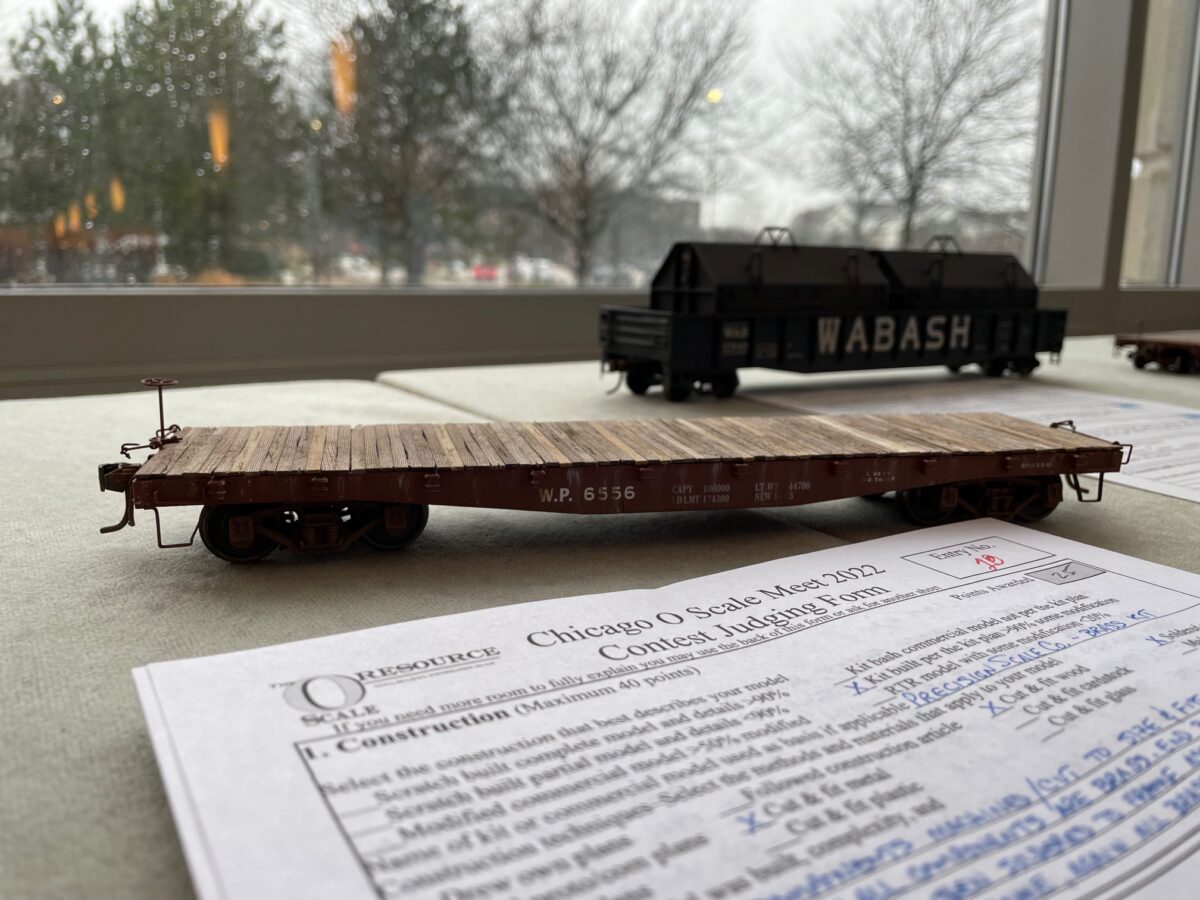
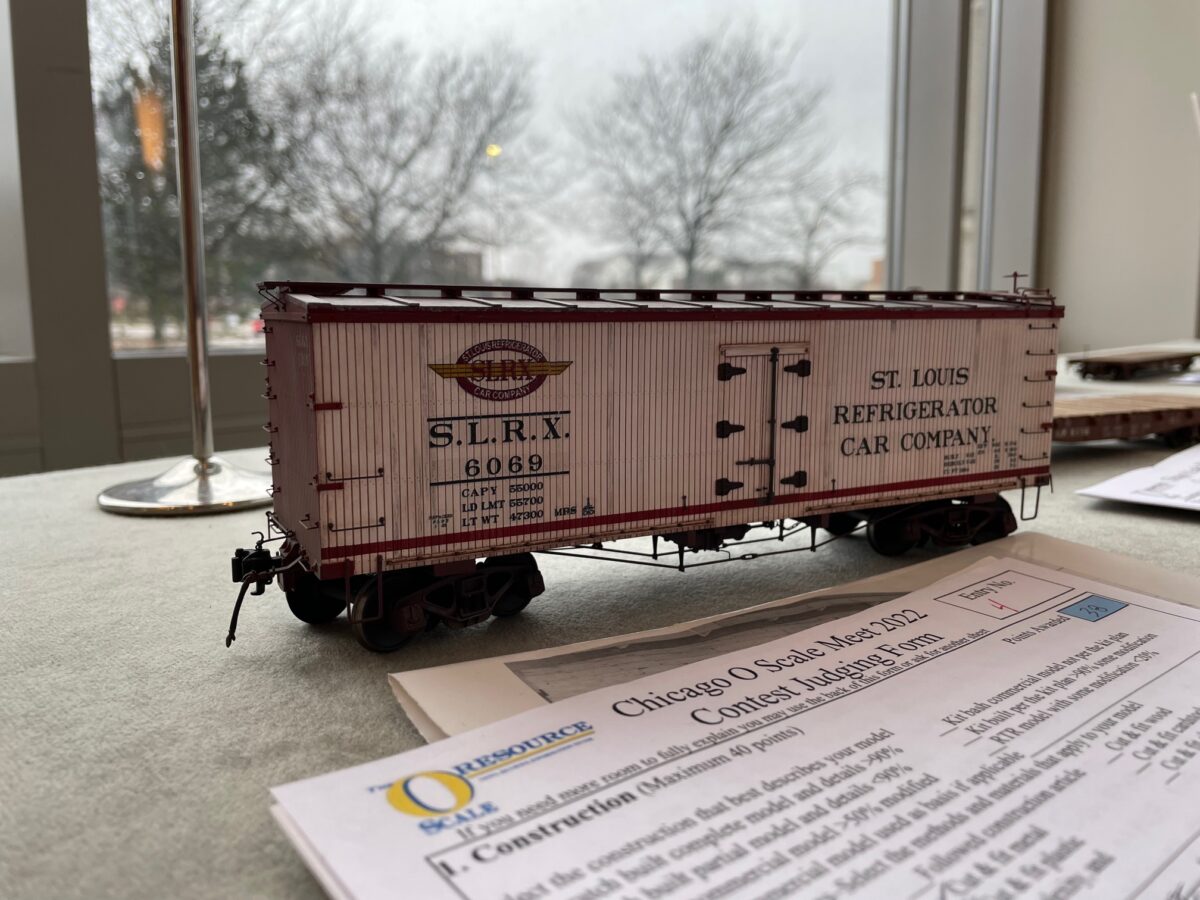
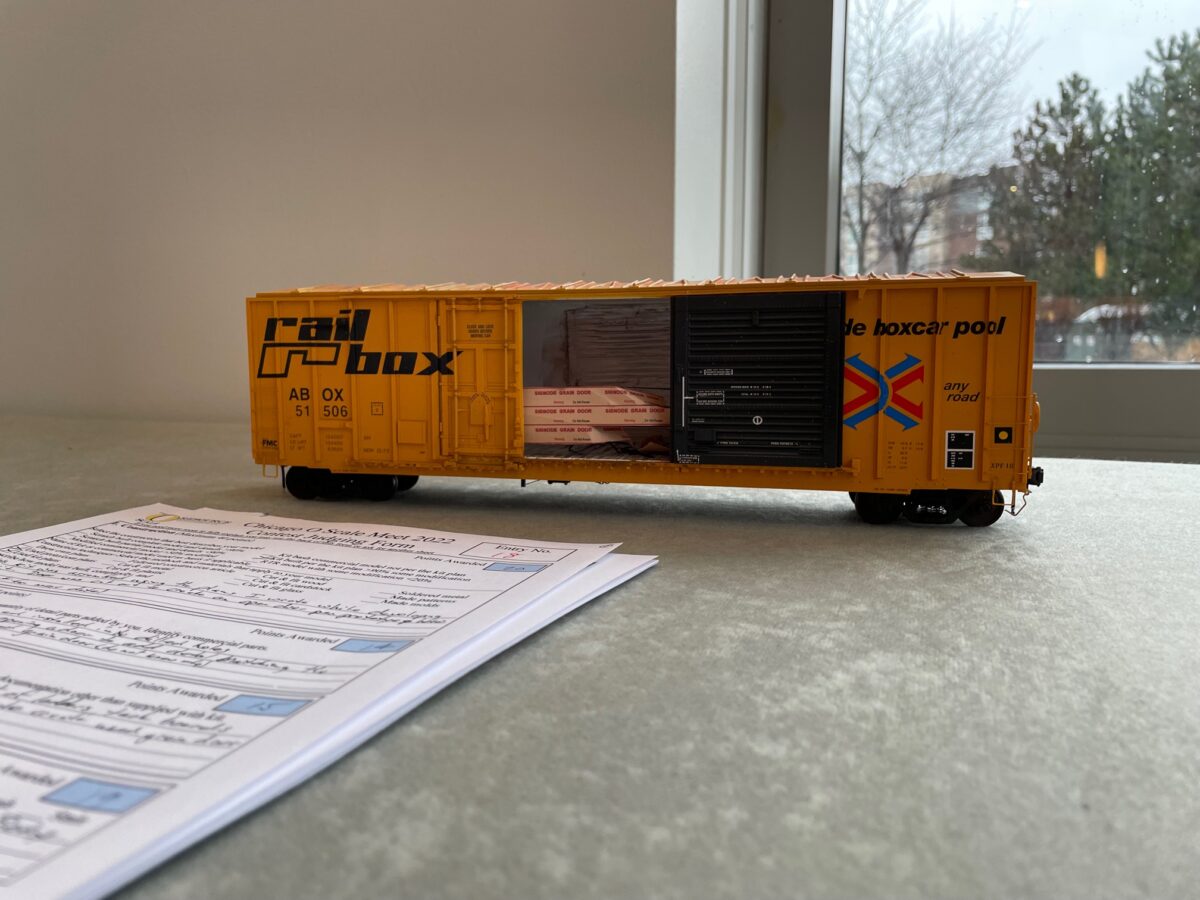
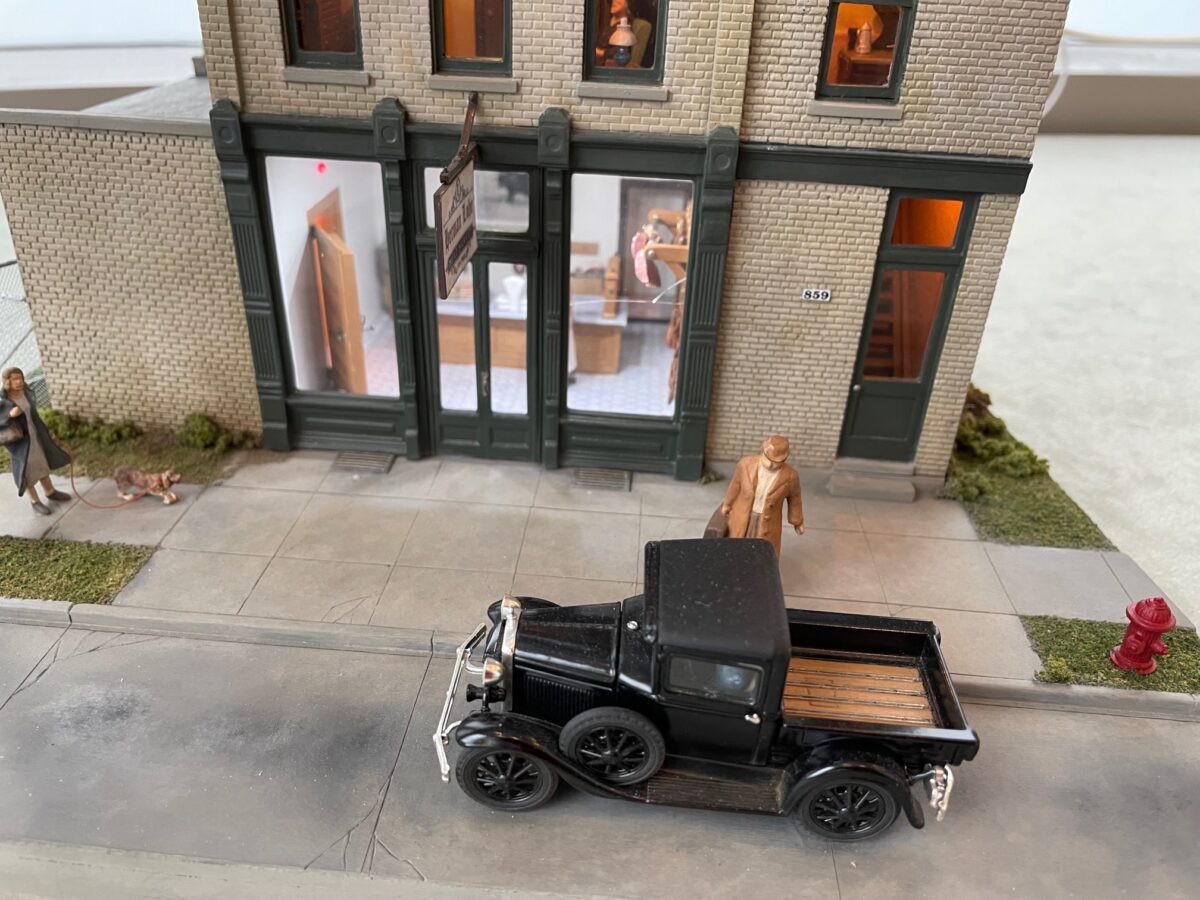
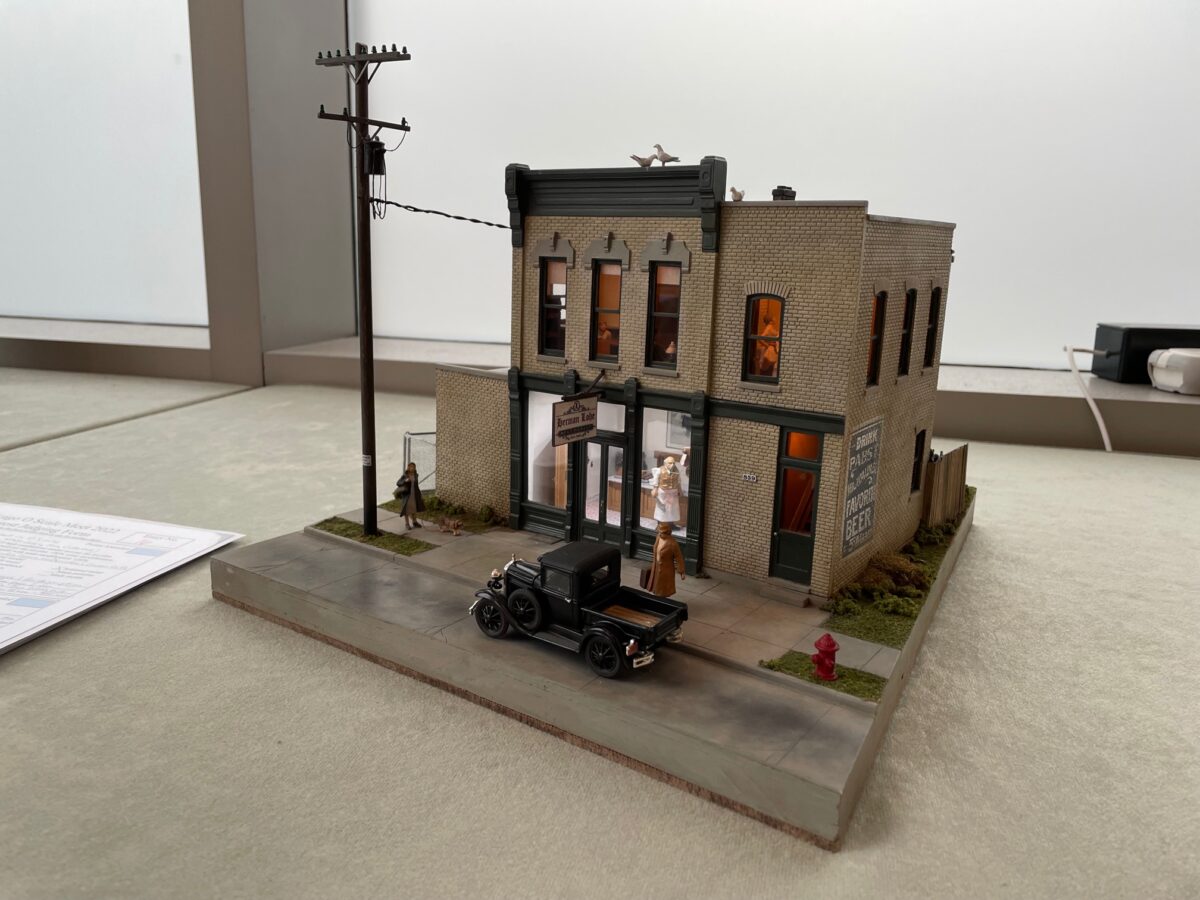
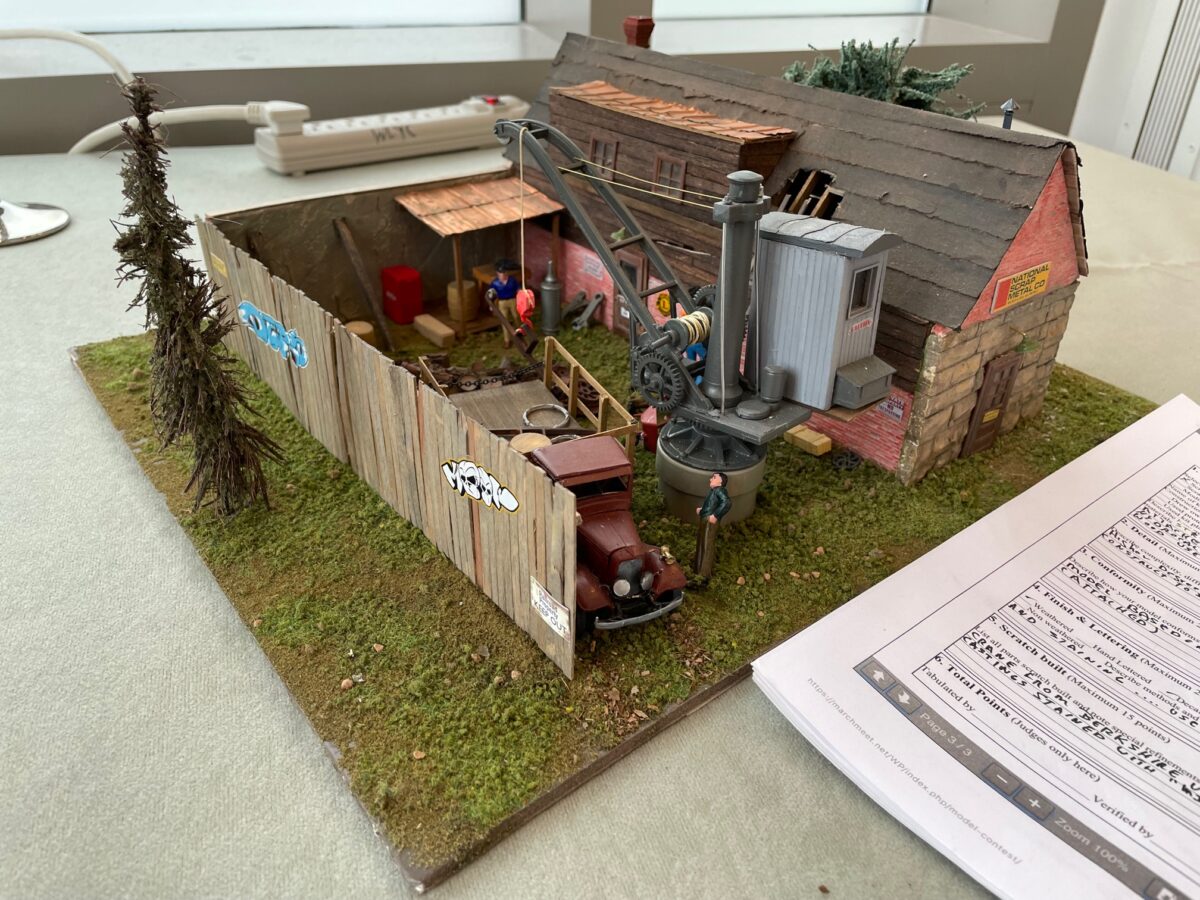
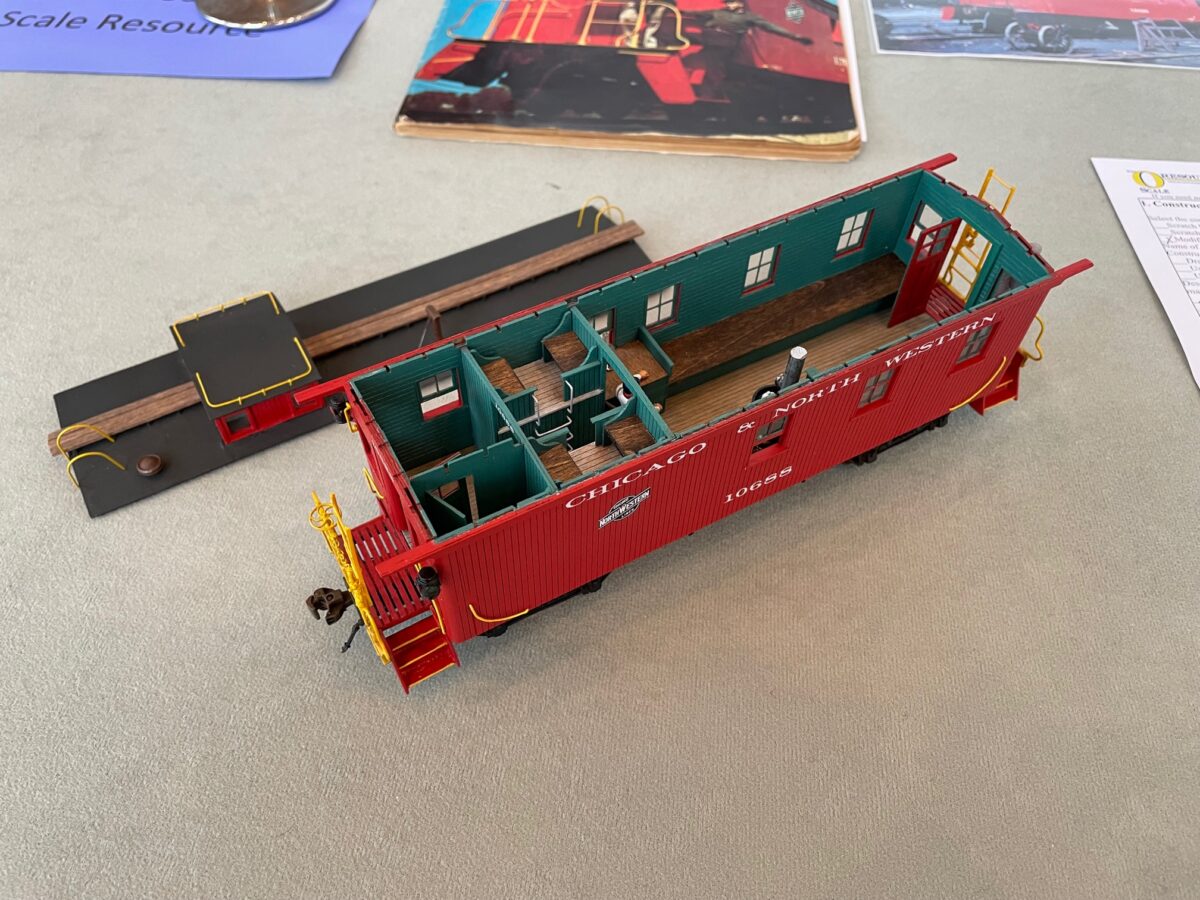
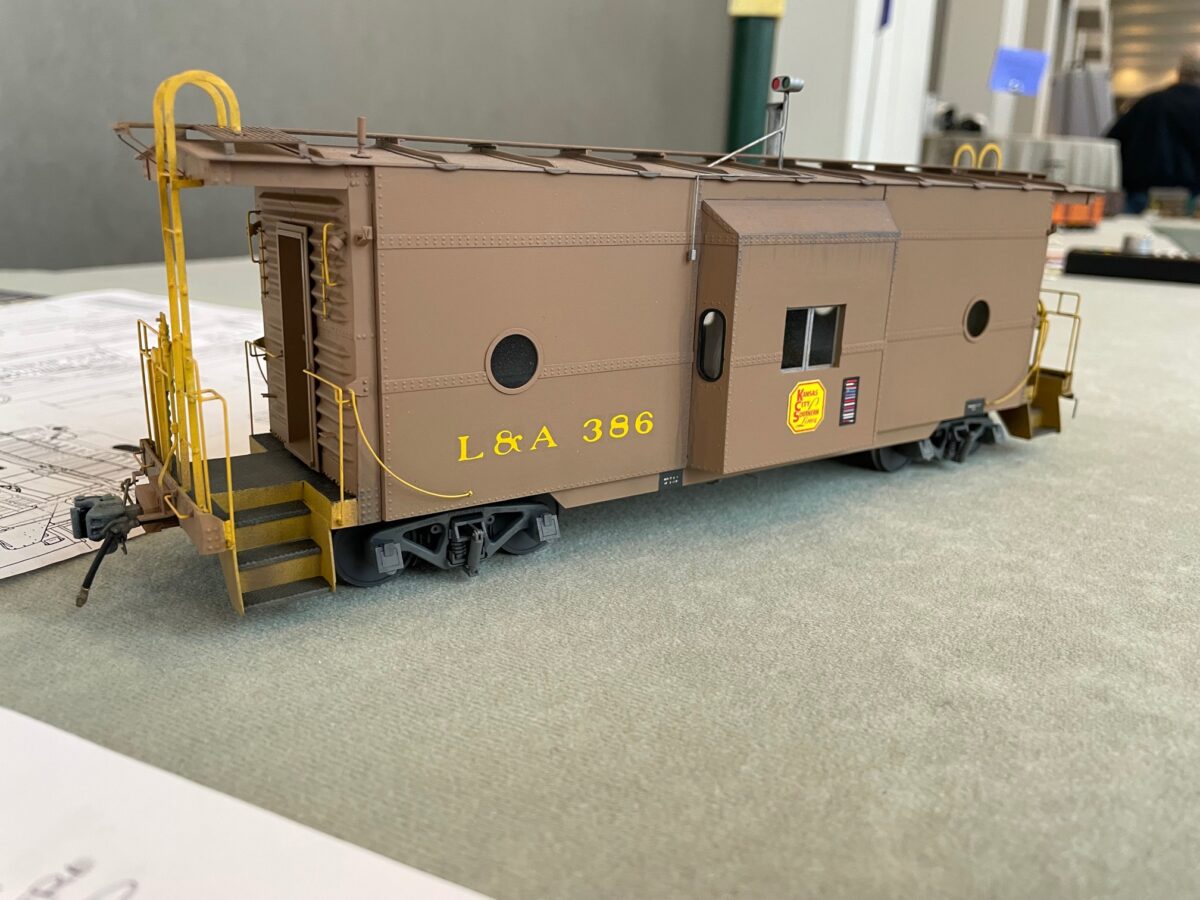
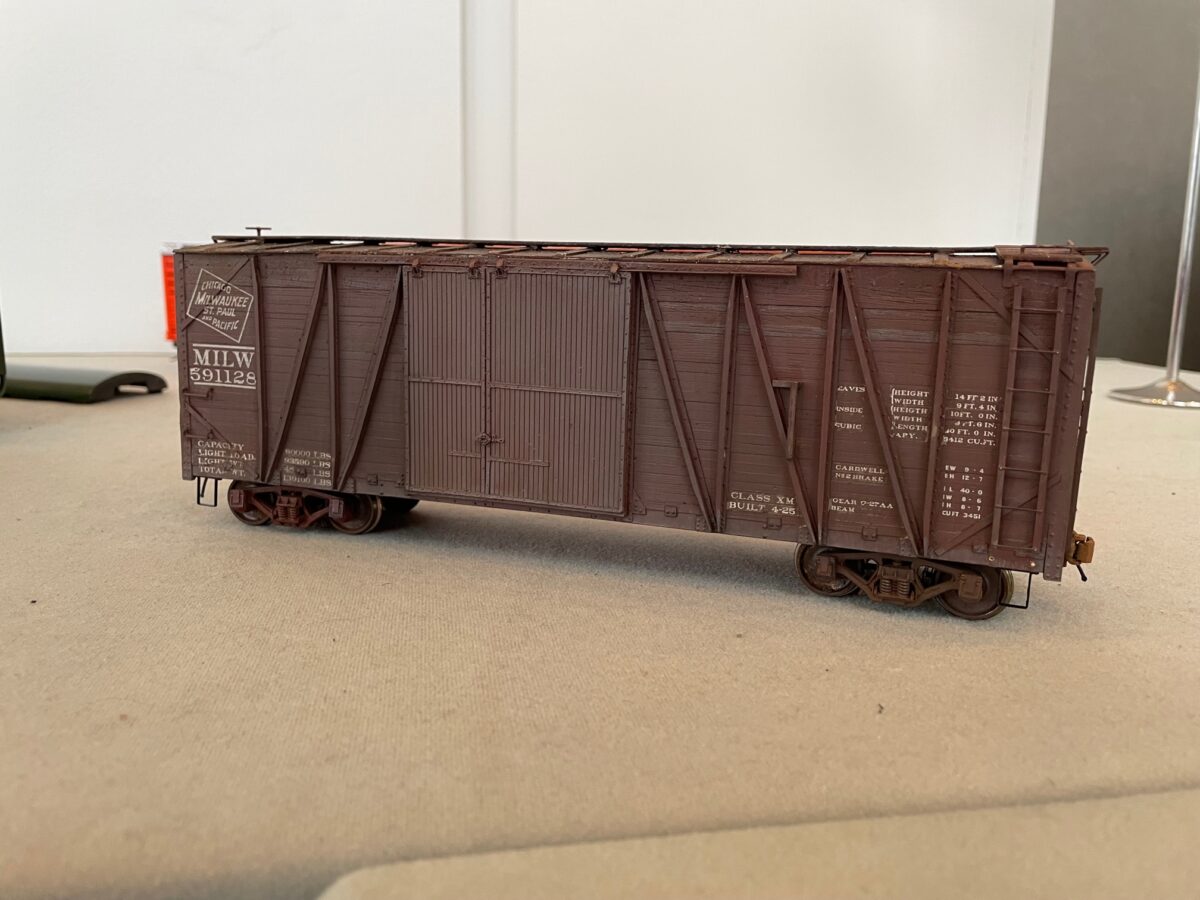
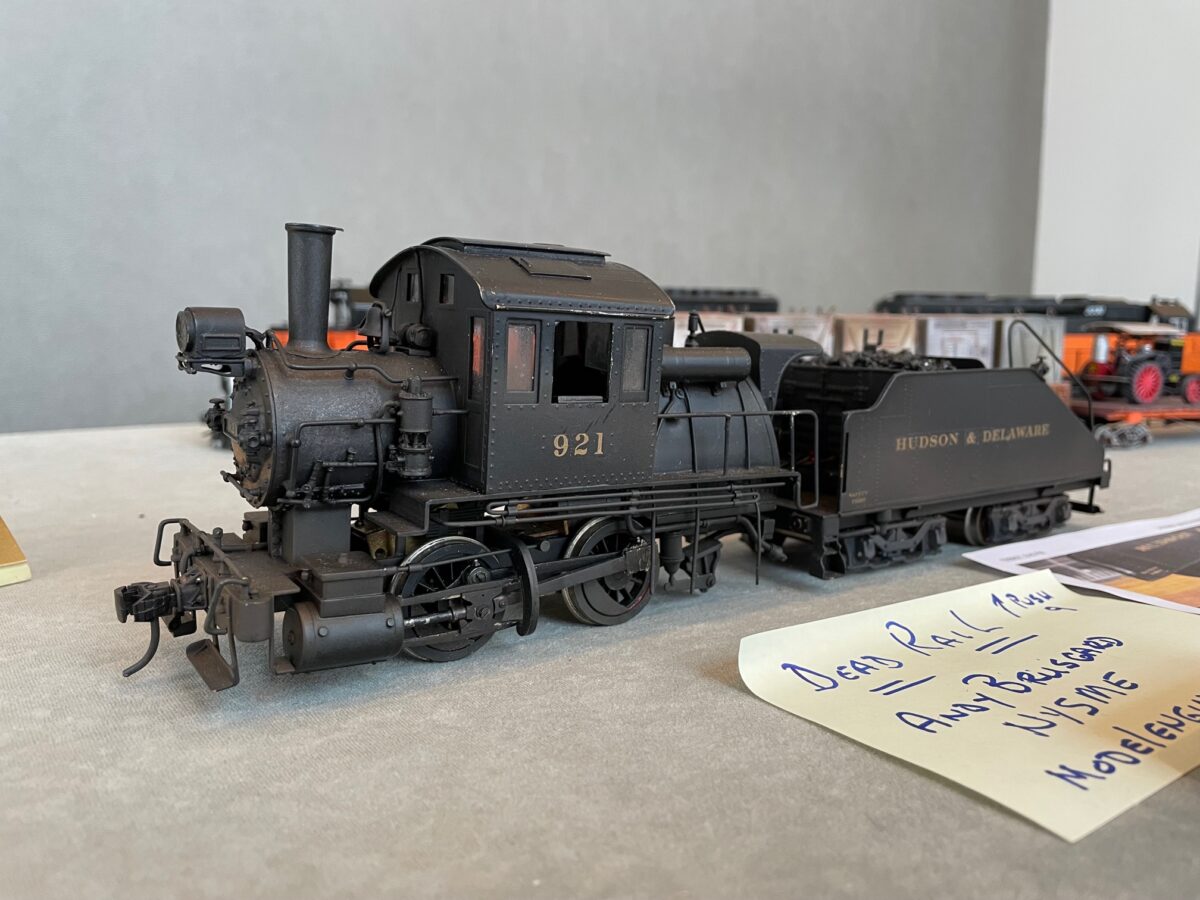
Next up are some images form the modeling contest. I know why they don’t list the names of the modelers but I really do wish they would. I’m less concerned with the contest as I am with the modelers who built the models. I would be nice to know.
This one we do know is Andy Brusard”s Dead Rail model
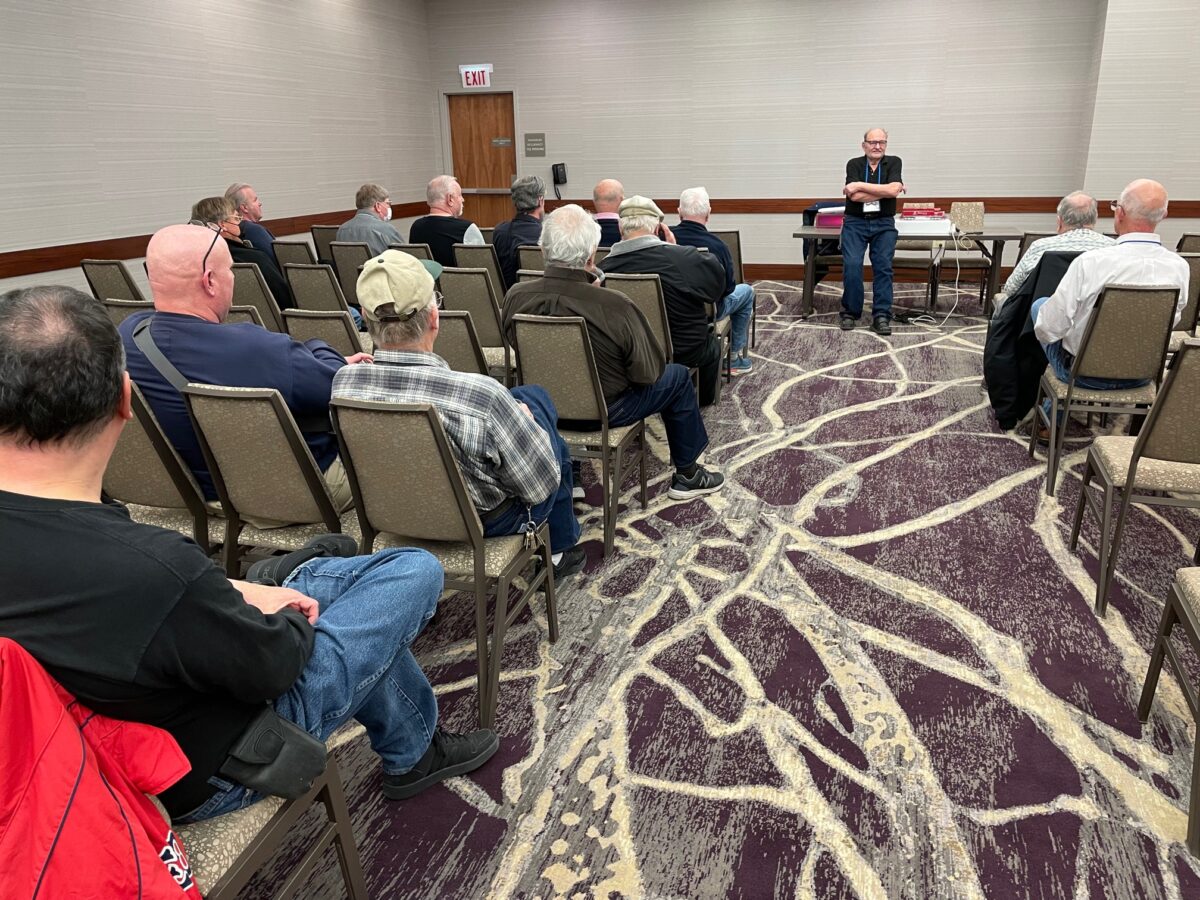
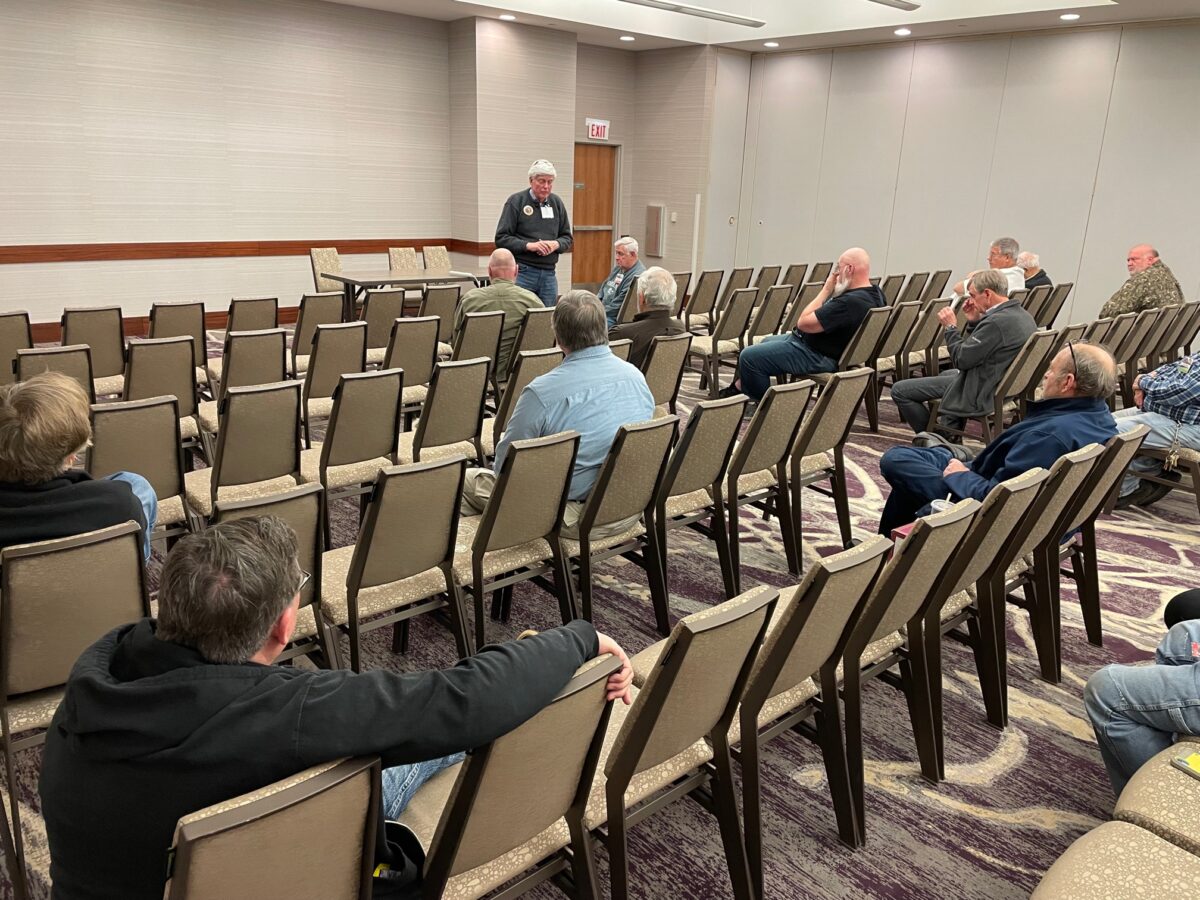
The Proto48 Meeting Paul Hanson hosted the meeting to a packed house.
Norm Buckhart was the first speaker. He spoke about his current release of 50 foot boxcars. Norm also spoke about his upcoming run of tank cars which are due in late 2022 or early 2023. This run will consists of multiple varieties of cars, most never having been produce in O Scale before.
Norm also spoke of the next run after the tank cars, round roof box cars. The box cars will be imported in late 2023 or early 2024. The round roof box car run will consist of multiple variations of the PRR class X31 of 40 foot boxcars and the PRR 50 foot boxcars in the X32 and X33 classes. In addition will be two classes of 40 foot cars for the Seaboard. I’m really looking forward to the Seaboard cars.
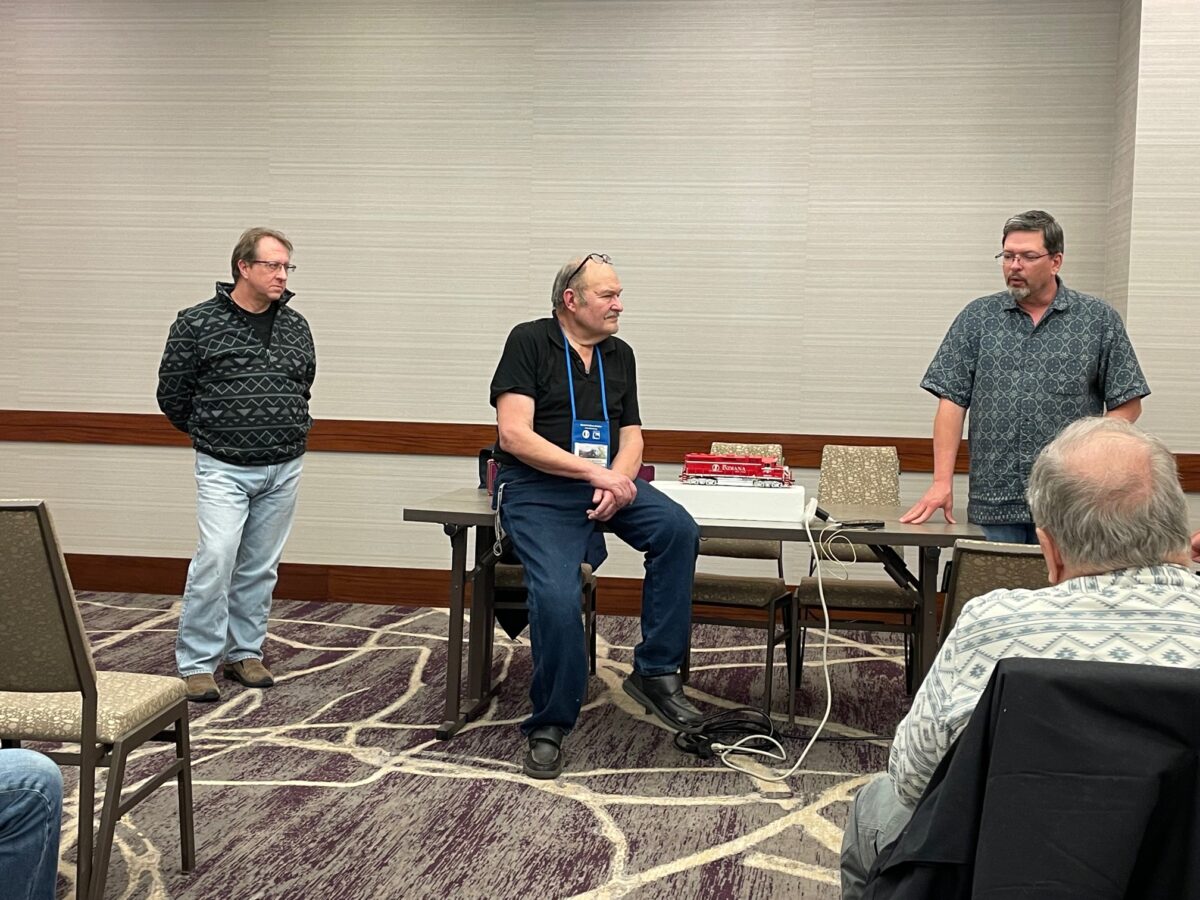
Next to speak were Ross Dando of Twin City Cars (on left) and Jon Cagle of Southern Car & Foundry (on right).
Ross was up first and spoke of his new offerings including a new double etched spike. That brought about some crowd participation and interaction. Ross also mentioned the development of his next release for Twin City Cars, a steel USRA rebuilt car from a USRA double sheathed boxcar. Gene Deimiling wrote about that is his recent blog post. I’m looking forward to that car.
Jon Cagle spoke about his new kit of the Howe Truss boxcar. The new composite side model is similar to the previous release of the steel sided Howe Truss Sand Springs box car. The difference is this is this car is accurate for three or four railroads instead of one shortline railroad with a total of four cars on the roster. Four cars total in 1952 when the were over 800,000 boxcars on the rails, what is the likelihood of one of them going past you trackside?
Jon also mentioned that his tank car kit are back into development. He had samples in the past at shows that looked great and well beyond anything that had been done before. They never became completed kit masters, but it sounds like they will later this year.
As Jon spoke you could hear his passion for what can be done with resin casting. And he also spoke about what others have recently released with resin. How some manufactures need to do more work with their masters BEFORE committing to making molds and casting resin. Without naming names, all that are facing having to sand 3D stepping out of roofs knew exactly what he was talking about.
After the presentations from the three manufactures, Paul Hanson showed off a modern MTH locomotive that had been converted to Proto48. This sparked some discussion about the difference between Finescale modeling and Proto48 modeling.
I have always believed that equating Finescale and Proto48 does more to exclude potential new Proto48 modelers from trying out Proto48. Below is the text of a post I made about the subject in the past on the OGR Board which pretty much sums up my feelings on the subject.
“Proto48 is about correcting the gauge of the rails and running with fine wheel widths and treads. There is nothing in the Proto48 standards about truck widths and there are absolutely no “requirements” beyond the gauge and wheel standards.
Just because some Proto48 modelers build finescale models, doesn’t mean that every Proto48 modeler has to build to that level. And I would point out that there are a lot of O Scale modelers who build models to finescale levels also. A Proto48 model does not have to be a finescale model and a finescale model does not have to be Proto48.“
The O Scale Kings Meeting David Vaughn hosted the O Scale Kings meeting. He discussed the current efforts of the group. They working on operating name change to O Scale Central. Acknowledging that some have had issues with the name of the group over the years.
There was discussion of developing new O Scale module standards which would also be inclusive of past modules built to NMRA or Free-Mo standards.
It was also suggested during the meeting that O Scale is positioned to take the lead on developing standards for DeadRail or Power On Board. It was noted that members of the O Scale Kings were working with representatives from the NMRA to help guide that discussion.
While the crowd was thinner than the Proto48 meeting which was held in the same room. I think that was because it was not the Business meeting of the O Scale Kings which was held the next day. I was not able to attend the business meeting.
Just returned from the 2022 Chicago O Scale Show. I always think this show can’t get any better and it always does. Another great show!
There were some new models from various manufacturers at this show, as well as a host of used models. Here are some of the new models I saw at the show.
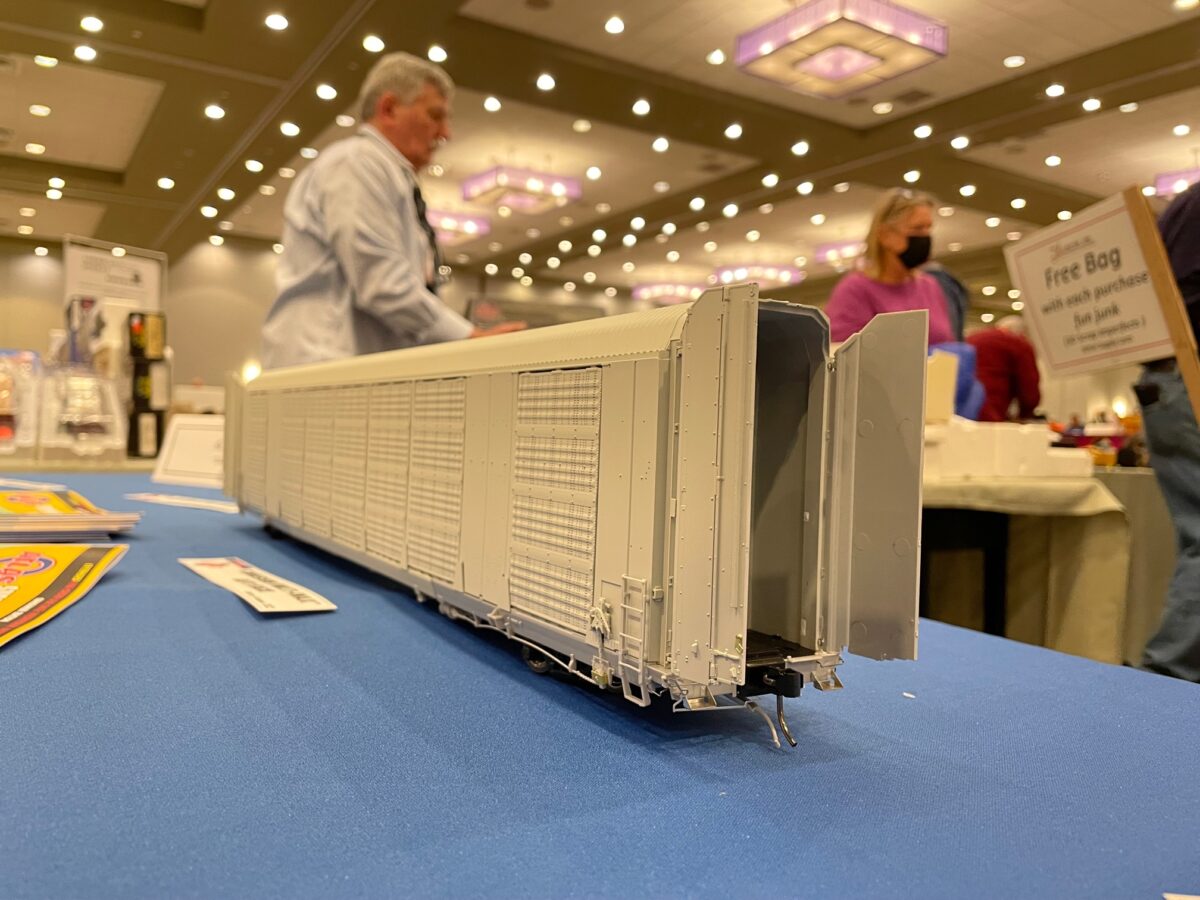
Atlas O Scale Bob Lavezzi had a display model of a new release for Atlas O Scale. It’s an 89′ Auto Rack. While too late for my modeling period of 1952, it is a fine looking model and great to see Atlas O releasing a fine looking new model in O Scale.
Southern Car & Foundry Jon Cagle from Southern Car & Foundry has released a new model of an ARA Standard Car with a Howe Truss. This model is similar to their previous release of the Sand Springs car but this is the composite version of that car. Jim Zwernemann did a wonderful job on the master work on this car. SC&F sold out of the kits he brought of this car on Saturday.
In addition SC&F had additional models of the previously released 1932 ARA Standard Boxcars available at the show.
Rails Unlimited Ted Schnepf had a new release of a UP 50 foot composite boxcar.
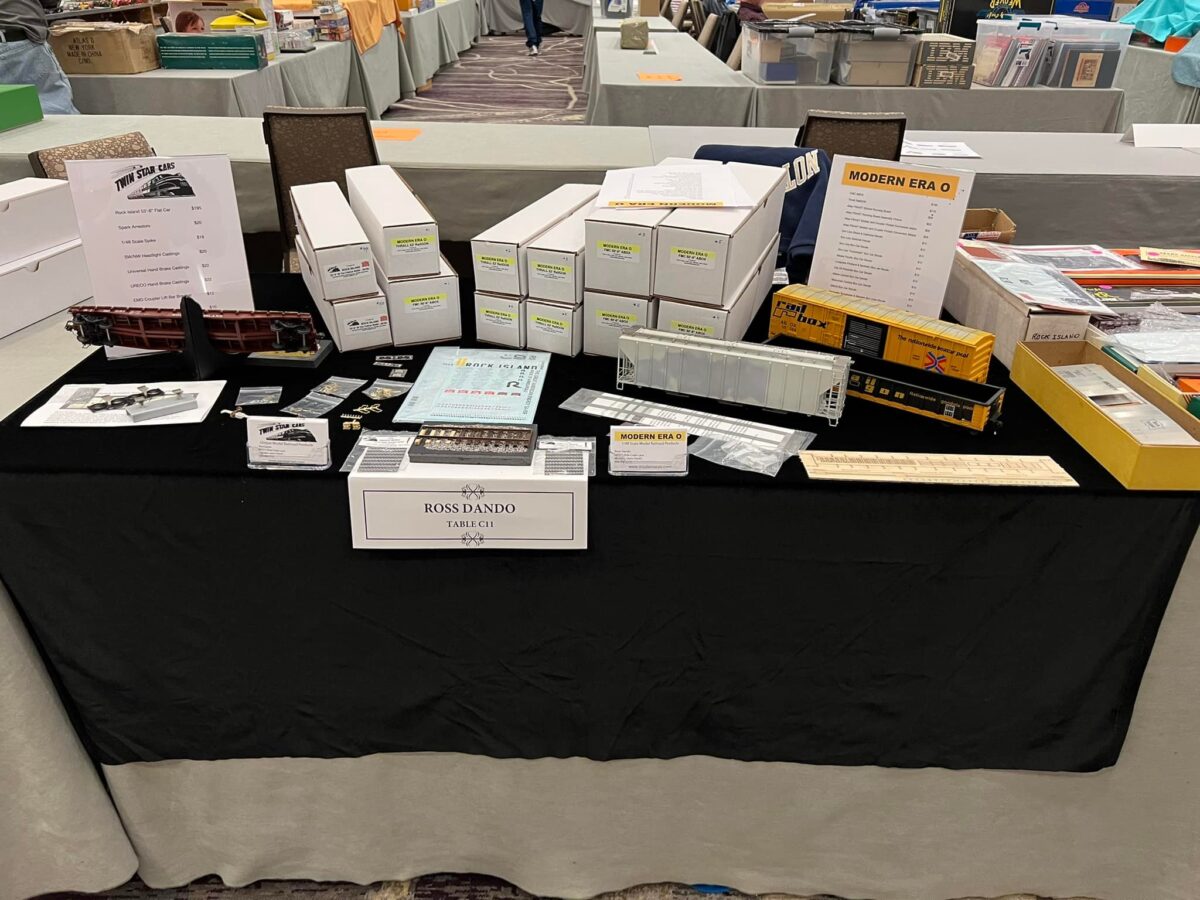
Twin Star Cars Ross Dando had the last two kits for his beautiful Rock Island flat car for sale at the show. He did say that that kit would not be re-run in the future, So I hope those that wanted one bought one while it was available.
Ross has also picked up Bill Yancey’s line called Modern Era O Scale resin kits. Ross had details and new kits in the lane. The modern era O Scalers I’m sure are very happy to see that line continue.
Steve Grabowski Steve had a sample of his PRR 2D-F8 truck at the show. He will be producing a limited run of plastic kits of this very common PRR truck in both Proto48 and O Scale. But you have to pre-order the trucks as the kits are going to be produced based on the orders and will not be a stocked item.
I took a ride with my brother Bob today. We went to a train show in Clark, NJ held in the Mother Seton High School. He always calls the show just simply “Mother Seton.”
The show is what we used to call a “paper show.” Meaning there would be lots of photographs, books and also railroad documents but not much in the way of models on the tables. The supply of railroad produced material was in very short supply at this show. Definatly not what I remember from back in the day.
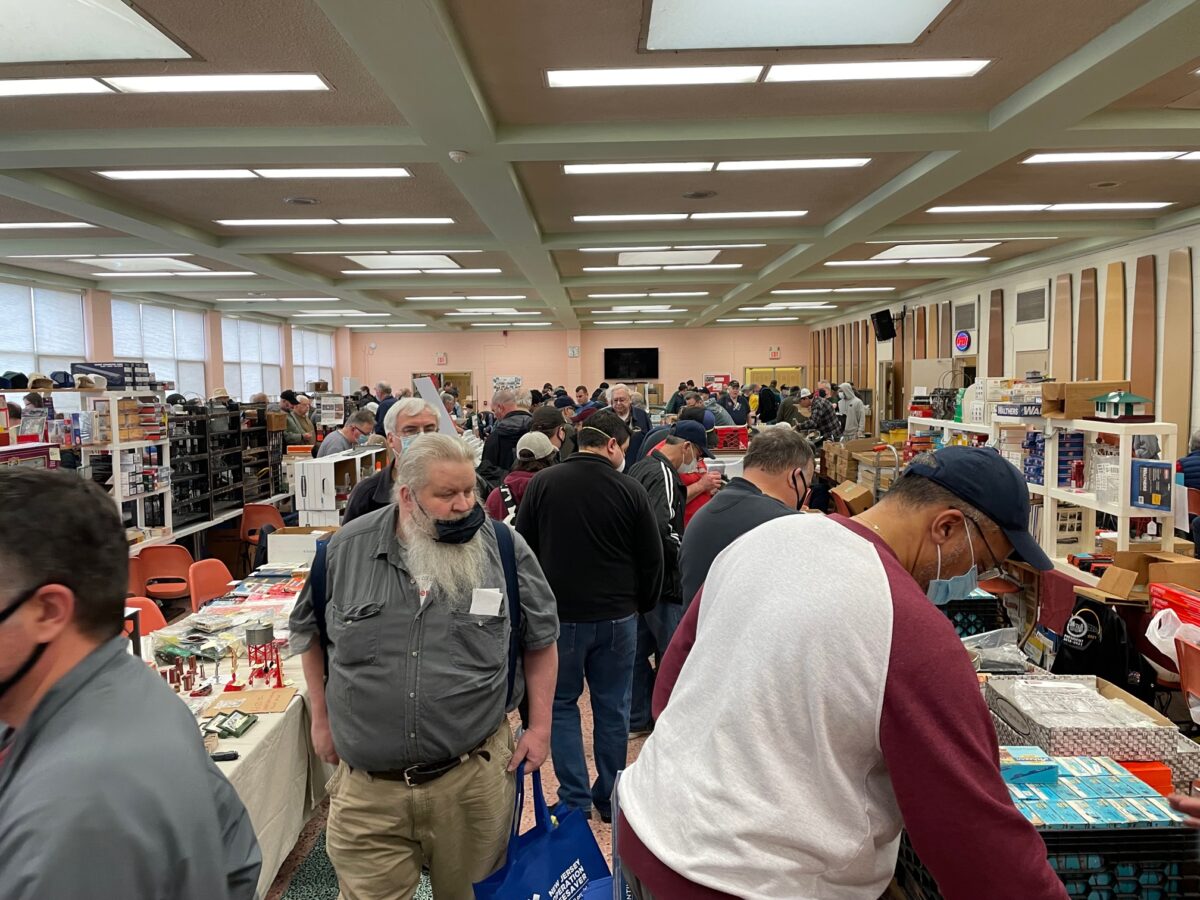
Mother Seton was one of the first shows I remember traveling to back in the 80’s. I haven’t been to one in about eight or ten years. The trading halls were in two large rooms in the High School. The opening photo shows the first of the two rooms.
Suprisingly, there was some O scale on the tables. I did see some Intermountain kits on one table and even two pieces of O scale brass on another table. There was a little three rail on one or two tables, but most of what few models that were on the tables were HO or N scale.
One of the Highlights of the show was talking to John Green of Bethlehem Car Works. John is an HO manufacturer that just released a 3d printed Lehigh Valley switcher kit. It is designed to fit over a Bachman 44 toner drive. Of coarse I was trying to talk him into outputting that switcher in O Scale.
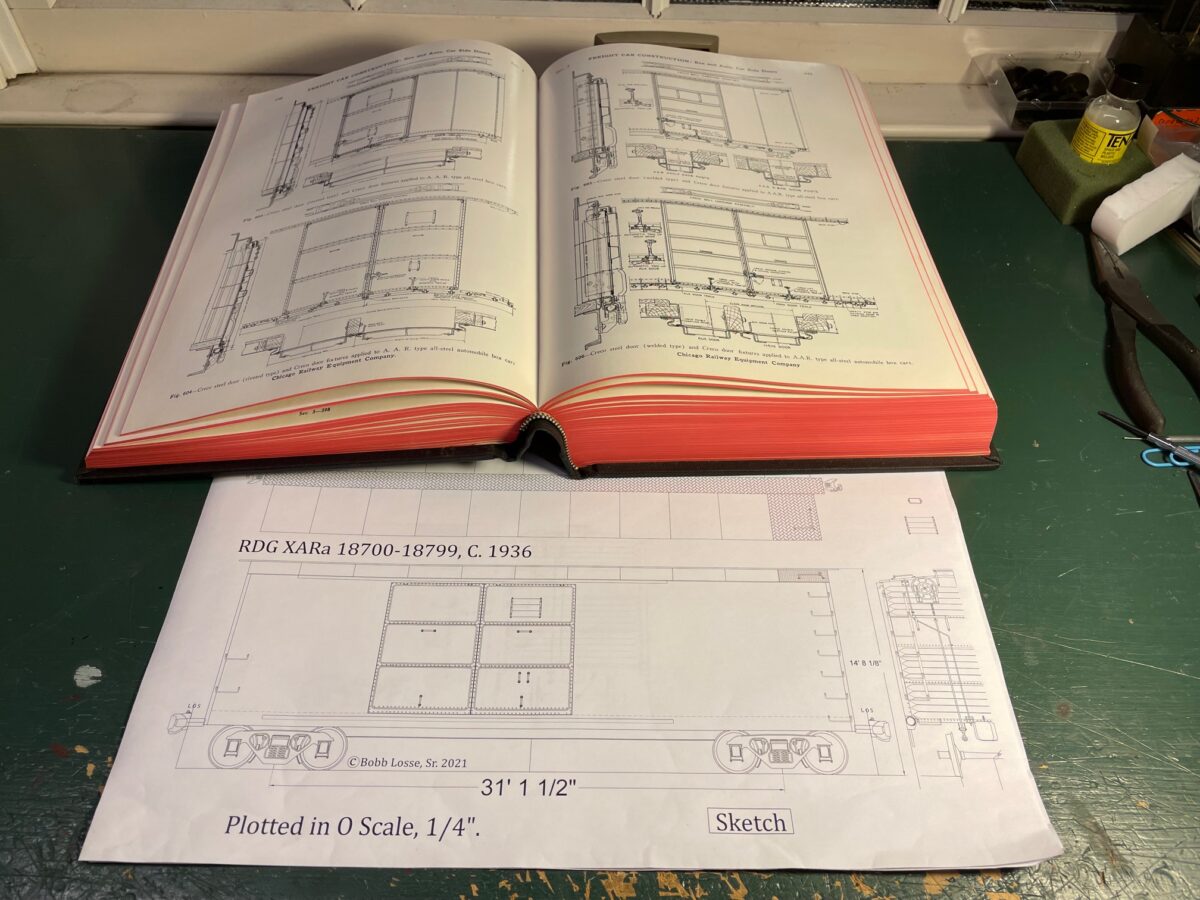
Just as our time at the show was winding down, my brother wanted to make the rounds to a four or five people to say good by. The first of which was a book dealer that lives in the same town as him, down here in South Jersey. One thing lead to another and somehow we each picked up a Car Builders Cyclopedia from his table. Mine was a very nice 1940 edition and Bob picked up one from the 1930’s. My 1940 was in better condition than any of the others I have and it was half the price I’ve paid before.
It was a good show, but one of the nicest parts of the day was the one hour drive each way up and back. I was able to have a nice conversation with my brother. Something you don’t always get enough time to do.
My new 1940 Car Builders Cyclopedia opened to the page with drawings of the Creco double doors like were shown in my brother’s sketch of the RDG XARa boxcar.
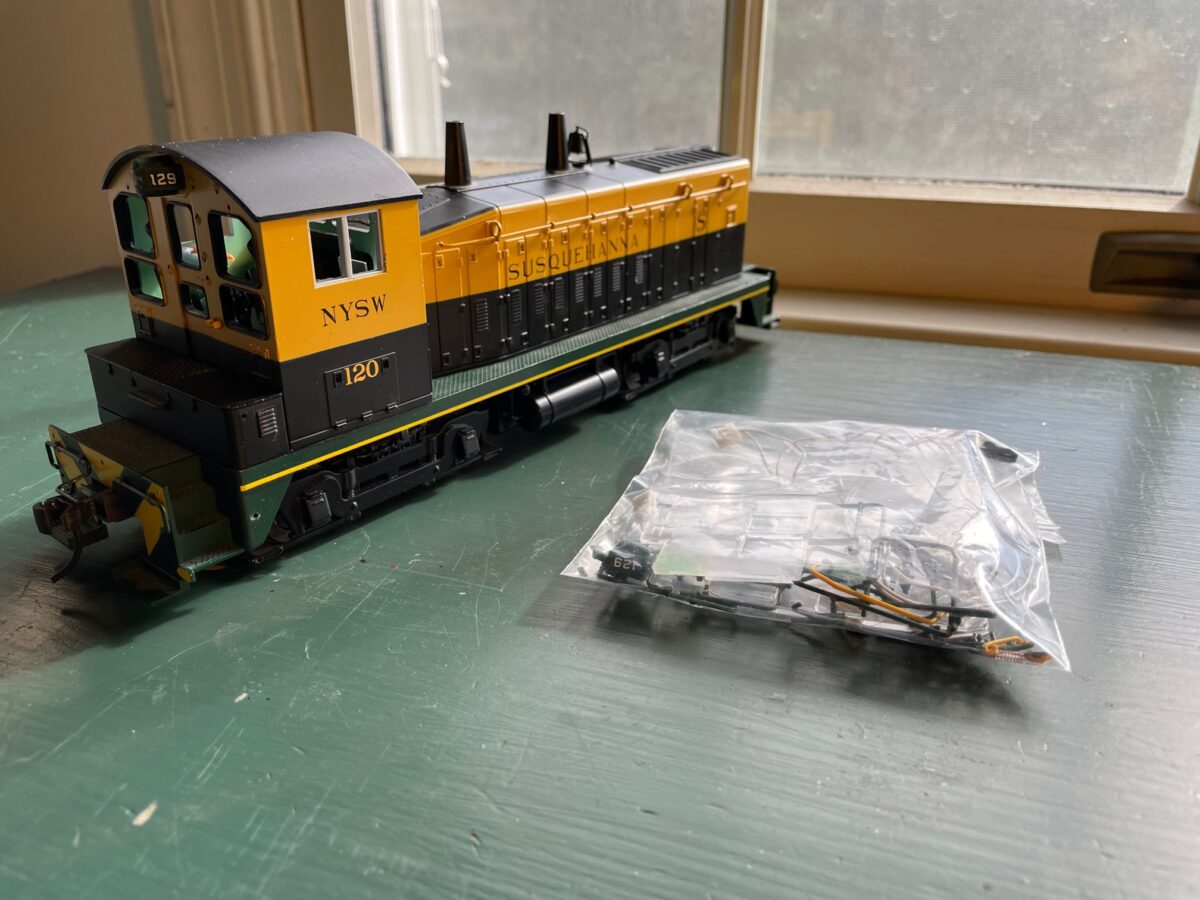
About twenty years ago I bought this Atlas SW-9. The unit was painted CN&W but I was planning on repainting it. This unit was the first I ever installed a DCC decoder into. I had some track set up in my kitchen in my first house. I used to just like to turn on the locomotive and listen to it idle of the table while I cooked dinner.
The unit was going to be repainted PRR back I first bought it. Never got to that. When the PRR became a secondary modeling focus, I tried to find other uses for this great running locomotive.
You might remember I had posts of it with an MTH SW-1 shell of the drive. Then, I was able to find a brass SW-1 at a Chicago Show. So it started to become an NW-2. I cut up an old All Nation NW-2 shell and fit the hood on the drive.
I finally found an extra old SW-9 shell at another show and put it back together as a SW-9. But it really didn’t fit my model needs for 1952. The Reading did not have SW-9’s until 1956.
The other day it was made ready and moved out onto the modeling interchange track. It shipped out over the weekend on it’s way to a new home. I did enjoy the model, but now I won’t be as tempted to paint it PC and model the early ’70’s.
It wasn’t even on my mind to part with the model. But someone was looking for one, so I thought it be a good reason to stop trying to find something to build it into.
I do want to remind readers that I do put models that no longer fit my modeling focus on my Interchange Track page.
It does create an empty project bin. What will fill that space next?
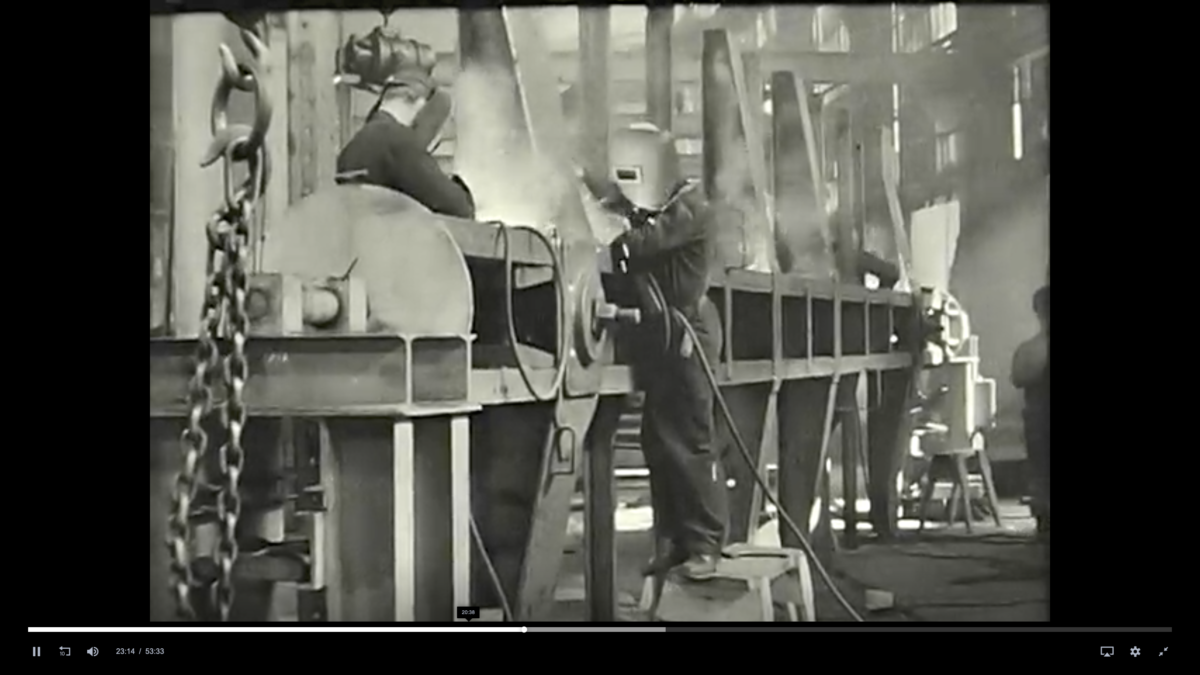
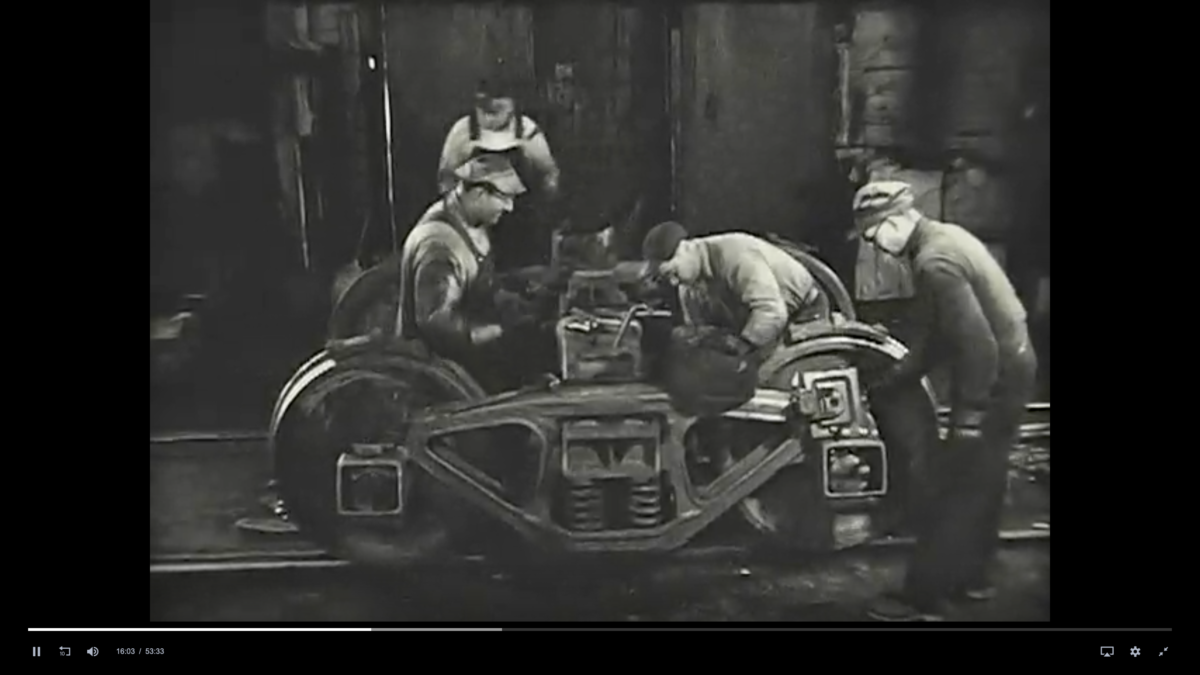
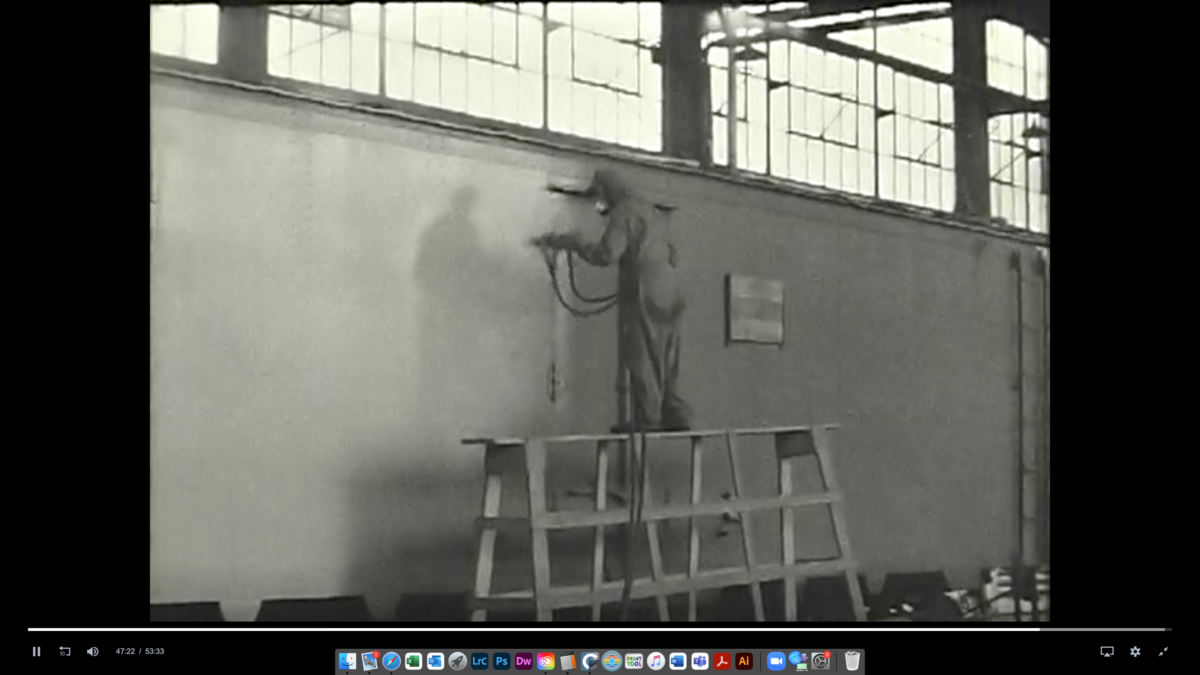
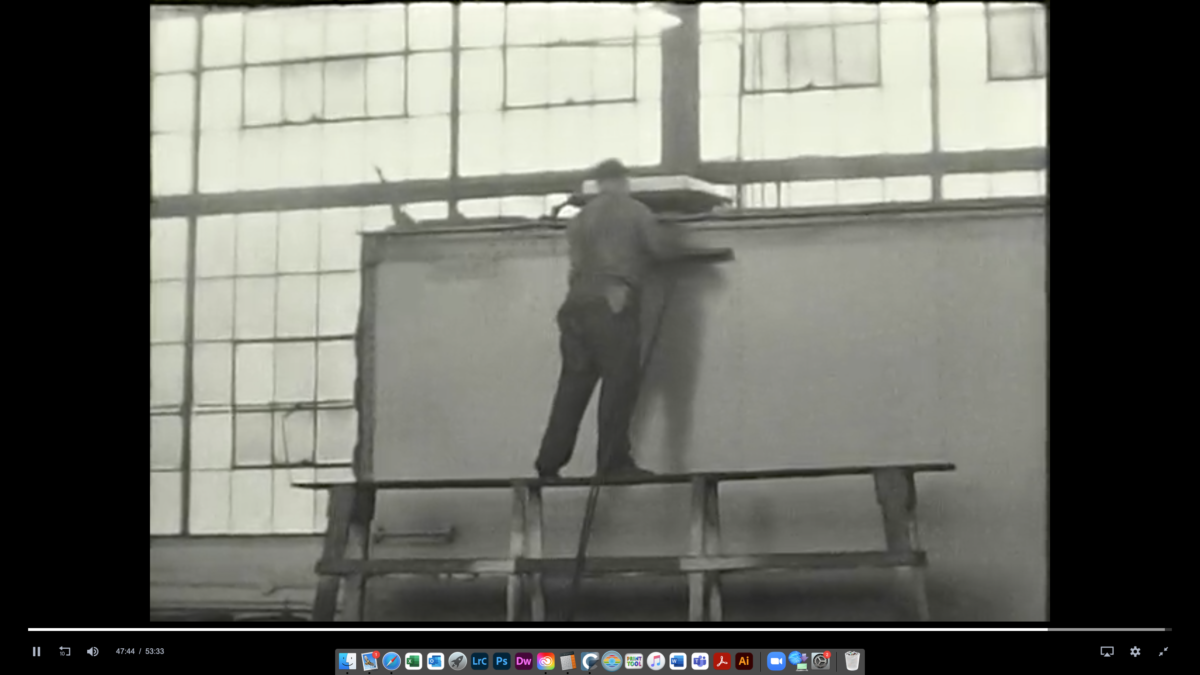
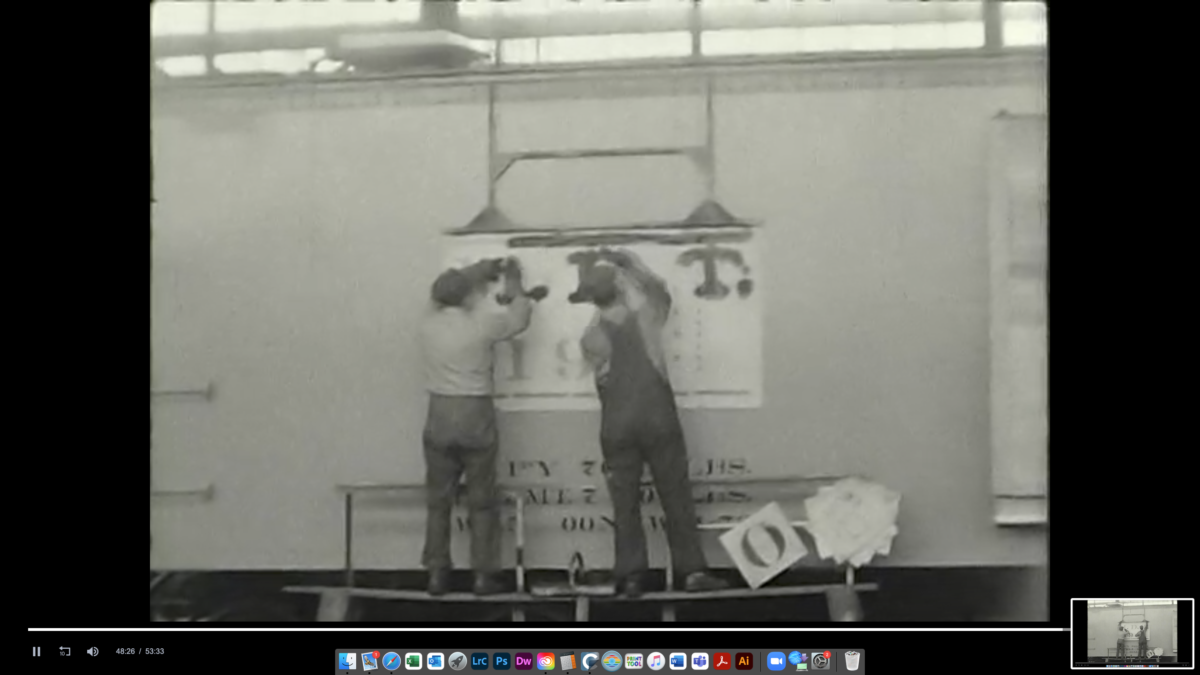
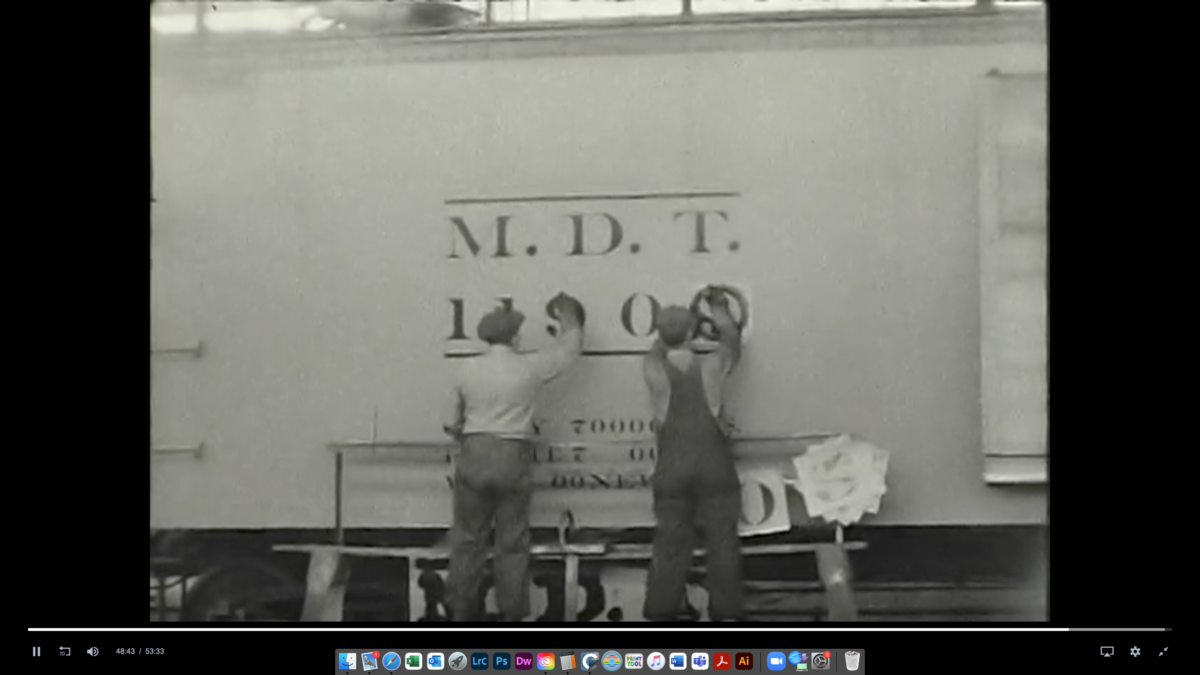
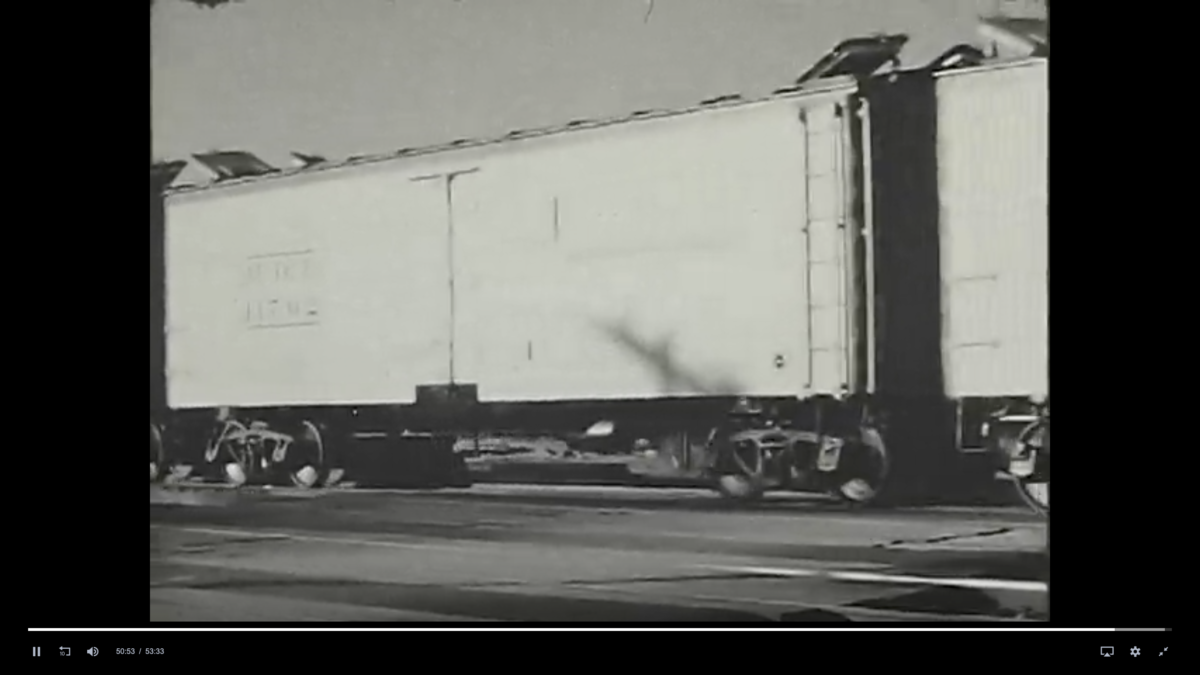
There was a link shared this morning on the Steam Era Freight Car Board to a video from 1951 of the Merchant Dispatch Car Shops in East Rochester, NY. I’ve seen this video a few years ago, but it is still enjoyable for any fans of freight cars.
The video documents the work of building freight cars in the early 1950’s. It goes all the way from stamping sheet metal for car sides and ends to the final painting of the cars being built.
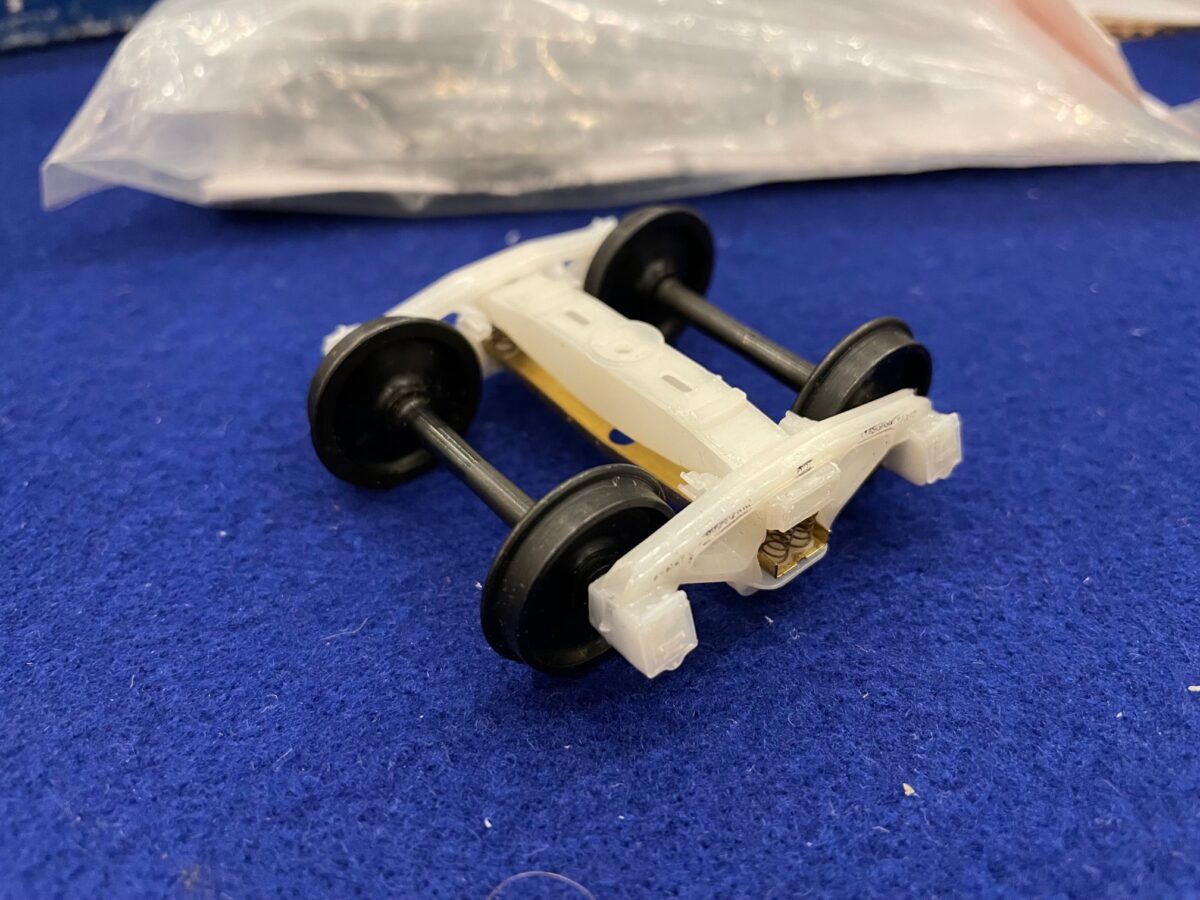
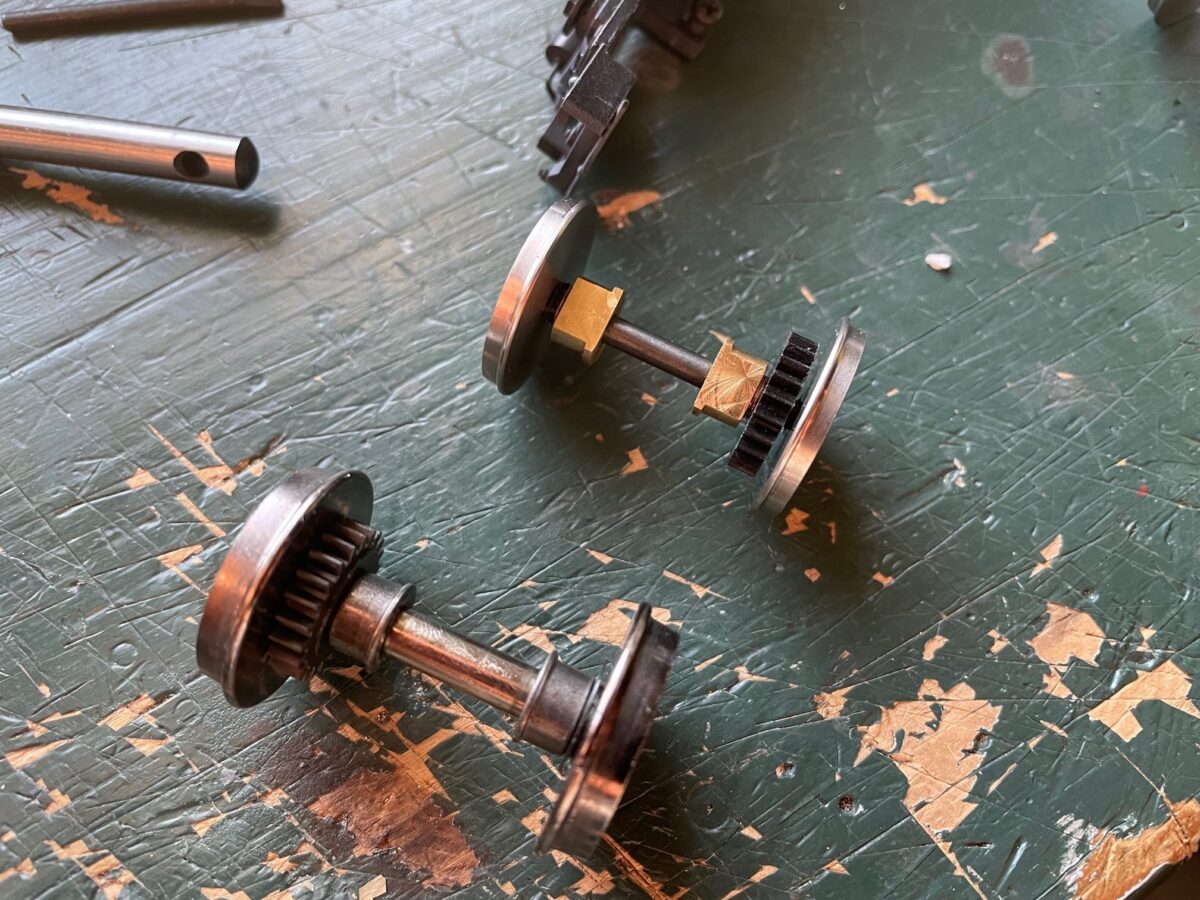
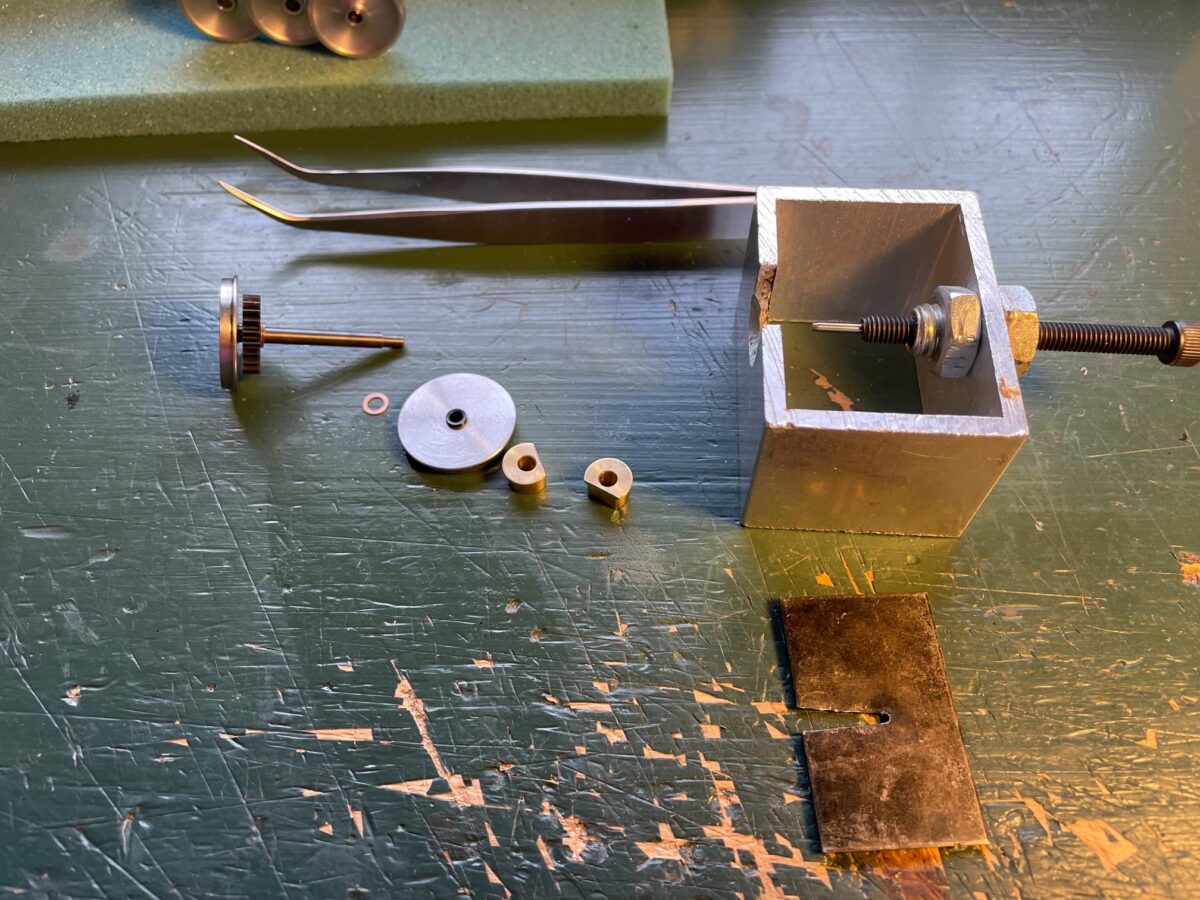
Original Atlas O axel assembly and the NWSL Conversion Wheelset
“Drop-In Conversion Parts” that is such a nice phrase. It’s not always a reality.
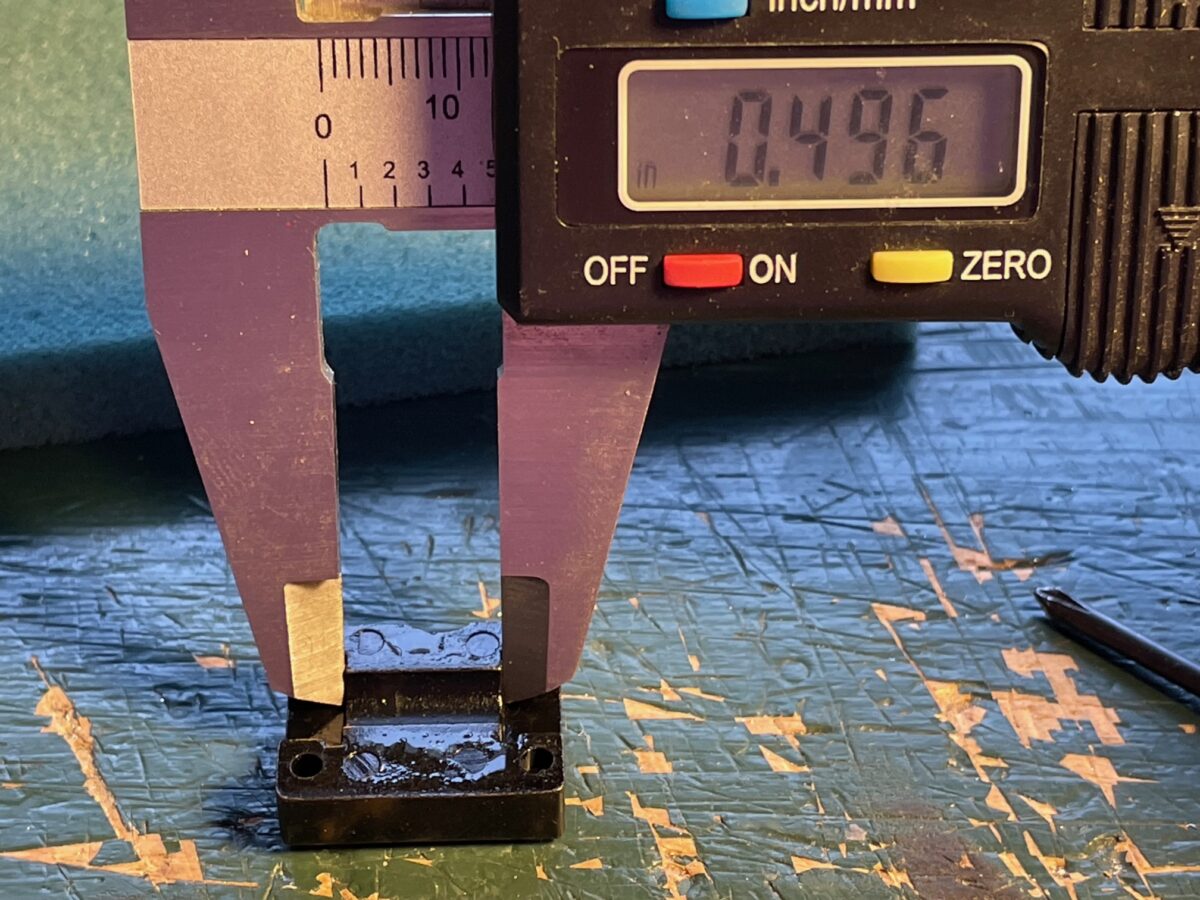
If you read yesterday’s post you know of my troubles installing the NWSL conversion wheelsets into the Atlas O F3B. To recap the back to back of the ridge on the bushings needed to be at least 0.496″.
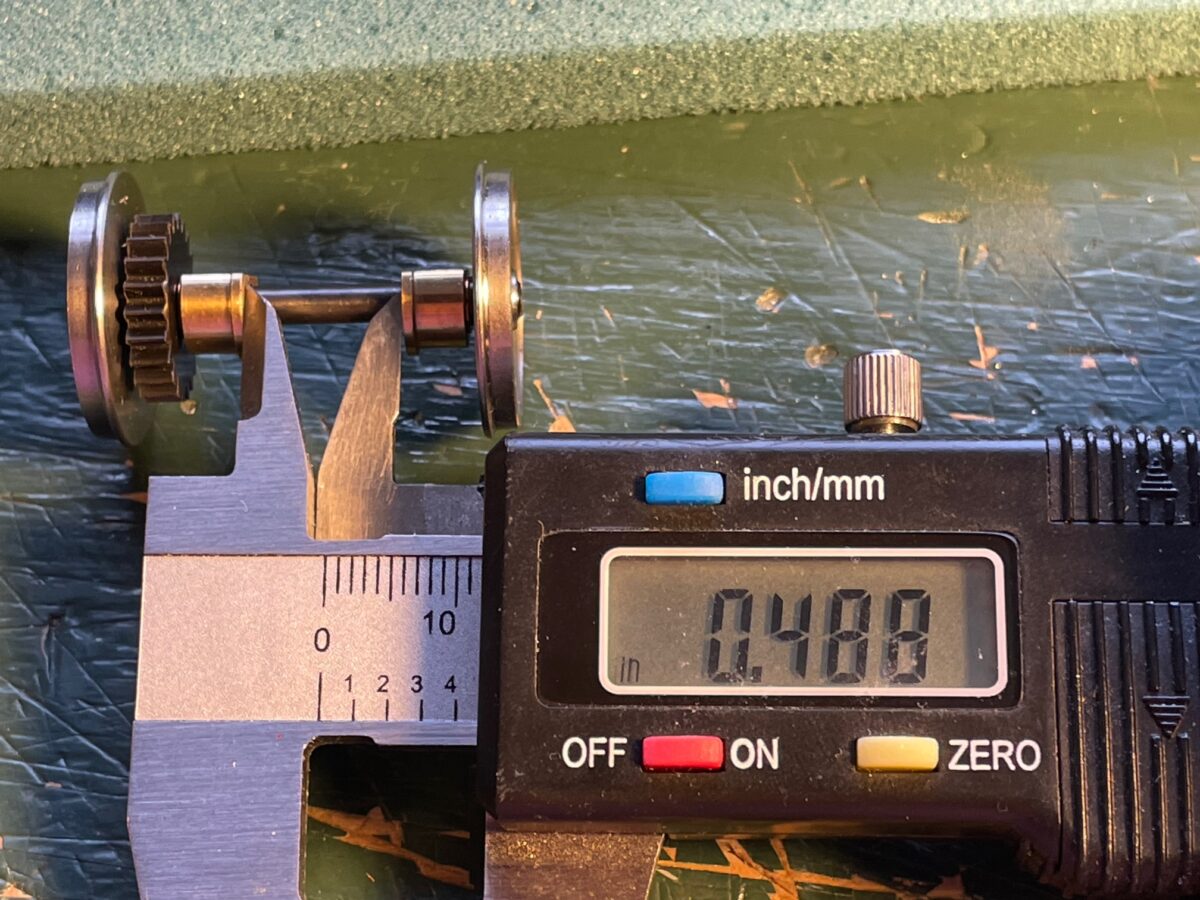
The NWSL parts had a back to back measurement of 0.488″ – 0.490″.
I know it’s only 0.006″ – 0.008″ difference but that is the difference of them fitting or not.
Time to disassemble the first axel.
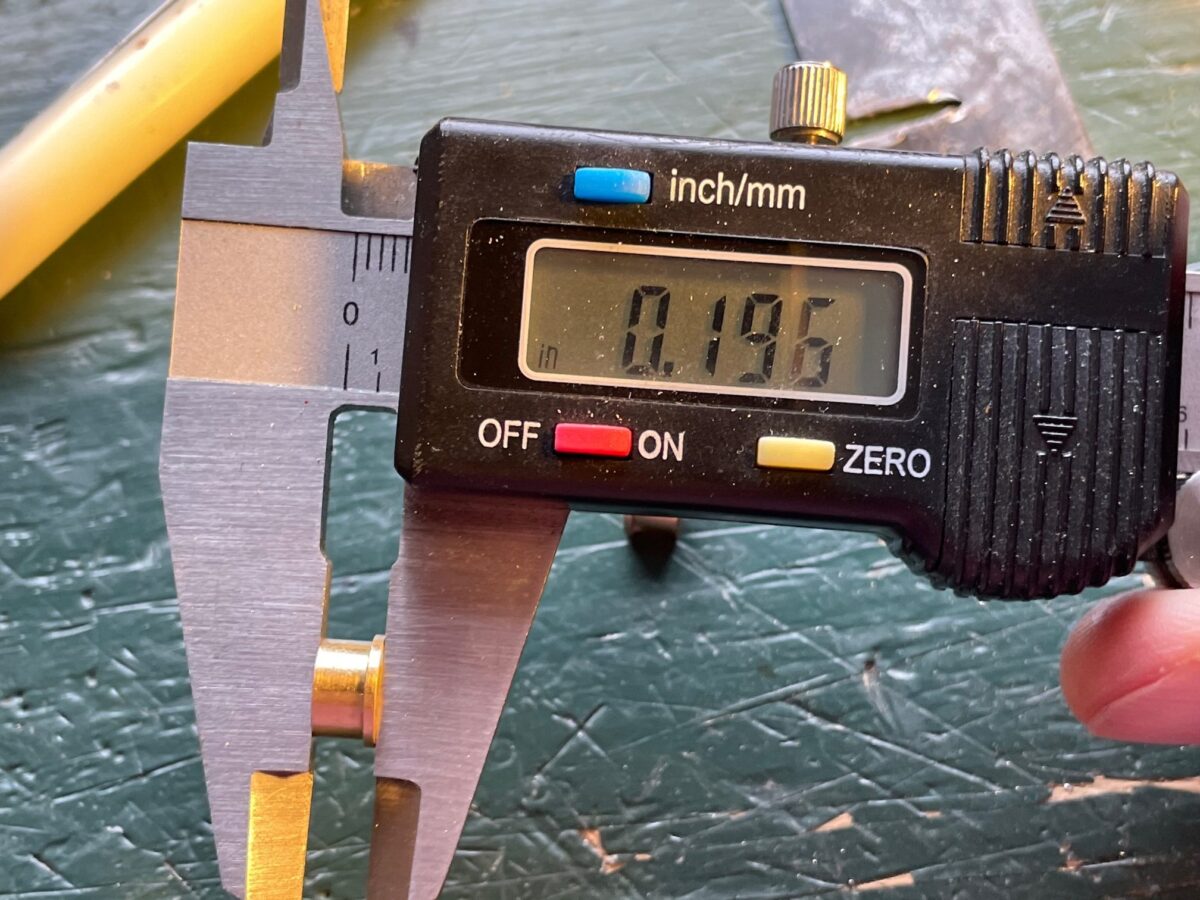
This was the before measurement for the bushing.
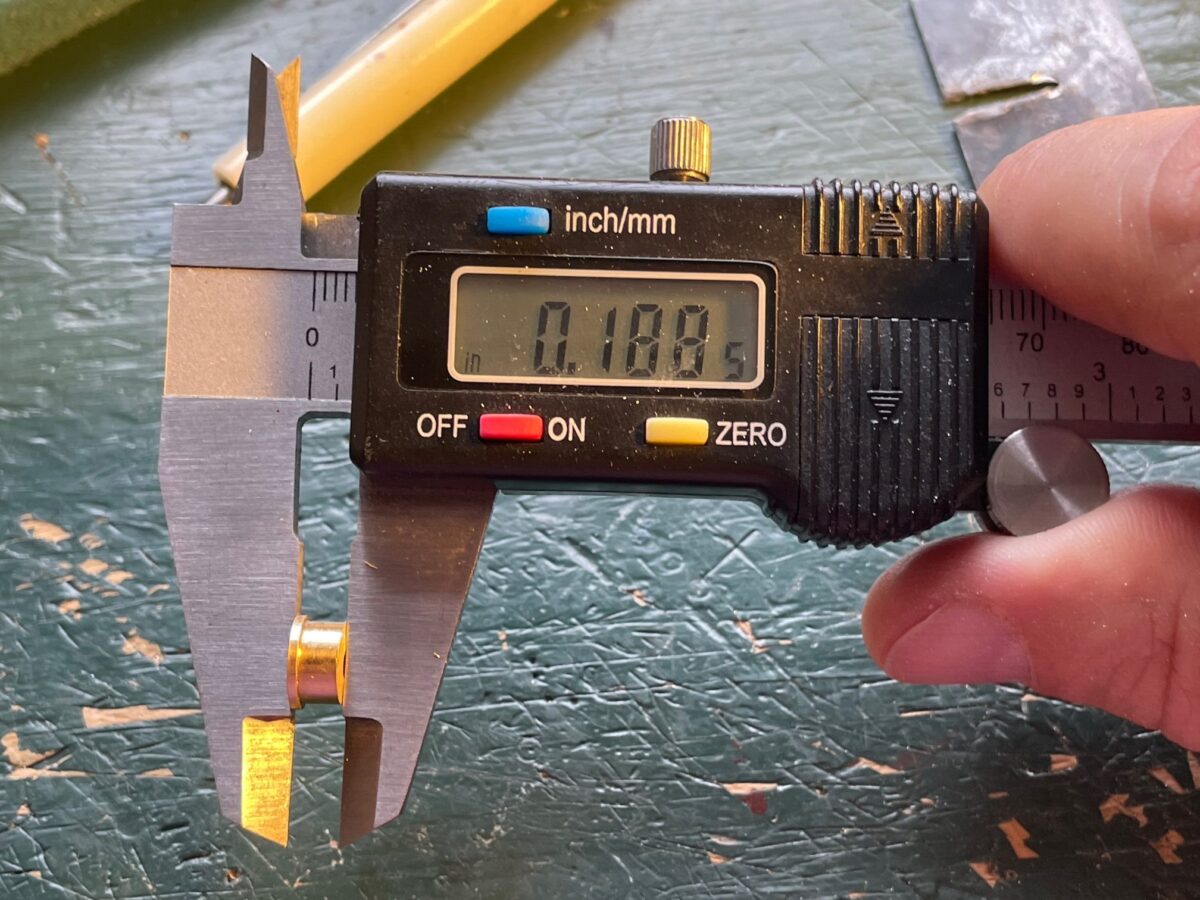
This is the bushing’s measurement after it went on a diet.
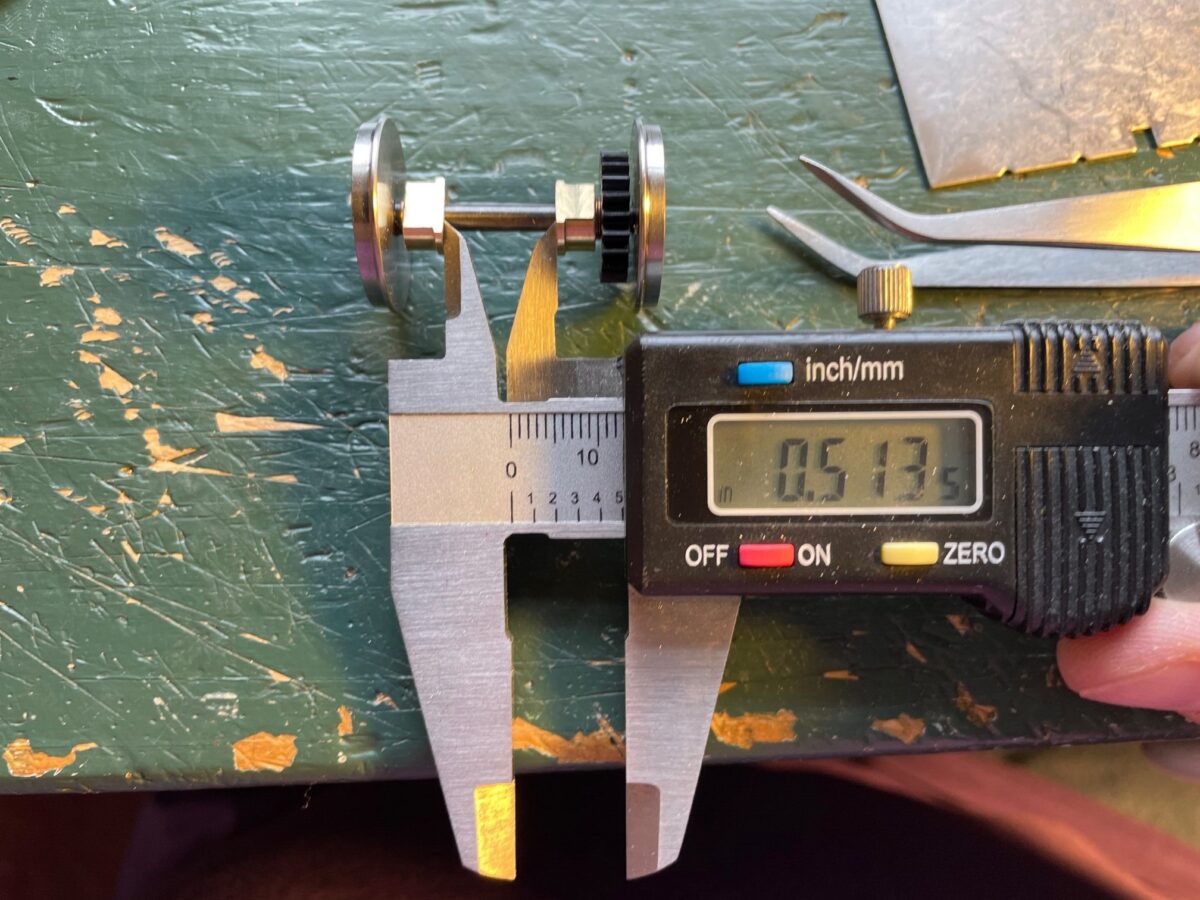
The new back to back measurement. And the most important thing….. They ACTUALLY were a drop-in fit into the grove on the top cover.
After modifying the two axels that didn’t fit, I had to open up the one truck where the axels did fit. I knew they were a very tight fit and just thought they would benefit from also being modified in the same manor.
I am happy to report that this last photo shows all four axels modified and installed. Next time I work on this model, those side frames need to move a lot closer to the wheels, but that is work for another day.
Truth be told, it took about the same amount of time to write this post as it did modify the bushings to make the axels fit properly. So it really wasn’t a big deal at all.
I’m still bothered that the conversion parts did not fit as delivered from NWSL. I’ve been modeling in Proto48 since the early ’90’s, I know there is no instant gratification in Proto48. We have to actually work on our models.
What if I was a newcomer to Proto48, this experience would have been very discouraging. It could have easily made me question if modeling in Proto48 was worth the extra effort. Sometimes the newcomer to Proto48 needs some simple wins to give them the motivation to keep going and try more difficult projects. This type of Proto48 conversion should be one of those simple wins.